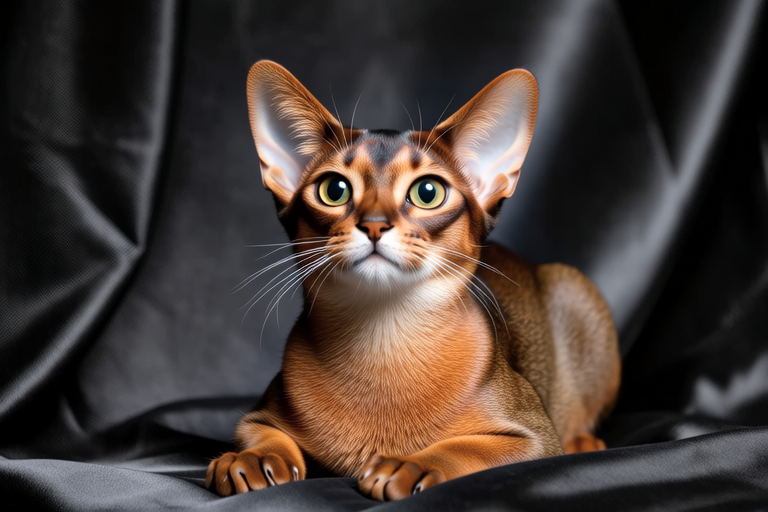
Unraveling the Mystery Behind the Abyssinian’s Wild Appearance
The Abyssinian cat is a breed that captivates both cat enthusiasts and casual observers alike. With its striking resemblance to the wild, this breed has intrigued people for centuries. The Abyssinian’s unique physical characteristics, combined with its rich history, make it one of the most fascinating feline breeds. This article will delve into the mysteries behind the Abyssinian’s wild appearance, exploring its origins, genetics, and behaviors.
Origins and Ancestral Roots
The Abyssinian cat’s wild appearance can be traced back to its ancestral roots in ancient Egypt. It is believed that these cats were originally found near the coast of the Indian Ocean and the Red Sea. Historical records suggest that these cats were brought to Europe by British soldiers who had served in Ethiopia, then known as Abyssinia. These soldiers returned home with these unique cats, which were subsequently bred and refined to become the Abyssinian we know today.
The earliest records of Abyssinians date back to the mid-19th century, where they were first exhibited at cat shows in England. The breed quickly gained popularity due to its striking resemblance to the wildcats of Africa. The Abyssinian’s sleek, muscular body and large ears are reminiscent of the African wildcat, which is thought to be one of the ancestors of all domestic cats.
Genetic Traits and Coat Patterns
The Abyssinian’s wild appearance is largely attributed to its unique coat pattern and color. The breed is known for its ticked coat, a distinctive feature that gives it a wild look. Each hair on an Abyssinian is banded with different shades of color, creating a subtle yet striking effect. This coat pattern is caused by a genetic mutation known as the Taqpep gene, which is responsible for the ticking pattern seen in many Abyssinian cats.
The Abyssinian’s coat color also contributes to its wild appearance. The most common color is ruddy, which is a reddish-brown with black ticking. Other recognized colors include blue, fawn, and cinnamon. These colors are the result of specific genetic combinations that have been selectively bred over generations to produce the desired coat patterns and colors.
Historical Context and Domestication
The Abyssinian’s journey from wild ancestor to domesticated companion is a fascinating tale. Ancient Egyptians revered cats, often depicting them in art and mummifying them after death. It is believed that the Abyssinian’s ancestors were domesticated in Egypt around 4,000 years ago. These early domesticated cats were likely used for rodent control, but they also held a special place in Egyptian society.
As trade routes expanded, these cats spread throughout the Mediterranean and eventually made their way to Europe. In the 19th century, British soldiers brought Abyssinian cats back to England, where they were further developed and refined. The breed was officially recognized by the Cat Fanciers’ Association (CFA) in 1937, cementing its place in the world of cat breeding.
Myths and Facts Surrounding Their Origin Stories
There are several myths surrounding the Abyssinian’s origins. One popular myth suggests that these cats were the descendants of the sacred cats of ancient Egypt. While it is true that the Abyssinian’s ancestors were likely domesticated in Egypt, there is no evidence to support the claim that these cats were considered sacred animals.
Another myth claims that the Abyssinian was the only cat to survive the Great Plague of London in the 17th century. While this story adds an air of mystery to the breed’s history, there is no historical evidence to support it. The truth is that the Abyssinian’s survival is more likely due to selective breeding and the efforts of dedicated breeders.
Behavior and Temperament Reflecting Wild Heritage
The Abyssinian’s wild appearance is reflected in its behavior and temperament. These cats are known for their high energy levels and love of play. They are intelligent and curious, often exploring every corner of their environment. Abyssinians are also very social animals, enjoying the company of humans and other pets.
Despite their playful nature, Abyssinians can be quite independent. They enjoy spending time with their owners but are also capable of entertaining themselves. This independence is likely a remnant of their wild ancestry, where survival required a degree of self-reliance. Abyssinians are also known for their affectionate nature, often seeking out attention and companionship from their human family.
Caring for an Abyssinian Cat
Due to their wild appearance and history, Abyssinian cats have some special needs when it comes to care. Their active lifestyle requires plenty of mental and physical stimulation. Providing toys and interactive playtime can help keep an Abyssinian entertained and prevent boredom.
Abyssinians also require regular grooming to maintain their coat. Their short, fine fur sheds less than longer-haired breeds, but it still requires brushing to remove loose hairs and distribute natural oils. Bathing should be done sparingly, as Abyssinians typically dislike water.
Dietary considerations are also important for Abyssinians. These cats are prone to dental issues, so providing a balanced diet that promotes good oral health is essential. Regular veterinary check-ups and dental cleanings can help prevent these issues from developing.
Finally, Abyssinians are sensitive to changes in their environment. Providing a stable, predictable routine can help reduce stress and anxiety. Creating a safe space for your Abyssinian, such as a quiet room or designated area, can also help them feel secure and comfortable.
Conclusion
The Abyssinian cat is a breed that truly embodies the spirit of the wild. From its striking coat patterns to its high-energy personality, this breed offers a glimpse into the world of its wild ancestors. By understanding the genetic, historical, and behavioral factors that contribute to the Abyssinian’s wild appearance, we can better appreciate the uniqueness of this remarkable feline.
Caring for an Abyssinian requires dedication and attention to their special needs. By providing proper care, stimulation, and a loving environment, you can ensure that your Abyssinian lives a long, healthy, and happy life. Whether you’re a seasoned cat owner or new to the world of felines, the Abyssinian is sure to captivate and charm you with its wild beauty and endearing personality.
