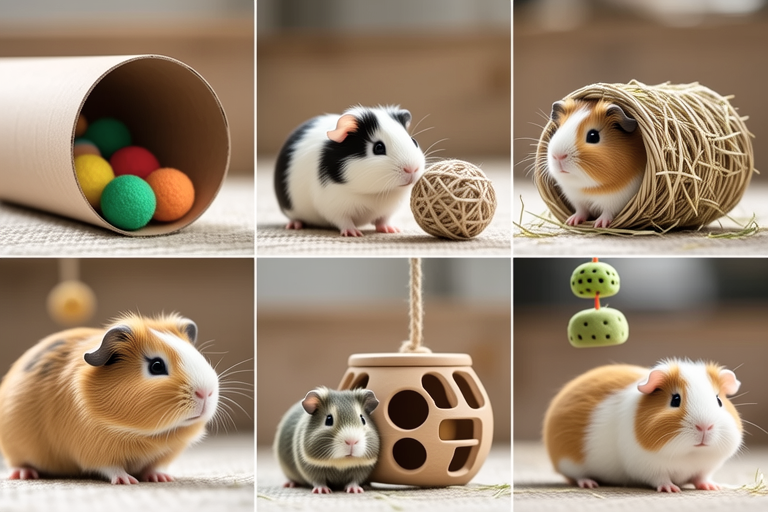
7 Creative DIY Toys for Keeping Your Guinea Pig Active and Happy
Welcome to the wonderful world of guinea pig care! These delightful creatures require more than just food and water to thrive; they need mental and physical stimulation to stay healthy and happy. Just like humans, guinea pigs can experience boredom, stress, and even obesity if they don’t have enough opportunities to exercise and explore. Providing them with stimulating toys is a great way to keep them active and entertained.
The Importance of Mental and Physical Stimulation for Guinea Pigs
Mental and physical stimulation are crucial for guinea pigs. Physically, it helps prevent obesity and strengthens their muscles. Mentally, it keeps them engaged and reduces the risk of behavioral issues. By creating a variety of DIY toys, you can ensure that your guinea pig has plenty of activities to enjoy.
1. Cardboard Tunnel System
Materials Needed:
- Cardboard boxes (various sizes)
- Scissors or box cutter
- Duct tape
- Non-toxic paint or markers (optional)
Instructions:
- Collect several cardboard boxes of different sizes. The variety will make the tunnel system more interesting for your guinea pig.
- Cut out openings in the sides of the boxes to connect them. Ensure the openings are large enough for your guinea pig to comfortably pass through.
- Tape the boxes together securely using duct tape to prevent them from collapsing when your guinea pig runs through.
- If desired, decorate the tunnels with non-toxic paint or markers to add visual appeal and further stimulate your pet’s curiosity.
Benefits:
This tunnel system provides an excellent opportunity for your guinea pig to explore and exercise. It encourages physical activity, stimulates their curiosity, and offers a sense of adventure.
2. Paper Tube Maze
Materials Needed:
- Empty paper towel or toilet paper rolls
- Glue gun or strong adhesive
- Paper clips (optional)
Instructions:
- Collect several empty paper towel or toilet paper rolls.
- Use a glue gun or strong adhesive to connect the rolls end-to-end, forming a maze-like structure. You can also use paper clips to secure the connections if preferred.
- Arrange the maze in various configurations within your guinea pig’s living space to encourage exploration.
Benefits:
The paper tube maze provides a fun and interactive environment for your guinea pig to navigate. It enhances problem-solving skills, promotes physical activity, and stimulates mental engagement.
3. Wooden Cube Puzzle
Materials Needed:
- Wooden cubes (can be purchased or made from scrap wood)
- Sandpaper (for smoothing edges)
- Paint or varnish (non-toxic, optional)
Instructions:
- Collect wooden cubes of varying sizes. If you’re making your own, cut the wood into cubes and sand down any rough edges.
- Paint or varnish the cubes if desired, ensuring the materials used are non-toxic.
- Arrange the cubes in a puzzle-like formation, allowing your guinea pig to move them around and knock them over.
Benefits:
The wooden cube puzzle encourages cognitive development and physical coordination. It also provides a tactile experience that can be soothing for your guinea pig.
4. PVC Pipe Bridge
Materials Needed:
- PVC pipes (appropriate diameter for your guinea pig)
- PVC connectors
- Duct tape or non-toxic pipe sealant
Instructions:
- Select PVC pipes of the appropriate diameter for your guinea pig to walk through comfortably. Connect the pipes using PVC connectors.
- Secure the connections with duct tape or a non-toxic pipe sealant.
- Place the bridge across different areas of your guinea pig’s living space, creating new pathways for them to explore.
Benefits:
The PVC pipe bridge offers a challenging yet enjoyable obstacle for your guinea pig. It encourages physical activity, improves balance, and provides a new perspective from which to view their surroundings.
5. Cloth Fort
Materials Needed:
- Soft fabric scraps (old towels, sheets, or blankets)
- Staple gun or sewing machine
- Non-toxic stuffing material (optional)
Instructions:
- Choose soft fabric scraps that are safe for your guinea pig to chew on. Cut the fabric into various shapes and sizes.
- Stitch or staple the pieces together to form a cozy fort. Add non-toxic stuffing material if desired to give the fort some structure.
- Place the fort in your guinea pig’s living area, allowing them to crawl inside and hide.
Benefits:
The cloth fort provides a safe and comforting space for your guinea pig to retreat to. It satisfies their natural desire to burrow and hide, offering both mental and physical stimulation.
6. Ball and Ramp Challenge
Materials Needed:
- Small, lightweight balls (plastic or rubber)
- Planks of wood or cardboard
- Glue or nails (to attach the ramp to the cage)
Instructions:
- Find small, lightweight balls that are safe for your guinea pig to play with.
- Construct ramps using planks of wood or cardboard. Attach the ramps securely to your guinea pig’s living space using glue or nails.
- Place the balls at the top of the ramp, encouraging your guinea pig to push them down to the bottom.
Benefits:
The ball and ramp challenge promotes physical activity and problem-solving skills. It also provides a fun game that can be played with your guinea pig, strengthening the bond between you and your pet.
7. Puzzle Feeder
Materials Needed:
- Small plastic containers with lids
- Holes of various sizes (cut into the containers)
- Non-toxic glue or hot glue gun
Instructions:
- Take small plastic containers with lids and cut holes of various sizes into the sides of the containers. Make sure the holes are large enough for treats but small enough to provide a challenge.
- Glue the lids back onto the containers securely.
- Fill the containers with treats and place them in your guinea pig’s living area.
Benefits:
The puzzle feeder encourages mental stimulation as your guinea pig works to retrieve treats. It also slows down eating, promoting healthier digestion.
Tips for Safe Toy Use and Regular Toy Rotation
To ensure your guinea pig enjoys these DIY toys safely, follow these guidelines:
- Supervision: Always supervise your guinea pig while they play with new toys to ensure they use them appropriately and avoid choking hazards.
- Material Safety: Use only non-toxic, pet-safe materials for all DIY projects. Avoid sharp edges, toxic paints, or adhesives.
- Regular Rotation: Rotate toys every few days to keep your guinea pig interested and engaged. This prevents boredom and ensures they continue to interact with different stimuli.
- Cleanliness: Clean toys regularly to prevent the growth of bacteria and mold. This is especially important for soft toys like the cloth fort.
By following these tips and incorporating these creative DIY toys into your guinea pig’s routine, you’ll help them lead a happier, healthier life. Remember, a mentally and physically stimulated guinea pig is a content guinea pig!
