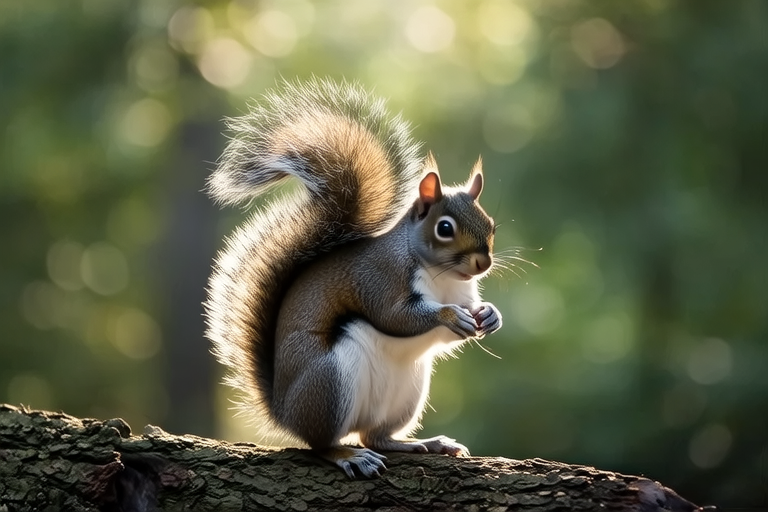
The Secret Language of Squirrels: What Their Tails Are Really Trying to Tell You
Have you ever watched a squirrel scurry across your backyard or park and wondered what it’s really up to? Beyond just being cute and acrobatic, these little creatures have a complex language of their own, much of which they communicate through their bushy tails. From signaling danger to attracting mates, a squirrel’s tail is a versatile tool that plays a crucial role in their survival and social interactions. Let’s dive into the fascinating world of squirrel communication and explore the secret language of their tails.
The Anatomy of a Squirrel Tail
Squirrels, especially those in the Sciuridae family, possess a tail that is both an extension of their spine and a vital part of their anatomy. The tail is composed of numerous vertebrae, each covered in fur, giving it its characteristic bushiness. Not only does this tail serve as a counterbalance while they leap and climb, but it also acts as a communication device, an umbrella, and even a blanket. Understanding the different ways squirrels use their tails can provide valuable insights into their lives and behaviors.
Tail Movements and Their Meanings
Just like humans use gestures to convey emotions, squirrels use their tails to communicate a range of messages. Here are some common tail movements and what they might mean:
Flagging
One of the most noticeable tail movements is flagging. When a squirrel rapidly moves its tail back and forth like a flag, it’s often a sign of alarm. This movement serves as a warning signal to other squirrels in the area. Nature enthusiasts have observed that when a predator, such as a hawk or a fox, is nearby, squirrels will start flagging their tails to alert others. This collective response can help deter predators or at least warn fellow squirrels to be more cautious.
Flicking
Flicking the tail is another common gesture. It typically indicates that a squirrel is feeling agitated or annoyed. This could be due to another squirrel encroaching on its territory or simply because something has startled it. Flicking is usually a milder form of communication compared to flagging, suggesting that the squirrel is not yet in full panic mode but is aware of potential threats.
Puffing
When a squirrel puffs out its tail, it creates a larger, fluffier appearance. This action is often used to appear bigger and more intimidating to rivals or predators. Puffing is particularly effective during confrontations with other squirrels over food or territory. By making itself look larger, a squirrel can potentially scare off a competitor without having to engage in physical conflict.
The Role of Tail Postures in Communication
In addition to movements, the posture of a squirrel’s tail also conveys important information. Here are some key tail postures and their meanings:
Flattened Tail
A flattened tail is often a sign of submission or surrender. When a squirrel feels threatened and cannot escape, it may flatten its tail against its body to appear smaller and less threatening. This posture is a clear indication that the squirrel is trying to avoid confrontation and is not prepared to fight back.
Arched Tail
An arched tail, where the tail is held high above the body, can indicate curiosity or readiness. This posture suggests that the squirrel is alert and paying attention to its surroundings. It might be observing new stimuli, such as a human or another animal, and is preparing to react accordingly. An arched tail can also signal that the squirrel is ready to take flight if necessary.
Neutral Tail
A neutral tail position, where the tail hangs loosely behind the squirrel, generally means that the animal is relaxed and comfortable in its environment. This is often seen when a squirrel is eating or grooming itself, indicating that there are no immediate threats or concerns.
Scientific Insights into Squirrel Behavior
Researchers have conducted extensive studies on squirrel behavior, providing valuable insights into their communication methods. One notable study published in the journal Animal Behaviour found that squirrels use a combination of vocalizations and tail movements to coordinate group activities, such as foraging and defense. Another study revealed that squirrels can recognize individual members of their community based on unique tail movements and vocal patterns.
These findings highlight the complexity of squirrel communication and suggest that their tails are not merely ornamental but are integral to their social structure. Scientists continue to explore the intricacies of squirrel behavior, hoping to uncover more about their cognitive abilities and social dynamics.
Observations from Nature Enthusiasts
Nature enthusiasts have long been fascinated by the behavior of squirrels and have made many interesting observations. One common observation is that squirrels often use their tails as a form of balance when running along power lines or tree branches. This helps them maintain stability and avoid falling, which is crucial for their survival in urban and forested environments.
Another observation is that squirrels frequently use their tails to shade themselves from the sun or protect themselves from rain. By spreading their tails wide, they create a canopy that shields them from harsh weather conditions. This adaptation showcases the versatility of their tails beyond mere communication.
Practical Tips for Understanding Squirrel Behavior
If you’re interested in understanding squirrel behavior in your local environment, here are some practical tips to help you interpret their tail movements and postures:
- Observe Consistently: Spend time watching squirrels regularly in your area. The more you observe, the better you’ll become at recognizing patterns and interpreting their actions.
- Note Context: Pay attention to the context in which tail movements occur. For example, flagging is often associated with alarm, so look for signs of potential threats nearby.
- Compare Observations: Compare your observations with those of other nature enthusiasts. Sharing insights can deepen your understanding and reveal new aspects of squirrel behavior.
- Be Patient: Squirrels can be unpredictable, so be patient and allow yourself time to witness different behaviors and interactions.
Conclusion
The tail of a squirrel is more than just a fluffy appendage; it’s a sophisticated communication tool that plays a vital role in their survival and social interactions. From flagging to flicking, puffing to flattening, each tail movement and posture tells a story about the squirrel’s emotional state and situational awareness. By understanding the secret language of squirrels, we gain a deeper appreciation for these remarkable creatures and the intricate world they inhabit.
Next time you see a squirrel in your backyard or park, take a moment to watch its tail. You might just catch a glimpse of its hidden language and learn something new about the fascinating world of these small but mighty animals.
