The Intriguing World of Heterometrus Spinifer: A Rainforest Marvel
Deep within the lush embrace of Southeast Asian rainforests, there exists a creature that has captivated the imagination of both scientists and nature enthusiasts alike – Heterometrus spinifer. This fascinating scorpion species is not only a testament to the remarkable biodiversity of tropical regions but also a prime example of evolutionary adaptation. Let us delve into the unique characteristics, habitat, behavior, and lesser-known facts about this enigmatic arachnid, exploring how it thrives in one of the most complex ecosystems on Earth.
Physical Traits and Spiky Features
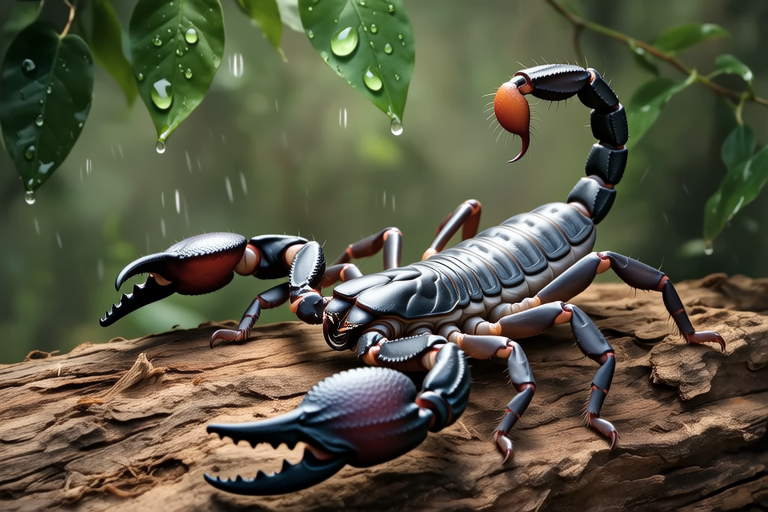
Heterometrus spinifer, commonly known as the spiny forest scorpion, is distinguished by its robust body covered with numerous sharp spines. These spines are not merely ornamental; they play a crucial role in the scorpion’s survival. The spines serve multiple purposes, including protection against predators and aiding in navigation through dense vegetation. Their presence allows the scorpion to maintain balance on uneven surfaces and provides an additional layer of defense when threatened.
Another notable feature of H. spinifer is its elongated pedipalps equipped with powerful claws. These appendages enable the scorpion to grasp prey securely and inject venom efficiently. Additionally, the scorpion possesses large pincers at the end of its tail, which can deliver potent venom if provoked. Despite being venomous, the toxicity level of H. spinifer‘s venom is relatively low compared to other scorpion species, making it less dangerous to humans.
Habitat and Adaptation to Rainforest Environments
The preferred habitat of Heterometrus spinifer is the humid, dark recesses of tropical rainforests stretching across countries like Malaysia, Thailand, Indonesia, and parts of India. These environments provide ideal conditions for the scorpion, offering ample hiding spots amidst fallen leaves, rock crevices, and tree roots. The high humidity ensures that the scorpion’s exoskeleton remains flexible and prevents dehydration.
Adaptations specific to the rainforest environment include nocturnal habits and exceptional sensory capabilities. As night falls, H. spinifer emerges from its daytime retreats to hunt for insects and small vertebrates. Its keen sense of touch, smell, and vibration detection helps locate prey even in near-total darkness. Furthermore, the scorpion’s ability to remain motionless for extended periods allows it to ambush unsuspecting victims effectively.
Behavior and Lesser-Known Facts
One intriguing aspect of Heterometrus spinifer‘s behavior is its reproductive strategy. Males engage in elaborate courtship rituals involving intricate dances before mating occurs. After successful copulation, females carry fertilized eggs internally until they hatch into miniature versions of adult scorpions called scorplings. This mode of reproduction ensures higher chances of offspring survival compared to laying eggs externally.
Another lesser-known fact about H. spinifer concerns its diet. While primarily carnivorous, these scorpions have been observed consuming plant material occasionally, suggesting some degree of omnivory. This dietary flexibility might contribute to their resilience in changing environmental conditions.
Place in the Ecosystem
In the intricate web of life within tropical rainforests, Heterometrus spinifer occupies a significant niche as both predator and prey. By controlling insect populations, it plays a vital role in maintaining ecological balance. However, it too faces predation from larger animals such as birds, reptiles, and mammals, contributing to nutrient cycling within the ecosystem.
The presence of H. spinifer also influences soil composition through its burrowing activities. As it digs tunnels and creates chambers, it aerates the soil, facilitating better water retention and root growth for plants. Consequently, this indirectly supports diverse flora communities thriving in the rainforest.
Myths and Misconceptions
Despite being scientifically studied, several myths persist regarding Heterometrus spinifer. One common misconception is that all scorpions glow under ultraviolet light due to their fluorescent cuticles. While true for many species, including H. spinifer, this characteristic serves more practical purposes than mere aesthetic appeal. Fluorescence aids in thermoregulation by allowing the scorpion to absorb more heat during nighttime hunts.
Another prevalent myth suggests that touching a scorpion will cause immediate death. In reality, while the sting of H. spinifer can be painful and cause localized swelling, fatalities are extremely rare unless the victim is highly allergic or belongs to vulnerable groups like children or elderly individuals.
Conservation Efforts
Recognizing the importance of preserving biodiversity, various organizations and governmental bodies have initiated conservation programs aimed at protecting Heterometrus spinifer and its habitat. These initiatives focus on sustainable logging practices, establishing protected areas, and promoting eco-tourism that benefits local communities without disrupting natural habitats.
Education campaigns targeting both locals and tourists aim to raise awareness about the value of rainforest ecosystems and encourage responsible behavior towards wildlife. By fostering respect and understanding, these efforts hope to ensure the continued existence of H. spinifer alongside other unique species sharing its home.
Conclusion
From its spiky armor to its nocturnal hunting prowess, Heterometrus spinifer exemplifies the wonders of evolution in action. Thriving amidst the rich tapestry of tropical rainforests, this scorpion stands as a symbol of resilience and adaptability. Through deeper exploration and appreciation of its place within the ecosystem, we gain valuable insights into our planet’s delicate balance. As stewards of nature, let us strive to protect these marvels for future generations to marvel at.
