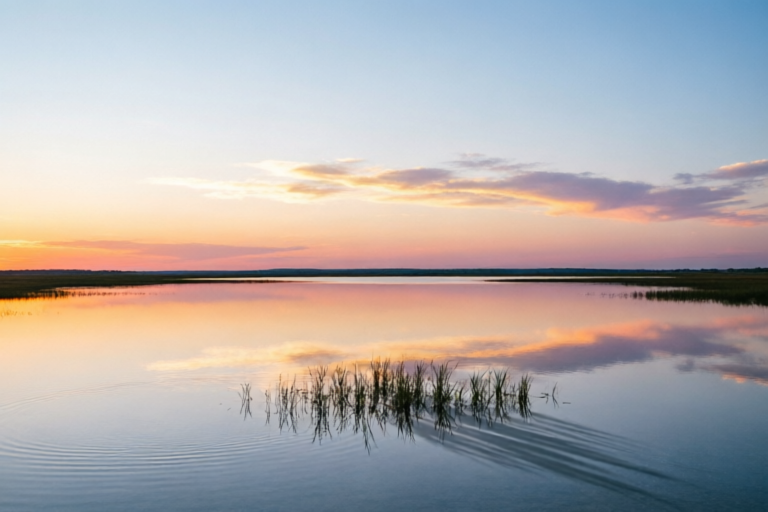
Learning & Knowledge
Why Does The Sky Change Color During Sunset Every Day
Witness Nature's Daily Light Show
## Why Does The Sky Change Color During Sunset Every Day
### Introduction: The Daily Spectacle of Changing Skies
Every evening, as the sun dips below the horizon, a transformation occurs that has captivated human imagination for millennia. From the deep blues and purples of early twilight to the fiery oranges and crimson reds that define the golden hour, the sky becomes a living canvas. This daily spectacle is not merely a poetic occurrence but a predictable interaction between sunlight and the Earth’s atmosphere. While we often take this visual feast for granted, understanding the mechanics behind it reveals a profound intersection of art and hard science. This article delves into the physics governing this event, moving beyond mere observation to explain the complex optical processes that turn a white star into a red jewel in the sky.
For centuries, philosophers pondered the sky’s color, but modern physics provides concrete answers. The changing hues are dictated by how light behaves when it encounters matter. By unraveling the mystery of sunset colors, we gain a deeper appreciation for our place in the solar system. We see not just beauty, but the fundamental properties of light and air working in harmony. Whether you are a photographer chasing the perfect shot or a curious observer finding peace in nature, knowing the science enhances the experience. In the following sections, we will dissect the journey of a photon from the sun to your eyes, exploring the invisible rules that dictate the colors we see at dusk.
### Understanding the Spectrum of Sunlight
To comprehend why the sky changes color, we must first understand what we are seeing. Most people perceive sunlight as simply white, yet this is an illusion created by the brain. Sunlight is actually a mixture of all visible colors of the electromagnetic spectrum bundled together. When this white light passes through a prism, it separates into the familiar rainbow of colors: red, orange, yellow, green, blue, indigo, and violet (ROYGBIV).
Each of these colors corresponds to a specific wavelength. Violet light has the shortest wavelength in the visible spectrum, measuring approximately 380 to 450 nanometers, while red light has the longest, ranging from 620 to 750 nanometers. All other colors fall somewhere in between. Before this light ever touches the Earth, it travels through the vacuum of space, maintaining its full spectral integrity because there is nothing to interfere with its path.
However, once this multi-colored beam enters the Earth’s atmosphere, the story changes. The atmosphere is not empty; it is filled with gases, primarily nitrogen and oxygen, along with water vapor and suspended particles. These components interact differently with different wavelengths of light. The fact that the sky appears blue during the day and red at sunset is a direct result of how these various wavelengths interact with the molecules present in the air. This initial breakdown of light sets the stage for the scattering phenomena that create the spectacular sunsets we witness daily. Without a spectrum to scatter, there would be no variety of colors, just a washed-out or monochromatic view of the world.
### The Mechanism of Rayleigh Scattering
The primary reason for the shifting sky colors lies in a physical phenomenon known as Rayleigh scattering. Named after the British physicist Lord Rayleigh who first described it in the late 19th century, this effect occurs when light interacts with particles that are much smaller than the wavelength of the light itself, such as gas molecules.
During the day, when the sun is high overhead, sunlight passes through a relatively thin layer of atmosphere. As it travels, the shorter wavelengths (blue and violet) are scattered far more efficiently by the nitrogen and oxygen molecules than the longer wavelengths (red and yellow). In fact, blue light is scattered roughly ten times more than red light. This scattered blue light reaches our eyes from all directions, making the entire dome of the sky appear blue. Since our eyes are more sensitive to blue than violet, we perceive the sky as blue rather than purple.
But why does this shift happen at sunset? As the sun descends, the angle of incidence changes drastically. The light no longer takes a straight vertical path but travels through a much thicker slice of the atmosphere to reach the observer. This increased thickness acts as a filter. Because the blue light has already been scattered out of the direct path long before the light reaches the horizon, what remains is the longer wavelength light. However, Rayleigh scattering alone explains the blue daytime sky and the general reddening of the sun. To fully understand the dramatic palette of a sunset, we must also consider the distance the light must travel.
### Atmospheric Path Length at Dusk
The geometry of the Earth’s rotation plays a crucial role in determining the intensity of sunset colors. Imagine the Earth as a sphere covered in an atmosphere similar to the skin of an onion. At noon, standing directly under the sun, you pierce only the outermost layers of this skin to get to your eyes. However, at sunset, the sun is near the horizon, and its light must traverse almost the entire width of the atmosphere. This path can be forty times longer than at noon.
Think of it as walking through fog. If you walk through a little fog in front of you, visibility remains okay. But if you walk through miles of fog, eventually the path ahead disappears entirely. Similarly, as sunlight travels this extended path at dusk, almost all of the blue and violet light is scattered away completely before it reaches the observer. What filters through to the surface is predominantly red, orange, and some yellow. This filtering process allows the longer wavelengths to dominate the view, bathing the world in warm, glowing tones.
This geometric explanation accounts for the basic transition from blue to red. However, the specific shades vary wildly from night to night. Sometimes the sky glows with soft pastels, and other times it burns with violent magentas and crimsons. This variability is caused by external factors interacting with the light during its long journey through the lower atmosphere. These factors modify the scattering process, creating unique displays that rarely occur twice the same way.
### External Factors Influencing Colors
While the physics of scattering establishes the foundation for sunset colors, real-world conditions act as modifiers. The presence of particulates in the atmosphere is the main variable that distinguishes a dull grayish evening from a spectacular fireworks display of color. Scientists refer to these small particles as aerosols, which include dust, pollen, smoke, pollution, and sea salt.
When large particles are present, they cause a different type of scattering known as Mie scattering. Unlike Rayleigh scattering, which affects short wavelengths, Mie scattering affects all wavelengths somewhat equally, often resulting in a white or gray appearance. However, if these particles are mixed with the gas molecules, they can enhance the scattering of light, particularly at the edges of clouds or near the sun. For instance, volcanic eruptions send massive amounts of sulfur dioxide into the stratosphere, which converts into sulfuric acid droplets. These droplets are excellent at scattering light. History records vividly illustrate this; after the eruption of Mount Tambora in 1815 and Mount Krakatoa in 1883, sunsets around the world became incredibly red and intense for years. The additional particles scattered even more blue light, allowing only the deepest reds to penetrate to the ground.
Cloud cover also plays a significant role. Thin cirrus clouds at high altitudes catch the sunlight before it hits the denser air below. They act as screens that reflect the filtered light back toward the observer. Depending on their composition and altitude, clouds can amplify colors, turning deep pinks into bright scarlets. Conversely, heavy, low-hanging stratus clouds block the light entirely, resulting in a flat, gray, or dark gray end to the day. Humidity levels also influence the perception of color. Moisture-rich air can intensify colors but can also create a hazier effect if pollution levels are high. Urban environments, rich in smog, often produce dramatic sunsets due to the abundance of nitrous oxides and carbon particles that absorb and re-emit light in unique patterns. Thus, the weather report is essentially a forecast for the upcoming artistic performance of the sky.
### Photography Tips: Capturing the Natural Masterpiece
Understanding the science of sunsets allows enthusiasts to better capture these moments visually. Photographers know that the best light is found not just when the sun is visible, but during the "golden hour," roughly twenty minutes after sunrise or before sunset. By the time the sun actually touches the horizon, the scene may darken rapidly. Digital sensors handle dynamic range poorly compared to the human eye, often struggling to capture both the bright sky and the dark foreground details simultaneously.
Using a tripod is essential for sharp images during twilight, as shutter speeds increase in low light. Composing shots with silhouettes helps emphasize the colors by removing distracting details from the landscape, forcing the viewer to focus on the gradient of the sky. Filters, such as graduated neutral density filters, can balance the exposure between the bright sky and the darker earth. Furthermore, knowing when to shoot can improve results. Days following a rainstorm usually offer clearer air, leading to crisper blues preceding the sunset. Conversely, hazy days may yield softer, pastel palettes. By aligning technical photography skills with the understanding of atmospheric conditions, observers can document these fleeting moments accurately.
### The Psychological Impact of Twilight
Beyond the physics, the color change holds profound psychological significance. Throughout history, the dimming of the sky has signaled rest and reflection for humanity. The biological clock is affected by the reduction in blue light as the sun sets, triggering the release of melatonin, the hormone that prepares the body for sleep. Evolutionarily, the red light signals danger is lessened compared to the glare of the midday sun. Watching the sky change color provides a sense of closure to the day, reducing stress and anxiety associated with waking hours.
Many cultures incorporate sunset rituals into their traditions, recognizing the moment as sacred. In terms of mental health, the simple act of pausing to watch the sky change serves as a mindfulness exercise. It grounds the observer in the present moment, acknowledging the scale of the universe versus individual concerns. The transient nature of the colors—that they exist for only a few fleeting minutes—echoes the Japanese philosophy of wabi-sabi, finding beauty in impermanence. Therefore, appreciating the sunset is not just an intellectual exercise in physics but an emotional experience that connects us to the rhythm of the planet.
### Conclusion: A Natural Optical Masterpiece
In summary, the question of why the sky changes color during sunset every day is answered by a sophisticated interplay of optics, geometry, and atmospheric chemistry. We have traced the path of sunlight from the vacuum of space, through the selective filtering of the atmosphere, to the final reception by our eyes. We learned that the dominance of red and orange hues is a result of the increased path length light travels, causing shorter blue wavelengths to be scattered away via Rayleigh scattering. We also discovered that the specific nuances of color depend heavily on the presence of dust, pollutants, and clouds.
This daily event is more than just a weather pattern; it is a natural optical masterpiece that occurs billions of times over Earth’s history. It reminds us that the world around us operates on consistent physical laws that produce spontaneous beauty. While technology continues to advance, there is no substitute for witnessing this ancient dance of photons and air molecules. Whether the sky turns gold, purple, or deep crimson, the underlying science remains constant. By understanding these principles, we deepen our respect for the natural world. So, the next time you find yourself outside as the sun begins its descent, pause for a moment. Look up, observe the gradients, and appreciate the physics painting the canvas above your head. It is a reminder that even in our modern, urbanized lives, the natural wonders of the universe remain accessible, available to anyone willing to take the time to look.
Comments

LazyViewer
Nice! Going to sit by the window tonight and watch.
👍 28👎 0

ArtStudent
Used to paint these skies without knowing the theory. Knowledge adds to the beauty tbh.
👍 21👎 0

StarGazer22
Quick Q - does altitude change anything? Living at sea level vs mountains?
👍 6👎 0

CityGirl_NY
Pollution makes our sunsets wilder here, honestly. Hope I got that part right.
👍 0👎 0

PhysicsGeek
Rayleigh scattering always confused me but this breakdown helped. Thx!
👍 29👎 0

SunsetChaser
Great read. Makes me appreciate watching the daily show a bit more.
👍 22👎 0

LightBender99
Huh, never realized the path length made such a difference. Always thought clouds were the main culprit!
👍 28👎 0