Travel & Environment
Why does the sky change colors during a sunset?
Capturing the Cosmos One Palette at a Time
# Why Does the Sky Change Colors During a Sunset?
## Introduction: Witnessing the Evening Sky
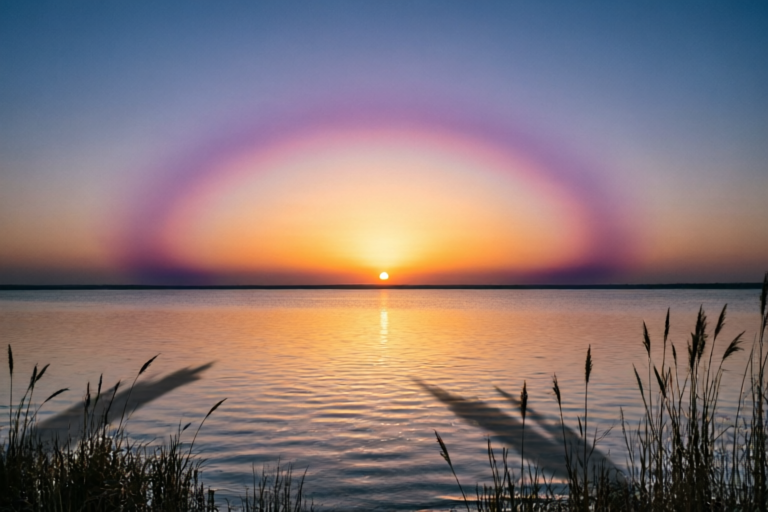
There is a universal magic in witnessing the day's end. For countless generations across every culture and continent, the sunset has been a source of wonder, poetry, and quiet reflection. Whether you are standing on a windswept beach in Hawaii, overlooking a sprawling metropolis from a skyscraper window, or gazing out over a quiet rural countryside, the transformation of the sky remains one of nature's most spectacular shows. As the sun descends toward the horizon, the familiar blue canvas of the afternoon shifts, painting the world in shades of tangerine, magenta, violet, and deep crimson.
While many of us appreciate the aesthetic beauty of this daily phenomenon, few pause to ask the fundamental question: Why does the sky change colors during a sunset? It is a query that bridges the gap between simple observation and complex astrophysics. We instinctively understand that the sun is going down, but we rarely consider the invisible journey its light takes before it reaches our eyes. The changing palette is not merely an illusion created by the fading light; it is a precise scientific event governed by the behavior of light waves interacting with the particles suspended in Earth's atmosphere.
This exploration delves deep into the mechanics of light and atmosphere. By understanding the science behind the spectacle, we do not diminish the beauty of the sunset; rather, we enhance our appreciation for it. Knowing the intricate dance of photons allows us to see the world with fresh eyes. In this comprehensive guide, we will dissect the core mechanisms at play, analyze the geometric factors involved, and examine how environmental variables create such variety in the evening display. From the molecular level of air to the macroscopic scale of weather systems, every element contributes to the masterpiece above us.
Prepare yourself for a journey into optics, meteorology, and the hidden physics that paint our evenings. Whether you are a photography enthusiast looking to master the golden hour, a student of science seeking clarity on optical phenomena, or simply a curious soul enamored by the heavens, understanding the "why" transforms a casual glance into an awe-inspiring experience.
## The Core Mechanism: Rayleigh Scattering
### Understanding the Nature of Light
To comprehend why sunsets change color, one must first understand what sunlight actually is. Often referred to as "white" light, sunlight is actually a mixture of all the visible colors of the spectrum. When Isaac Newton passed sunlight through a prism in the seventeenth century, he demonstrated that this white light could be separated into the rainbow colors: red, orange, yellow, green, blue, indigo, and violet. Each of these colors corresponds to a specific wavelength of electromagnetic radiation. Red light has the longest wavelengths in the visible spectrum, roughly around 700 nanometers, while violet light has the shortest, around 400 nanometers.
When sunlight travels through space, it moves freely until it encounters something solid or liquid. On Earth, the first obstacle sunlight meets is our atmosphere—a thick blanket of gases, primarily nitrogen and oxygen, along with varying amounts of water vapor, carbon dioxide, and microscopic solid particles. As light passes through this gaseous medium, it interacts with the atoms and molecules present. This interaction causes the light to bounce off or scatter in various directions. This process is known as scattering.
### The Physics of Rayleigh Scattering
The specific type of scattering that dominates the daytime sky is called Rayleigh scattering, named after Lord Rayleigh who explained the phenomenon in the 19th century. This form of scattering occurs when light interacts with particles that are much smaller than the wavelength of the light itself, such as individual nitrogen and oxygen molecules. The key principle of Rayleigh scattering is that it is highly dependent on wavelength. Specifically, shorter wavelengths scatter much more easily than longer wavelengths.
Mathematically, the intensity of scattered light is inversely proportional to the fourth power of the wavelength (I ∝ 1/λ⁴). This means that because blue and violet light have significantly shorter wavelengths compared to red and yellow light, they are scattered roughly ten times more intensely. Consequently, when you look up at the sky during the middle of the day, you see blue light coming from all directions. Although violet light is scattered even more than blue, the human eye is less sensitive to violet, and some of it is absorbed by the upper atmosphere, resulting in the perception of a clear blue dome overhead.
It is this differential scattering that sets the stage for the sunset. If all light scattered equally, the sky would remain white throughout the day, regardless of the sun's position. But because blue light bounces away so easily, it gets removed from the direct beam of sunlight traveling toward the ground. As we approach sunset, this mechanism becomes more extreme, fundamentally altering the color of the direct sunlight and the surrounding sky.
### From Daylight to Twilight
During midday, the sun is near its zenith (directly overhead). The distance sunlight must travel through the atmosphere to reach an observer is relatively short—approximately 10 kilometers depending on altitude. In this short distance, only a fraction of the blue light is scattered out of the beam. This allows the remaining light to appear white or slightly yellowish to us. The sky around the sun looks bright and bluish because that blue light has been scattered sideways into our line of sight.
As the sun begins its descent, the angle of incidence changes. The path length through the atmosphere increases drastically. By the time the sun touches the horizon, the sunlight must traverse an atmospheric path roughly 30 to 40 times longer than it did at noon. This dramatic increase in distance forces the light to interact with vastly more atmospheric molecules. In this extended journey, almost all the short-wavelength blue and violet light is completely scattered away before it can reach your eyes. What remains of the direct sunlight is predominantly the longer wavelengths—reds, oranges, and yellows. These colors survive the long passage through the atmosphere and strike your retina, painting the sun and the clouds immediately around it in warm tones.
This explains the primary color shift. However, the story does not end there. The scattering of blue light away from the direct beam doesn't mean it disappears forever; it lights up the eastern part of the sky opposite the setting sun. As the sun sets, the scattering of blue light creates the famous "blue hour," where the western sky glows with the reddish hues of the sun, while the eastern sky retains a cooler, deeper blue tone. This interplay creates the gradient of colors characteristic of twilight.
## Impact of Solar Position and Distance
### Geometric Implications of the Sun's Angle
The position of the sun is the most critical factor determining the intensity and variety of sunset colors. It is not merely about the sun being lower; it is about the geometry of the Earth relative to the observer. Because the Earth is spherical, the curvature dictates how much air mass lies between the observer and the sun. At sunset, the observer is essentially looking tangent to the curve of the Earth, cutting through the thickest part of the atmospheric layer.
If we were to calculate the "airmass"—a measure of the amount of atmosphere a ray of light passes through—we find that at sunrise or sunset, the airmass is at its maximum. This geometric reality ensures that even subtle components of the atmosphere have a significant effect on the light reaching the ground. The longer the path, the greater the selective filtering of the spectrum. This is why a sunset on the equator can differ from a sunset at the poles, simply due to the angle at which the atmosphere is traversed.
Furthermore, the tilt of the Earth on its axis influences the duration of these transitions. In higher latitudes, during summer months, the sun does not set steeply but skims along the horizon. This results in a prolonged twilight period where the light travels through immense distances, often creating vibrant sunsets that last for hours. Conversely, in polar winter regions, the sun may never rise, or dip only briefly below the horizon, leading to constant, dim red light rather than distinct day-night cycles.
### Seasonal and Latitudinal Variations
The seasons play a pivotal role in shaping sunset colors. In spring and autumn, the angle of the sun's entry into the atmosphere tends to create particularly vivid displays. This is partly due to the alignment of global weather patterns, which vary with seasons. Additionally, the temperature of the air affects air density. Cooler air is denser, which can alter the refractive index slightly, affecting how light bends and scatters.
For observers at sea level versus those at high altitudes, the experience differs significantly. At high altitudes, such as on mountain peaks, the atmosphere is thinner above the observer. There is less total air mass for the sunlight to pass through, even at sunset. This results in cleaner, crisper sunsets where the colors may appear less intense but more distinct against a darker background. The reduction in atmospheric interference also allows for a sharper view of celestial objects. Conversely, someone in a dense valley might see a softer, more diffused sunset due to the extra layers of mist and dust trapped in the local topography.
### The Role of Refraction
Another consequence of the sun's low position is atmospheric refraction. As light enters the atmosphere from the vacuum of space, it slows down and bends. This bending effect causes the sun to appear slightly higher in the sky than it physically is when it is near the horizon. Without this atmospheric lensing effect, we would see the sun set earlier. Refraction also helps spread the colors. The differential refraction—where different wavelengths bend by different amounts—can sometimes cause the bottom edge of the sun to appear redder than the top edge, contributing to the overall chromatic separation seen in a sunset. This subtle distortion enhances the visual drama, ensuring that no two sunsets are ever exactly alike.
## Environmental Factors and Color Variations
### Particulate Matter and Pollution
While the physics of Rayleigh scattering explains the baseline colors, the actual visual impact is heavily modified by the environment. Airborne particles, collectively known as aerosols, play a massive role in coloring the sky. Small particles like sulfur dioxide, which often comes from volcanoes or industrial emissions, can lead to exceptionally bright and fiery sunsets. These particles interact with light differently than gas molecules. While Rayleigh scattering favors short wavelengths, larger particles cause Mie scattering, which scatters all wavelengths more equally but with a strong forward directionality.
If the air is filled with pollutants or fine dust, the blue light is scattered away very efficiently, allowing even more red and orange to dominate. This is why urban environments sometimes experience stunning, though smoggy-looking, sunsets. The contrast between the darkened city skyline and the glowing, filtered sky creates a surreal landscape. However, if the particle concentration is too high, such as during severe wildfire events, the light can be blocked entirely, turning the sky black or grey, obscuring the sun's disc completely. The delicate balance of particulate density determines whether the result is a brilliant display or a washed-out haze.
### Humidity and Cloud Forms
Water vapor and cloud formations are perhaps the most dynamic canvases for sunset colors. Low-level clouds act as screens upon which the sky paints its final masterpiece. Different cloud types reflect light differently. Cirrus clouds, composed of ice crystals high in the atmosphere, tend to catch the sunlight first as the sun drops below the horizon. This phenomenon, known as alpenglow, can illuminate the tops of these wispy clouds in pinks and purples for a significant time after the sun has disappeared.
Stratus clouds, which are lower and thicker, absorb more light and tend to create darker, more muted silhouettes. Nimbostratus or cumulus clouds offer dramatic backlit effects. Water droplets in clouds undergo Mie scattering, which scatters light in the same way for all colors, making the clouds themselves appear white or grey when lit from the side. However, when backlit by the setting sun, the water droplets scatter the transmitted red and orange light towards the observer, making the cloud bottoms glow with intense color. Rainbows, formed by raindrops shortly before or after sunset, are another testament to the complexity of water-light interactions, relying on both refraction and reflection.
### Meteorological Phenomena and Afterglow
One of the most beautiful outcomes of sunset physics is the afterglow, which occurs after the sun has dipped below the horizon. This happens because the upper atmosphere continues to be illuminated by sunlight that bypasses the observer. As the Earth rotates, the shadow line creeps across the surface, but light reflects off the high clouds or dust layers remaining aloft, casting a secondary glow eastward. Sometimes, this results in a band of orange or purple light arching across the entire hemisphere.
Volcanic eruptions can enhance this effect globally. Ash particles ejected into the stratosphere stay airborne for years, reflecting sunlight over large areas. Historical records show that major eruptions, such as Mount Tambora in 1815, led to "blood-red" sunsets recorded in paintings by artists like J.M.W. Turner worldwide for several years. Similarly, forest fires can inject soot into the upper atmosphere, tinting the sky with unusual shades. This demonstrates that while the base physics are constant, the "ingredients" mixed into the atmosphere determine the unique recipe of any given day.
Climate change is also altering these patterns. Rising temperatures affect humidity levels and wind patterns, which in turn influence the distribution of aerosols. Some studies suggest that increasing moisture in the atmosphere might lead to more vibrant reds due to increased Mie scattering potential, while other factors like reduced particulate pollution in developed nations might make skies cleaner but potentially less colorful. Understanding these environmental feedback loops adds a layer of urgency and importance to studying the night sky.
## Conclusion: The Science Behind Beauty
### Recap of Scientific Principles
In conclusion, the shifting colors of a sunset are a testament to the elegant laws of physics governing our universe. The primary driver is Rayleigh scattering, where shorter blue wavelengths are preferentially scattered by atmospheric molecules, leaving longer red and orange wavelengths to reach our eyes during the long atmospheric journey of dusk. The solar position dictates the path length, amplifying this effect, while environmental factors like aerosols, humidity, and cloud cover act as modifiers, creating the infinite variety of palettes we witness. Refraction and Mie scattering further refine the image, ensuring that the sunset is a multidimensional optical event rather than a simple dimming of light.
### The Value of Understanding Nature
Why does this knowledge matter? Beyond the intellectual satisfaction of knowing the mechanics, understanding the science deepens our connection to the natural world. When we realize that every sunset is a unique combination of planetary geometry, molecular physics, and local ecology, we recognize the preciousness of the moment. It reminds us that we live on a fragile planet shielded by a thin veil of gases that protects us from radiation yet collaborates with light to create beauty. This appreciation can foster a desire to protect the environment, as pollution that alters these delicate scattering properties threatens the natural harmony we enjoy.
### Looking Forward
As technology advances, our ability to capture and analyze these phenomena grows. Spectrometers on satellites now map atmospheric scattering globally, helping scientists track climate indicators through the analysis of sunset light. Yet, the ultimate sensor remains human. Every time we stop to watch the sky darken, we participate in an ancient ritual of observation. Whether through a camera lens or a pair of eyes, the goal remains the same: to witness the collision of starlight and atmosphere.
Next time you witness a breathtaking evening sky, remember the billions of collisions occurring within that air column. Remember that the red you see is the light that survived a journey through the deep ocean of air. Let the science fuel your sense of wonder. The sunset is not just a trick of the light; it is a fundamental expression of the laws of nature in action. And as long as we have an atmosphere and a sun, this daily miracle will continue to unfold, inviting us to look up and marvel at the science of beauty.
***
### Frequently Asked Questions About Sunset Colors
#### Q: Can we see the same sunset colors everywhere on Earth?
A: No. Sunset colors vary significantly based on latitude, season, altitude, and local weather. Observers in the tropics see steeper sunsets, while those in polar regions see slanted, prolonged ones. Local pollution and dust also dictate the specific hue.
#### Q: Why do some sunsets look green?
A: Rarely, a "green flash" can occur just as the sun dips below the horizon. This is caused by refraction and dispersion, separating the light into colors at the very edge of the solar disc. It typically lasts only a second or two.
#### Q: Do clouds always make sunsets brighter?
A: Generally, yes. Clouds reflect and scatter the colored light that would otherwise pass into space. However, very thick storm clouds can block the light entirely, resulting in a dimmer sunset. High, thin clouds often create the most dramatic displays.
#### Q: How does light pollution affect sunset viewing?
A: Excessive artificial light can wash out the twilight colors, reducing contrast and making it difficult to perceive the subtle gradients of purple and blue that signal the end of the day. Dark sky preserves reduce this effect.
#### Q: Why is the sky purple after sunset?
A: The mix of residual red light from the setting sun and blue light from the overhead scattering creates purple. This is most prominent in the blue hour phase after the sun has fully set.
Comments

BlueSkyBlue
also humidity really changes it, seen crazy oranges when it rained earlier today
👍 27👎 0

QuickReader
mind blown rn.
👍 5👎 0
PhysicsFan
wait, so sunrise works the same way right? or is it totally different?
👍 21👎 0

EveningWalks
i try to watch from my porch every day. best part of my routine definitely.
👍 1👎 0

RainyDayRick
does pollution make the colors pop more or duller? noticed a lot more deep red lately here.
👍 1👎 0

CuriousGeorge88
so basically the air filters out the blue stuff first? that makes sense though.
👍 24👎 0

SkyDweller
never knew this! i always just stopped to look but didnt know why it happened.
👍 10👎 0