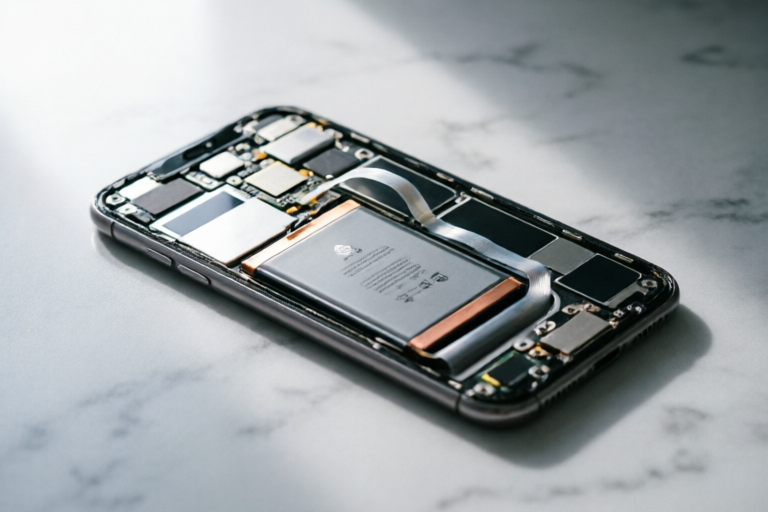
How Does a Smartphone Battery Work?
Powering Your Device: Understanding Smartphone Batteries
Introduction to Smartphone Batteries
Smartphone batteries are crucial components that determine the usability and convenience of mobile devices. They provide the necessary energy to power all the functions of a smartphone, from basic calls and texts to advanced features like photography and gaming. Over the years, battery technology has evolved significantly, leading to more efficient, longer-lasting, and safer batteries.
Brief Overview of Smartphone Batteries
The primary role of a smartphone battery is to store electrical energy, which can be converted into various forms of energy (e.g., light, sound, heat) to power the device. Without a reliable battery, smartphones would not be nearly as functional or portable as they are today.
Evolution of Battery Technology in Smartphones
The first generation of mobile phones used nickel-cadmium (NiCd) batteries, which were bulky and had memory effects. Later, nickel-metal hydride (NiMH) batteries offered better performance but still lacked efficiency. The introduction of lithium-ion (Li-ion) batteries marked a significant advancement, providing higher energy density, lighter weight, and longer lifespans. Today, Li-ion batteries remain the standard, with ongoing improvements in technology.
Types of Smartphone Batteries
Lithium-Ion (Li-ion) Batteries
Li-ion batteries are the most commonly used type in modern smartphones. They consist of a cathode, an anode, and an electrolyte. The cathode is typically made of lithium cobalt oxide, while the anode is usually graphite. During charging, lithium ions move from the cathode to the anode, and during discharging, they move back. This process allows the battery to store and release energy efficiently.
Advantages of Li-ion batteries include high energy density, long cycle life, and low self-discharge rates. However, they do have some drawbacks, such as sensitivity to overcharging and overheating. Despite these challenges, Li-ion batteries are widely preferred due to their superior performance compared to other battery types.
Other Types of Batteries
While Li-ion batteries dominate the market, there are other types of batteries used in smartphones, such as lithium-polymer (Li-Po). Li-Po batteries offer similar advantages to Li-ion but with a few differences. They are more flexible in design, allowing for thinner and more compact batteries. Li-Po batteries also tend to have a slightly higher energy density than Li-ion batteries.
Other less common types of batteries include nickel-cadmium (NiCd), nickel-metal hydride (NiMH), and lead-acid batteries. These older technologies are rarely used in modern smartphones due to their lower efficiency and environmental concerns.
How Smartphone Batteries Function
Basic Principles of Electrochemical Reactions
At its core, a smartphone battery operates through electrochemical reactions. In a Li-ion battery, these reactions involve the movement of lithium ions between the cathode and the anode. When the battery is charging, lithium ions flow from the cathode to the anode, where they are stored. During discharging, the ions move back to the cathode, releasing energy in the process.
Charging Process
The charging process begins when you plug your smartphone into a charger. The charger converts alternating current (AC) from the wall outlet into direct current (DC), which is then fed into the battery. Inside the battery, the DC current causes the lithium ions to move from the cathode to the anode, storing electrical energy. This process continues until the battery is fully charged.
Discharging Process
When you use your smartphone, the battery discharges by moving lithium ions from the anode to the cathode. As the ions move, electrons flow through the external circuit, powering the device. This process continues until the battery is depleted, at which point it needs to be recharged.
Factors Affecting Battery Life
Usage Patterns
The way you use your smartphone can significantly impact its battery life. Intensive activities like gaming, video streaming, and GPS navigation consume more power than simple tasks like browsing or texting. Additionally, screen brightness, background apps, and Bluetooth connectivity can also drain the battery faster. To extend battery life, it's essential to minimize power-hungry activities and close unnecessary apps.
Environmental Factors
Temperature and humidity play important roles in battery performance. Extreme temperatures, both hot and cold, can degrade battery capacity and shorten its overall lifespan. It's recommended to keep your smartphone in moderate temperatures, ideally between 0°C and 35°C (32°F to 95°F). Humidity can also affect battery performance, so it's best to avoid exposing your device to excessive moisture.
Software Updates and Power Management Settings
Regular software updates often include optimizations that improve battery efficiency. Manufacturers frequently release patches that enhance power management and reduce energy consumption. Additionally, adjusting power-saving settings can help extend battery life. Features like adaptive brightness, battery saver mode, and disabling background data can make a noticeable difference in how long your battery lasts.
Battery Management Systems (BMS)
Role of BMS
A Battery Management System (BMS) is a critical component in modern smartphones. Its primary role is to protect the battery from damage caused by overcharging, overdischarging, or overheating. The BMS continuously monitors the battery's state of charge, temperature, and voltage, ensuring optimal performance and safety.
Monitoring and Regulation
The BMS constantly checks the battery's charge level and adjusts the charging rate accordingly. If the battery reaches full capacity, the BMS will slow down or stop the charging process to prevent overcharging. Similarly, if the battery gets too hot or cold, the BMS will take action to cool or warm the battery, maintaining safe operating conditions.
Safety Features and Failure Modes
\nIn addition to monitoring and regulation, the BMS includes several safety features to prevent catastrophic failures. For example, if the battery voltage drops below a certain threshold, the BMS will cut off power to prevent further discharge. Some BMS systems also incorporate fail-safes that trigger when the battery is in danger of overheating or short-circuiting, helping to prevent fires or explosions.
Conclusion and Future Trends
Summary of Key Points
This article has explored the fundamental aspects of smartphone batteries, including their types, functions, and the factors that affect their performance. We've learned about the evolution of battery technology, the importance of proper usage and environmental conditions, and the role of battery management systems in protecting the battery.
Emerging Technologies
As we look to the future, new battery technologies are on the horizon. One promising development is solid-state batteries, which promise even higher energy densities and improved safety compared to traditional Li-ion batteries. Other advancements, such as graphene-based batteries and sodium-ion batteries, could further revolutionize the way we power our devices.
Tips for Extending Battery Life
To maximize the lifespan of your smartphone's battery, follow these practical tips:
- Use the original charger and cable provided by the manufacturer.
- Avoid extreme temperatures; store your phone in a cool, dry place.
- Enable power-saving modes and disable unnecessary background processes.
- Update your operating system regularly to benefit from power optimizations.
- Consider using a case that provides thermal protection.
By adopting these practices, you can ensure your smartphone remains functional and efficient for a longer period.
Comments

Thanks for this! I always leave my phone plugged in overnight. Does that really hurt the battery?

Is there a way to extend battery life besides reducing screen brightness?

Solid-state batteries sound promising. Hope they become mainstream soon!
Interesting! I thought all smartphone batteries were the same. This explains why some last longer than others.
Great breakdown on how batteries work. I'm curious though, what's the difference between overcharging and topping off?

I've noticed my battery life drops faster in winter. Is it really just the cold weather affecting it?

Never knew this! So the Li-Po batteries are more flexible because of the solid electrolyte. Makes sense now.
Wow, I always wondered why my phone gets so hot when charging! Thanks for explaining the BMS role in keeping it safe.