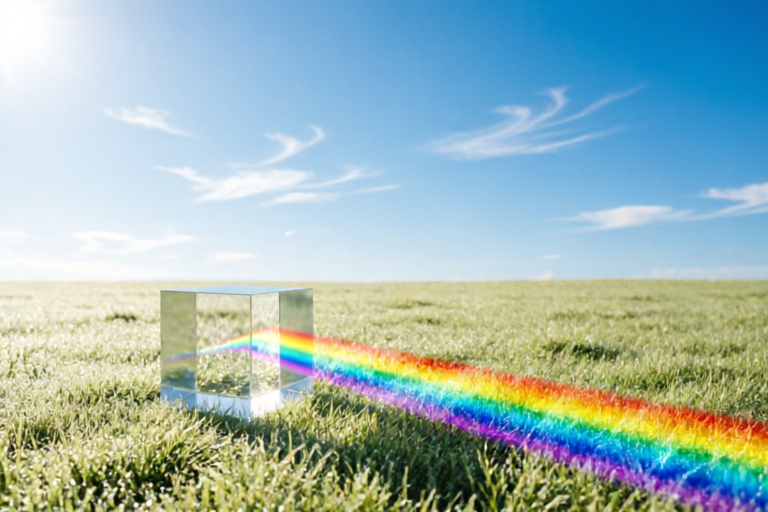
What Causes the Sky to Appear Blue?
Understanding the Science Behind the Blue Sky
1. Introduction to the Blue Sky Phenomenon
The sky appears blue due to a combination of factors involving sunlight, Earth's atmosphere, and the way light interacts with air molecules. Understanding this phenomenon not only satisfies our curiosity but also helps us appreciate the beauty of nature. This knowledge can be applied in various fields, from meteorology to environmental science.
2. The Role of Sunlight and Atmosphere
Sunlight Composition: Sunlight consists of all colors of the visible spectrum, ranging from red to violet. Each color corresponds to a different wavelength of light. Shorter wavelengths, such as blue and violet, have higher frequencies and shorter wavelengths compared to longer wavelengths like red.
Interaction Between Sunlight and Atmosphere: When sunlight enters Earth's atmosphere, it collides with gas molecules, such as nitrogen and oxygen. These collisions cause the light to scatter in different directions. The amount of scattering depends on the wavelength of the light.
Scattering of Light: Shorter wavelengths, particularly blue and violet, are scattered more efficiently than longer wavelengths like red and yellow. This is because shorter wavelengths have more energy and are more likely to interact with the gas molecules in the atmosphere.
3. Rayleigh Scattering: The Key Mechanism
Detailed Explanation: Rayleigh scattering occurs when light waves pass through particles much smaller than their wavelength. In the case of Earth's atmosphere, gas molecules are significantly smaller than the wavelengths of visible light. As sunlight passes through the atmosphere, these molecules scatter the shorter wavelengths of light, such as blue and violet, more effectively than the longer wavelengths.
Why Blue Scatters More: While both blue and violet light scatter more than other colors, our eyes are more sensitive to blue light. Additionally, the Earth's atmosphere absorbs some of the violet light, making the sky appear predominantly blue.
Historical Context: Lord John William Strutt, known as Lord Rayleigh, first described this phenomenon in the late 19th century. His work laid the foundation for understanding how light interacts with particles in the atmosphere.
4. Atmospheric Composition and Its Impact
Overview of Gases: Earth's atmosphere is composed primarily of nitrogen (78%) and oxygen (21%), with small amounts of argon, carbon dioxide, and water vapor. These gases play a crucial role in the scattering of light.
Different Atmospheric Conditions: Various atmospheric conditions can affect the appearance of the sky. For example, during clear days, the sky appears a bright blue due to the efficient scattering of blue light. However, on hazy or polluted days, the sky may appear gray or white as larger particles in the atmosphere scatter light differently.
Factors Affecting Sky Color: Pollution, altitude, and humidity all influence the way light scatters. Higher altitudes typically result in a clearer sky, while increased humidity can lead to more cloud cover and a less vibrant blue sky.
5. Variations in Sky Color Throughout the Day
Changes During Sunrise and Sunset: During sunrise and sunset, the sun is lower in the sky, and its light must pass through more of the atmosphere. This increased path length causes more scattering of shorter wavelengths, leading to the vibrant reds, oranges, and pinks we see at these times.
Influence of Sunlight Angle: The angle at which sunlight enters the atmosphere affects the scattering process. When the sun is high in the sky, blue light is scattered in all directions, resulting in a uniformly blue sky. However, when the sun is near the horizon, the longer path through the atmosphere allows more red and orange light to reach our eyes.
Why Not Always Uniform Blue: The sky is rarely a uniform shade of blue due to variations in atmospheric conditions, including cloud cover, humidity, and pollution. These factors can create a range of shades and hues throughout the day.
6. Conclusion and Final Thoughts
In conclusion, the blue color of the sky is a result of the scattering of shorter wavelengths of sunlight by gas molecules in the atmosphere. This phenomenon, known as Rayleigh scattering, explains why we see a predominantly blue sky during clear days. Understanding this process not only enhances our appreciation of natural phenomena but also has practical applications in fields like meteorology and environmental science.
We encourage readers to explore further topics related to light scattering, atmospheric composition, and the effects of pollution on sky color. By deepening our knowledge of these subjects, we can better understand and protect our environment.
Comments

Great explanation! I always wondered why the sky wasn't just one solid color.

Never knew this! Now I'll pay more attention to the sky and its colors.

Interesting! I never thought about how humidity might change the sky's color. Nature is full of surprises!

So does this mean that if we were on Mars, the sky would look red because of its atmosphere?
This explains why sunsets are so colorful! It's amazing how the angle of sunlight changes everything.

I've noticed that the sky looks different when there's pollution. Does that mean the scattering of light is affected too?

Wow, I always thought it was just because the sky was blue! Never knew it was all about how light scatters. This makes so much sense.