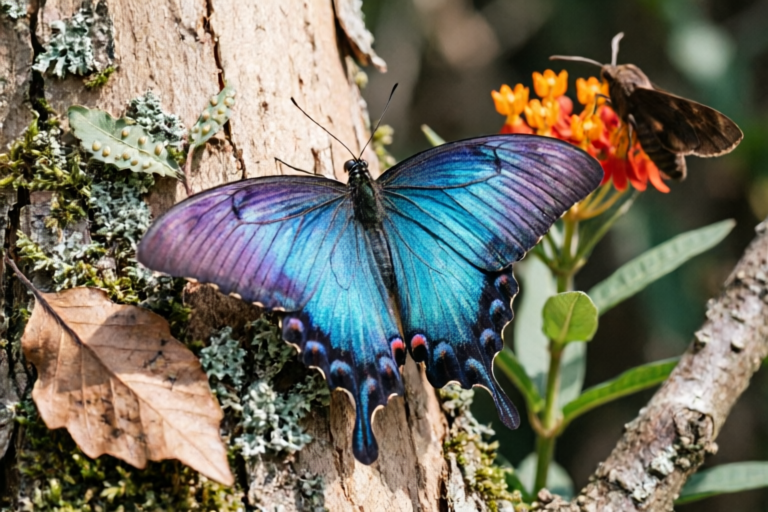
Why Do Butterflies Have Such Bright Colors?
Uncover the Beauty and Science Behind Butterfly Coloration
Introduction to Butterfly Colors
Butterflies are some of the most visually striking creatures in the animal kingdom, known for their vibrant and diverse coloration. With thousands of species around the world, each boasting unique patterns and hues, butterflies have long fascinated scientists, artists, and nature enthusiasts alike. Their colors serve not only as a source of aesthetic pleasure but also play crucial roles in their survival and reproduction.
Brief Overview of Butterfly Species and Their Vibrant Colors
From the Monarch's iconic orange and black stripes to the Blue Morpho's shimmering blue wings, butterflies display an incredible range of colors. These hues can be categorized into two main types: pigmented colors, which result from chemical pigments within the butterfly's wing scales, and structural colors, which arise from the microscopic structure of the scales themselves. Both types of coloration are essential for the butterfly's survival and reproduction.
Importance of Studying Butterfly Coloration in Nature
Understanding the reasons behind butterfly coloration is vital for several reasons. It helps us appreciate the intricate balance of nature and the evolutionary processes that shape species over time. Additionally, studying butterfly coloration can provide insights into broader ecological relationships, such as predator-prey dynamics and plant-pollinator interactions.
Evolutionary Advantages of Bright Colors
The bright colors of butterflies are not just aesthetically pleasing; they also serve important evolutionary purposes. Here are some of the key ways in which butterfly coloration benefits these creatures:
Camouflage and Predator Avoidance Strategies
In many cases, bright colors serve as a form of camouflage, helping butterflies blend in with their surroundings. For example, some species of butterflies have evolved to resemble leaves or bark, making it difficult for predators to spot them. Other species use disruptive coloration, where contrasting patterns break up the outline of their body, making it harder for predators to focus on them.
Mimicry as a Survival Mechanism
Some butterflies have evolved to mimic the appearance of other species that are toxic or distasteful to predators. By resembling these harmful species, harmless butterflies can avoid predation. This phenomenon, known as Batesian mimicry, is particularly common among certain families of butterflies, such as the Heliconiinae.
Attraction of Mates Through Visual Signals
Bright colors also play a crucial role in attracting mates. In many species, males and females use visual signals to communicate their fitness and suitability as partners. For example, males may display brighter or more elaborate color patterns to attract females, while females may choose mates based on the quality of their coloration. This process of sexual selection has driven the evolution of increasingly vivid and intricate color patterns in many butterfly species.
Role of Pigments and Structural Colors
The vibrant colors of butterflies are created by a combination of pigments and structural colors. Understanding the science behind these two types of coloration provides valuable insights into the mechanisms that drive butterfly evolution and ecology.
Explanation of How Pigments Contribute to Coloration
Pigments are organic molecules that absorb specific wavelengths of light and reflect others, creating the colors we see. In butterflies, pigments are produced by specialized cells called chromatophores, which are located in the wing scales. Different types of pigments produce different colors, such as melanin for brown and black, carotenoids for yellow and orange, and ommochromes for red and purple. The arrangement and concentration of these pigments determine the final color of the butterfly's wings.
The Science Behind Structural Colors and Iridescence
Structural colors, on the other hand, arise from the physical structure of the butterfly's wing scales rather than pigments. These scales contain tiny, regularly spaced structures that interfere with light, causing it to scatter and produce iridescent colors. This effect is similar to the way oil slicks on water create rainbow-like patterns. Structural colors are responsible for the shimmering blues, greens, and purples seen in many butterfly species, including the Blue Morpho and the Morpho peleides.
Comparison Between Pigment-Based and Structural Coloration
While both pigments and structural colors contribute to the overall appearance of butterfly wings, they have distinct characteristics and functions. Pigments provide more stable and consistent colors, while structural colors can change depending on the angle of light and the viewer's perspective. In some cases, butterflies use a combination of both types of coloration to create complex and dynamic patterns. For example, the wings of the Morpho peleides feature both iridescent blue scales and dark brown borders, creating a striking contrast.
Impact on Ecosystems and Biodiversity
Beyond their individual roles in survival and reproduction, the bright colors of butterflies have significant impacts on ecosystems and biodiversity. They play important roles in pollination, serve as indicators of ecosystem health, and interact with plants and other insects in complex ways.
Many butterfly species are important pollinators, transferring pollen from one flower to another as they feed on nectar. The bright colors of their wings help them stand out against the backdrop of green foliage, making it easier for them to locate flowers. Some species have even evolved to mimic the appearance of flowers, further enhancing their ability to attract pollinators. By playing this critical role in plant reproduction, butterflies contribute to the maintenance of healthy and diverse ecosystems.
Brightly colored butterflies often serve as key players in their ecosystems, influencing the behavior and distribution of other organisms. For example, the presence of brightly colored butterflies can signal the availability of food resources, attracting birds and other animals that prey on them. This, in turn, can influence the population dynamics of these predators and their prey. Additionally, brightly colored butterflies may act as keystone species, shaping the structure and function of entire ecosystems.
Beyond their role as pollinators, butterflies have complex interactions with plants and other insects. Many butterfly species rely on specific host plants for laying eggs and feeding larvae, while others form mutualistic relationships with ants or other insects. These interactions can have far-reaching effects on the composition and stability of ecosystems. For example, the presence of certain butterfly species can promote the growth of particular plant species, while the absence of others can lead to declines in plant diversity.
Human Perception and Cultural Significance
Beyond their ecological roles, the bright colors of butterflies have captured the attention and imagination of humans for centuries. They have inspired art, literature, and symbolism in cultures around the world, and continue to fascinate people today.
Humans have developed sophisticated visual systems that allow us to perceive a wide range of colors, including those found in butterflies. However, our perception of butterfly colors can be influenced by factors such as lighting conditions, viewing distance, and individual differences in color vision. In some cases, the colors we see may differ slightly from what the butterfly actually displays, due to the way light interacts with its scales. Despite these variations, the bright and intricate patterns of butterfly wings remain a source of wonder and inspiration for many people.
Butterflies have played important roles in the mythology, art, and symbolism of cultures around the world. In many societies, butterflies are associated with transformation, rebirth, and spiritual growth. For example, in ancient Greek mythology, Psyche was transformed into a butterfly at the end of her story, symbolizing her journey from human to immortal. In Chinese culture, butterflies are often depicted as symbols of love and fidelity, while in Native American traditions, they represent the soul and the afterlife. These symbolic meanings have been reflected in various forms of art, from paintings and sculptures to textiles and jewelry.
The vibrant and intricate patterns of butterfly wings have inspired countless artists and designers throughout history. From Renaissance paintings to modern fashion, the beauty and symmetry of butterfly coloration have provided endless sources of inspiration. Many artists have sought to capture the essence of butterfly wings in their work, using techniques such as painting, photography, and digital media. In addition to their visual appeal, butterfly patterns have also been incorporated into textiles, ceramics, and other decorative arts, reflecting the enduring fascination with these creatures.
Conclusion: Appreciating Nature's Artistry
The bright colors of butterflies are a testament to the remarkable creativity and complexity of nature. From their evolutionary origins to their ecological roles and cultural significance, these creatures offer a wealth of insights into the workings of the natural world. By appreciating the beauty and science behind butterfly coloration, we can gain a deeper understanding of the interconnectedness of all living things and the delicate balance that sustains life on Earth. Whether you're a scientist, artist, or simply a lover of nature, there is much to be learned and admired in the colorful world of butterflies.
Comments

Makes sense now. Their colors must be a complex balance between attracting mates and avoiding predators.

Never knew this! It explains why some butterflies are so vibrant and others are more subdued.

I'm surprised by how much there is to learn about something so small and beautiful. Nature never ceases to amaze.

It's fascinating how these colors affect pollination. I guess that's one way they contribute to biodiversity.

The colors really do inspire artists. I've been painting butterflies lately, and now I understand why they're so popular.

I always thought it was just for looks. Now I see it plays such an important role in their survival and ecosystem.
How do these bright colors help them avoid predators? It seems like it would make them more noticeable.

Wow, I never knew butterflies used both pigments and structural colors! That's so cool. Nature is amazing.