Animals & Nature
Why do large birds fly in V formations during migration?
Soaring Together, Flying Smarter
## Introduction to Avian Migration Formations
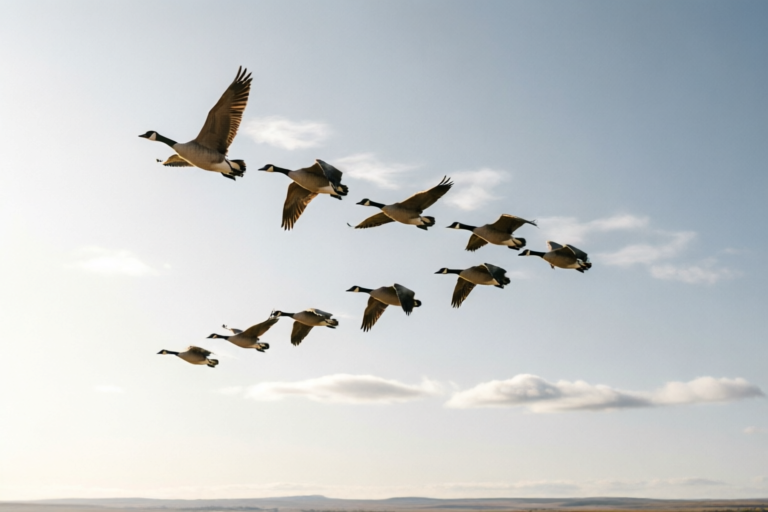
Every autumn, millions of people across the Northern Hemisphere gaze upward, captivated by the breathtaking spectacle of migratory birds traversing the skies. Among these spectacles, perhaps none is as iconic or mathematically precise as the V-shaped formation flown by large waterfowl such as geese, swans, and pelicans. At first glance, this arrangement might appear to be a simple matter of organization or tradition. However, beneath the aesthetic appeal lies a complex interplay of physics, biology, and social coordination. This formation is not merely a visual pattern; it is a sophisticated survival mechanism honed by millions of years of evolution.
The phenomenon of the V-formation is most commonly associated with species that undertake long-distance migrations, often traveling thousands of miles between their breeding grounds in the north and their wintering habitats in the south. While many smaller birds migrate in loose flocks, larger birds tend to adopt this specific geometry. Scientists have studied this behavior extensively, utilizing telemetry, radar, and computational modeling to understand the underlying reasons. The consensus among ornithologists and physicists is that the primary driver for this formation is energy conservation, achieved through aerodynamic benefits. Yet, this is only part of the story. The V-shape also facilitates communication, visual monitoring, and shared leadership, all of which contribute to the flock's overall cohesion and success.
Understanding why birds adopt this formation provides us with profound insights into nature’s engineering solutions. It reveals how living organisms interact with their environment to optimize performance under extreme physical stress. As we delve deeper into this topic, we will explore the intricate mechanics of flight, the dynamics of group movement, and the evolutionary imperatives that have kept this formation alive through generations.
## Aerodynamic Efficiency and Energy Conservation
### The Physics of Upwash and Downwash
To understand the V-formation, one must first grasp the principles of fluid dynamics, specifically regarding how wings generate lift. When a bird flies, its wings push air downward to create an equal and opposite reaction force that pushes the bird upward. This process generates a wake behind the wings known as a vortex. These vortices trail off the tips of the wings, spiraling outward. Within the context of aerodynamics, there are two distinct zones of airflow surrounding these wingtip vortices: downwash and upwash.
Directly behind the center of the bird's path, the air flows downward, creating a region of downwash. However, on the outer edges of these vortices, the air circulates upward, creating a zone called upwash. For a bird flying alone, it has to constantly work against the induced drag generated by its own wingtips. However, for a bird flying behind another in a specific offset position, the situation changes dramatically.
In a V-formation, each bird (except the leader) positions its wingtip slightly ahead of and above the wingtip of the bird in front. By doing so, the trailing bird places itself directly into the upwash zone of the leading bird’s wingtip vortex. Instead of fighting against gravity and drag alone, the trailing bird utilizes the rising air currents generated by the bird ahead. This additional lift reduces the amount of power the trailing bird needs to expend to stay aloft. Research suggests that this can reduce energy expenditure by up to 20 to 25 percent compared to solo flight. Over a migration journey lasting hundreds of hours, this savings is monumental and could be the difference between life and death.
### Wingtip Vortices and Induced Drag Reduction
Induced drag is a form of aerodynamic resistance caused by the production of lift. For large birds, whose bodies are heavy relative to their wing surface area, managing induced drag is critical. A lone bird experiences significant induced drag because the air leaks around the wingtips, creating turbulence that pulls the bird back.
When multiple birds align themselves in a staggered line, the turbulence created by the leading bird becomes useful rather than destructive. The trailing birds effectively "surf" on the energy of the leader. Scientific studies involving GPS tracking of Common Terns and Great White Pelicans have shown heart rates remain lower when birds fly in formation compared to when they fly solo or in non-optimal distances. This data confirms the physiological benefit of the V-shape. The alignment is not random; the distance between birds is carefully calibrated—usually about a wingspan—to maximize the benefit of the upwash while avoiding the detrimental effects of the downwash located directly behind the lead bird.
### Species Variations in Aerodynamics
While the V-shape is prevalent, slight variations exist depending on the species. For example, Sandhill Cranes often fly in tighter lines or looser groups depending on wind conditions. Some researchers hypothesize that the angle of the V can change based on tailwind speeds. If the wind is strong and steady from behind, the formation might stretch out further. Conversely, in headwinds or turbulent air, birds may bunch up more closely for stability. This adaptability shows that the formation is dynamic, responding to real-time atmospheric conditions rather than being a rigid geometric rule.
## Visual Contact and Group Coordination
### Line-of-Sight Maintenance
While aerodynamics provides the physical rationale for the V-formation, visual contact provides the operational framework. Large birds rely heavily on visual cues to maintain safe distances and coordinate movements. In the vast expanse of the sky, losing sight of the flock could result in straying off course or falling prey to predators. The V-shape ensures that every member of the flock has a clear line of sight to the bird immediately in front of them, and by extension, the leader at the tip.
This visual chain creates a self-reinforcing feedback loop. If the leader turns left, the bird directly behind them sees the motion and adjusts, passing the signal down the line to the last bird. This rapid transmission of directional changes is crucial during migration when navigating through complex weather systems or mountain ranges. Without a clear visual line, birds would have to rely solely on auditory signals or internal navigation instincts, which might slow down decision-making and increase the risk of collision.
### Signaling and Vocalizations
Communication is a key component of the V-formation. Birds often vocalize while in flight. It has been observed that the call rates increase in V-formations compared to scattered flights. This chatter serves multiple purposes. First, it keeps members aware of each other's presence. Second, it helps monitor the health and fatigue levels of neighbors. A weak bird might cry out for help or signal the need to descend earlier than planned.
Furthermore, visual signals extend beyond mere observation. Tail feathers and wing positioning act as subtle indicators of intent. A bird tilting its head might indicate a change in speed or direction. In tight formations, these micro-signals prevent accidents. Studies have noted that birds occasionally flap their wings or adjust their posture to create visible disturbances in the air, helping those behind gauge their position relative to the upwash zone.
### Safety in Numbers Through Formation
Beyond navigation, the V-formation acts as a defensive structure against aerial predators. Predators like falcons or hawks often target stragglers or birds at the edge of the flock. By keeping in a compact V-formation, each bird is surrounded by the presence of others, making it harder for a predator to isolate a target. Additionally, the formation allows for rapid, synchronized evasion maneuvers. If a predator appears, the entire line can shift direction almost simultaneously due to the close proximity and constant monitoring required to maintain the formation.
## Leader Rotation and Shared Workload
### The Cost of Leadership
Despite the benefits enjoyed by trailing birds, the bird leading the V-formation pays a steep price. The leader breaks the air current, bearing the full brunt of wind resistance without the benefit of upwash from another bird. This means the leader expends significantly more energy than the followers. Studies show that the lead bird experiences higher heart rates and depletes energy reserves faster. If one individual were to lead the entire journey, they would likely become exhausted before reaching the destination.
Therefore, a system of shared responsibility is essential. In a healthy flock, leadership is not a permanent rank but a temporary duty. This concept is fundamental to the longevity of the migration trip for the whole group.
### Alternating Positions
Birds rotate the leadership role frequently. Observational data indicates that a leader will fly in the front position for a certain duration, perhaps a few minutes or several miles, before stepping back to the side or rear of the formation. This step-back process is often seamless, with the next bird seamlessly moving forward to fill the gap. The birds behind often shuffle forward to maintain the optimal spacing.
This rotation ensures that the workload is distributed evenly among the flock members. No single bird carries the burden for too long. In some species, such as the Canada Goose, researchers have even recorded the specific sequence of leadership rotations, noting that dominant individuals sometimes hold the lead longer, suggesting a correlation between fitness and social hierarchy, though the energetic burden remains high regardless of rank.
### Managing Fatigue and Injury
What happens if a bird cannot rotate efficiently? A sick or injured bird might struggle to keep up with the aerodynamic requirements or the pace of the group. In such cases, the flock often slows down or circles until the struggling bird recovers or finds a place to land. The formation inherently supports vulnerable members because everyone is moving together. There is rarely a scenario where a slow-moving bird is left behind entirely, unlike in loose scattering formations. This communal care ensures that the survival probability of the entire flock increases, reinforcing the evolutionary advantage of flocking behavior.
## Evolutionary Significance and Survival Impact
### Energy Efficiency and Reproductive Success
From an evolutionary standpoint, traits that conserve energy are strongly selected for. Migration is energetically expensive. Birds must build up fat reserves before leaving and burn through them rapidly during flight. A 20 percent reduction in energy usage translates directly to less food needed at stopover sites. This efficiency means birds can arrive at their breeding grounds in better condition, leading to higher reproductive success. Birds that can save energy are more likely to survive harsh winters and breed successfully in the spring, passing on the genetic predisposition for intelligent flocking behaviors to the next generation.
Over millennia, birds that adopted the V-formation had a statistical advantage over those that did not. The inefficient fliers died or reproduced less frequently, eventually being outcompeted by those who mastered the aerodynamics of group flight. Thus, the V-formation is a biological adaptation refined by natural selection to maximize the chances of survival for migratory species.
### Adaptation to Environmental Pressures
The environment presents varying challenges during migration: storms, high altitudes, thin oxygen, and cold temperatures. The V-formation aids in mitigating these pressures. By flying closer together, birds can share warmth, reducing heat loss in colder climates. Furthermore, the collective navigation ability means the flock is more adept at finding favorable air currents like thermal updrafts. A single bird might miss a thermal; a coordinated group is more likely to locate and utilize one, allowing the entire flock to gain altitude without excessive flapping.
### Implications for Human Technology
Interestingly, the efficiency of avian V-formations has captured the imagination of engineers and computer scientists. In the realm of Unmanned Aerial Vehicles (UAVs), or drones, the same principles apply. Drones consume batteries, which are currently limited in capacity. By mimicking the V-formation, swarms of drones can potentially save significant amounts of battery life, extending their range and mission time. Several research projects have already tested drone swarms in V-like configurations, validating the biological theories with robotic hardware. This cross-pollination of ideas highlights how studying animal behavior can solve modern technological problems. It demonstrates that nature has already engineered solutions to complex logistical and energy challenges that humans are still striving to master.
## Conclusion
The V-formation of migratory birds is a testament to the elegance and efficiency of natural design. It is a harmonious blend of physics and biology, where the laws of fluid dynamics intersect with the social needs of a family unit. Each element of the formation—from the precise placement of wings to the rotation of leaders—serves a specific purpose aimed at conserving energy, ensuring safety, and facilitating communication.
By flying in this configuration, birds do more than just travel from point A to point B; they optimize their survival odds in an unpredictable world. They teach us valuable lessons about collaboration, resource management, and adaptive efficiency. As we look to the future, whether observing nature or designing advanced technologies, the ancient wisdom encoded in the wings of a goose remains relevant. Understanding why large birds fly in V formations deepens our appreciation for the complexity of the natural world and inspires us to innovate in ways that are both sustainable and effective. Ultimately, the V-formation represents the triumph of cooperation over isolation, proving that flying together allows us to soar further than we ever could alone.
Comments

LoudNoise
Can you do a post about why geese honk specifically??
👍 24👎 0

NatureFan
Cool read. Shows animals have team spirit
👍 0👎 0

LogicBob
Makes sense though. If everyone took the front turn every time, the first one would die of exhaustion lol
👍 6👎 0

StarryNight
Mind blown 🤯 I always admired the shape but never thought about the upwash thing
👍 4👎 0

TinyFeather
Does this work for hummingbirds or just big flocks?
👍 23👎 0

SciGuy101
Kinda like cyclists drafting behind each other huh? Physics is crazy
👍 18👎 0

ParkDasher
Saw a huge flock over the park yesterday. Didn't realize until now that they're swapping turns leading!
👍 13👎 0