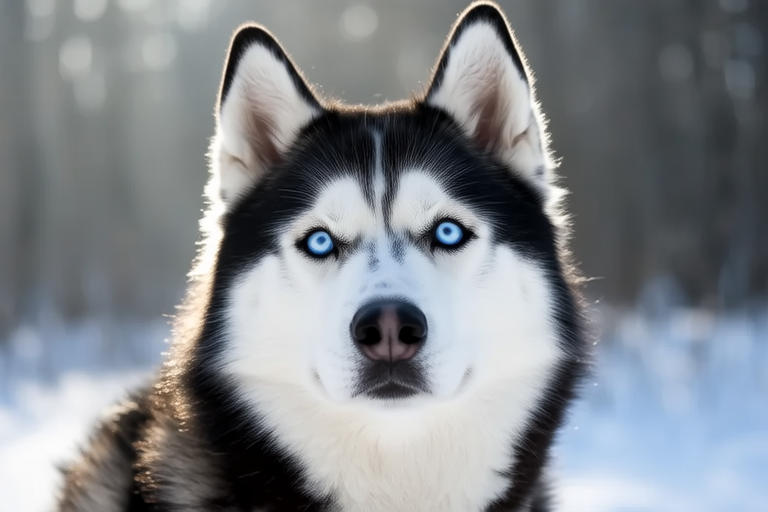
The Enchanting Blue Eyes of Siberian Huskies: A Genetic and Evolutionary Journey
Siberian Huskies are renowned for their striking blue eyes, a trait that has captured the hearts of many dog lovers worldwide. This breed’s mesmerizing blue eyes have not only become an iconic feature but also a subject of fascination for scientists, breeders, and enthusiasts alike. In this article, we delve into the genetic and evolutionary reasons behind Siberian Huskies’ blue eyes, their prevalence within the breed, cultural significance, common misconceptions, and the relationship between eye color and temperament.
Genetic Basis of Blue Eyes in Siberian Huskies
The genetics of eye color in Siberian Huskies is a complex interplay of multiple genes. The most significant gene involved is ASIP, which influences pigmentation in various parts of the body, including the eyes. This gene plays a crucial role in determining whether a Husky will have blue or brown eyes. Additionally, another gene called MC1R is involved in regulating the production of melanin, the pigment responsible for skin, hair, and eye color.
In Siberian Huskies, the presence of a specific variant of the ASIP gene can result in the dilution of melanin, leading to blue eyes. However, the inheritance pattern of this trait is not straightforward, as it can be influenced by other genetic factors. Some Huskies may inherit multiple copies of the dilution allele, resulting in more intense blue coloring, while others may have a single copy, leading to less pronounced blue eyes.
Evolutionary Adaptations for Survival in Harsh Climates
The blue-eyed trait in Siberian Huskies is believed to have evolved as an adaptation to their harsh Arctic environment. In the icy landscapes of Siberia, where the breed originated, having lighter-colored eyes could have provided an advantage in terms of vision. Lighter eyes allow more light to enter, potentially enhancing visual acuity in low-light conditions, which would have been crucial for hunting and navigation.
Moreover, the presence of blue eyes in Huskies may be linked to their overall coat coloration and patterns. The same genetic factors that contribute to their distinctive fur markings might also influence eye color. This connection suggests that the blue eyes of Siberian Huskies are part of a broader suite of adaptations that helped them thrive in their native environment.
Cultural Significance of Siberian Huskies with Blue Eyes
Siberian Huskies have long held a special place in human culture, particularly among indigenous peoples of Siberia and Alaska. Their striking appearance, including their blue eyes, has made them symbols of strength, endurance, and loyalty. These dogs were originally bred by the Chukchi people of northeastern Asia for sledding and herding reindeer. Over time, they became integral to the lives of many Arctic communities, serving as companions, protectors, and workers.
In modern times, Siberian Huskies have gained popularity as pets and competitors in sled racing events. Their unique appearance, including their blue eyes, has contributed to their appeal. Many people are drawn to the breed because of its striking looks, and blue-eyed Huskies are often seen as especially desirable. This cultural fascination has led to increased breeding efforts focused on preserving and enhancing the blue-eyed trait.
Common Misconceptions About Eye Color and Health
Despite their beauty, there are several misconceptions surrounding the health implications of blue eyes in Siberian Huskies. One common myth is that blue-eyed Huskies are more prone to eye diseases or vision problems. While it is true that some eye disorders, such as progressive retinal atrophy (PRA), can affect Huskies, the color of their eyes does not necessarily increase their risk.
Another misconception is that blue-eyed Huskies are less intelligent or trainable than those with brown eyes. This belief is unfounded, as intelligence and trainability are determined by a variety of factors, including breed-specific traits and individual differences. Siberian Huskies are known for their independent nature and problem-solving abilities, regardless of their eye color.
Eye Color and Temperament
The relationship between eye color and temperament in Siberian Huskies is an intriguing area of study. Some researchers suggest that the presence of blue eyes may be associated with certain behavioral traits. For example, blue-eyed Huskies may be more prone to independent thinking and less likely to follow commands blindly. This tendency can make training these dogs more challenging but also rewarding for owners who appreciate a companion with a strong will and personality.
However, it is important to note that temperament is influenced by numerous factors, including genetics, early socialization, and environmental experiences. Therefore, while there may be correlations between eye color and certain behaviors, it is not accurate to generalize based solely on this characteristic.
History as Working Dogs in Harsh Climates
The history of Siberian Huskies as working dogs in harsh climates is closely tied to their physical and mental attributes, including their blue eyes. Originally bred by the Chukchi people for sledding and herding reindeer, Huskies were prized for their stamina, speed, and ability to work in extreme weather conditions. Their blue eyes, along with their thick coats and webbed paws, contributed to their success as working dogs.
During the Alaskan gold rush in the early 20th century, Siberian Huskies gained fame for their role in delivering life-saving serum during the 1925 diphtheria epidemic in Nome, Alaska. The dogs’ endurance and reliability in transporting medicine across hundreds of miles of treacherous terrain demonstrated their exceptional capabilities as working animals. This event further solidified the breed’s reputation as a reliable and resilient companion.
Conclusion
The blue eyes of Siberian Huskies are a fascinating combination of genetic, evolutionary, and cultural factors. Understanding the science behind this trait provides valuable insights into the breed’s history and characteristics. By dispelling common misconceptions and exploring the relationship between eye color and temperament, we can better appreciate the unique qualities of these enchanting dogs.
As we continue to learn more about the genetics and evolution of Siberian Huskies, it is clear that their blue eyes remain a captivating aspect of their identity. Whether you’re a seasoned breeder or simply an admirer of these beautiful creatures, the story of the Siberian Husky’s blue eyes is one worth exploring.
