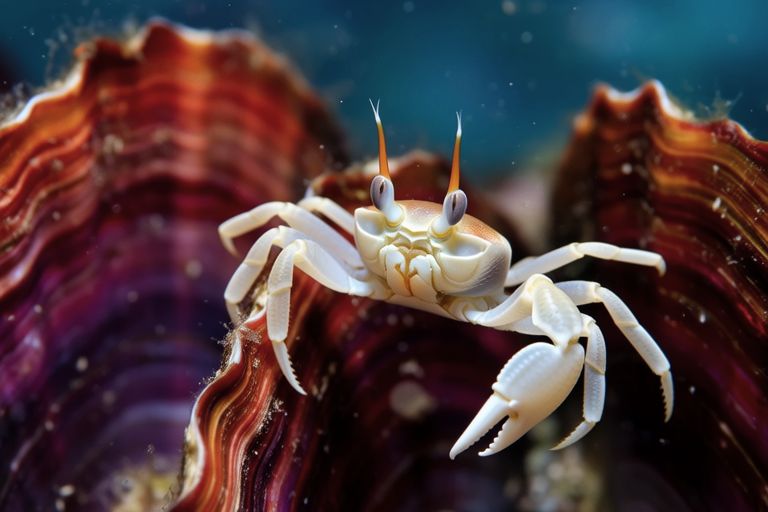
The Unseen Ocean Dweller: Revealing the Enigmatic Pea Crab
The ocean, vast and mysterious, harbors countless secrets beneath its waves. Among these enigmas lies a tiny inhabitant, the pea crab (Pinnotheridae), a creature so small that it often goes unnoticed. Despite its diminutive stature, this minuscule crustacean plays a significant role in marine ecosystems, particularly through its intricate symbiotic relationships with other sea creatures. This article delves into the fascinating world of the pea crab, exploring its habitat, evolutionary adaptations, and the importance of studying this unseen ocean dweller.
Size and Symbiosis: A Unique Partnership
Pea crabs, named for their resemblance to the seeds of peas, are some of the smallest crabs in the world, measuring only a few millimeters in length. Their petite size belies the complexity of their existence, especially given their symbiotic relationships with larger marine organisms. These crabs live inside the cavities of their hosts, such as barnacles and anemones, where they are protected from predators and provided with a constant supply of food. In return, the pea crabs help clean the host by feeding on parasites and detritus, thus maintaining the health of their living quarters.
This mutualistic relationship is not one-sided. The barnacle, for instance, benefits from the presence of the pea crab by having a cleaner environment, which can lead to better reproductive success. Similarly, anemones gain protection from potential predators due to the crabs’ presence. The crab’s ability to thrive in such close quarters without causing harm to its host showcases the remarkable balance of nature.
Habitat and Distribution
Pea crabs are found in diverse marine environments across the globe, from shallow coastal waters to deep-sea habitats. They have adapted to a wide range of conditions, from tropical seas to colder regions, making them a truly versatile species. Their adaptability allows them to coexist with a variety of hosts, each providing a different niche within the marine ecosystem.
In tropical areas, pea crabs often reside in the protective shells of hermit crabs, while in colder waters, they may find refuge in the hard exteriors of barnacles. The distribution of pea crabs reflects the global diversity of marine life, highlighting their importance in maintaining ecological balance across different ecosystems.
Anatomy and Evolutionary Adaptations
The anatomy of a pea crab is a marvel of evolutionary adaptation. With a flattened body, they are perfectly suited for life within the tight confines of their hosts. Their legs are adapted for clinging to the inner surfaces of their hosts, ensuring they do not get washed away by currents or displaced by movement. The crab’s exoskeleton is thin and flexible, allowing it to squeeze into narrow spaces without causing damage to itself or its host.
Pea crabs also possess specialized mouthparts designed for filter feeding, which enables them to consume the organic matter and detritus present in their environment. This feeding mechanism is crucial for their survival, as it ensures a steady food supply without relying on external hunting or scavenging.
Reproduction and Life Cycle
The reproductive cycle of pea crabs is equally fascinating. Mating occurs when male and female crabs meet within the same host cavity. After mating, the female carries the fertilized eggs on her abdomen until they hatch. Once hatched, the larvae enter the water column, where they undergo several molts before settling onto a new host. This life cycle underscores the importance of maintaining healthy populations of potential hosts for the continued survival of the species.
The process of finding a new host is fraught with challenges. Larvae must navigate the complex marine environment, avoiding predators and locating a suitable host. This journey highlights the resilience and adaptability of pea crabs, traits that have allowed them to survive and thrive in diverse marine environments.
The Role of Pea Crabs in Marine Ecosystems
While pea crabs may seem insignificant compared to larger marine animals, their role within their ecosystem is vital. By maintaining the health of their hosts, pea crabs contribute to the overall stability of marine communities. Their presence can influence the behavior and health of their hosts, potentially affecting the broader ecosystem.
For example, the presence of pea crabs within barnacles can reduce the prevalence of parasitic infections, leading to healthier barnacle populations. This, in turn, can affect the availability of resources for other marine organisms that rely on barnacles for food or shelter. Understanding the dynamics of these interactions is crucial for comprehending the intricate web of life in the ocean.
The Importance of Studying Pea Crabs
Studying pea crabs provides valuable insights into marine ecology and biodiversity conservation. As indicators of environmental health, their presence or absence can signal changes in the marine environment. For instance, declines in pea crab populations could indicate stressors such as pollution or climate change affecting their hosts.
Moreover, research on pea crabs can inform conservation strategies aimed at protecting marine biodiversity. By understanding the factors that influence their survival and distribution, scientists can develop targeted interventions to mitigate threats to these tiny but important creatures. Additionally, the study of pea crabs contributes to our broader understanding of symbiotic relationships and evolutionary adaptations, offering lessons that extend beyond marine biology.
In conclusion, the pea crab, though small, plays a crucial role in marine ecosystems. Its unique symbiotic relationships, adaptability, and contribution to the health of its hosts highlight the interconnectedness of life in the ocean. As we continue to explore and understand the ocean’s depths, the pea crab serves as a reminder of the importance of every organism, no matter how tiny, in maintaining the delicate balance of marine life. By studying these unseen dwellers, we gain invaluable knowledge that can guide us in preserving the rich biodiversity of our oceans.
