Life and Behavior of Clownfish
Clownfish, also known as anemonefish, are some of the most recognizable and beloved marine creatures. These vibrant fish are native to the warm waters of the Indian and Pacific Oceans, particularly around coral reefs. They are famous for their symbiotic relationship with sea anemones, which provides them with protection from predators and a place to lay their eggs. This article explores the life and behavior of clownfish, their adaptation to home aquariums, and the conservation efforts aimed at protecting their natural habitats.
Natural Habitat and Symbiotic Relationship
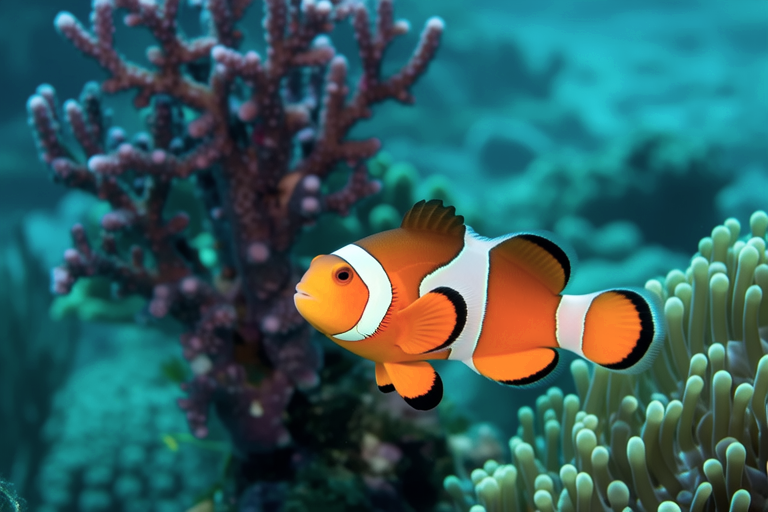
Clownfish inhabit the tropical and subtropical regions of the Indian and Pacific Oceans. They are commonly found in shallow waters near coral reefs, where they live in close association with sea anemones. The sea anemone provides shelter and protection for the clownfish by stinging potential predators with its tentacles. In return, the clownfish defends the anemone against intruders and provides it with nutrients through its feces. This mutually beneficial relationship is known as mutualism.
The clownfish’s ability to live among the anemone’s tentacles without being harmed is due to a layer of mucus on their skin that protects them from the anemone’s stinging cells. Over time, clownfish have evolved to be immune to the anemone’s sting, making this relationship possible. The clownfish’s vibrant colors, which range from bright orange to yellow, serve as a warning to predators that they are toxic and should not be eaten.
Unique Coloration and Swimming Patterns
Clownfish are known for their distinctive coloration, which varies depending on the species. Some of the most common colors include orange, yellow, and black. Their unique coloration is not only visually striking but also serves as a form of communication within their social hierarchy. The dominant female, who is usually the largest and most colorful member of the group, will display her dominance through aggressive behavior and body language.
Clownfish have a fascinating swimming pattern that is often described as “zigzagging.” This movement helps them avoid predators and navigate through the complex underwater environment of coral reefs. They are also known for their playful behavior, often darting in and out of the anemone’s tentacles or chasing each other around the reef. This playful behavior is especially noticeable when they are young and still learning to navigate their environment.
Adaptation to Home Aquariums
Clownfish have become increasingly popular in home aquariums due to their vibrant colors and interesting behavior. However, adapting to life in captivity requires careful attention to their specific needs. Clownfish require a well-maintained aquarium with stable water parameters, including temperature, pH, and salinity. They also need plenty of hiding places, such as rocks, caves, and artificial anemones, to feel secure in their new environment.
In addition to providing a suitable habitat, it is important to feed clownfish a balanced diet that includes both meaty foods and plant matter. They are omnivores and will eat a variety of foods, including brine shrimp, mysis shrimp, and algae-based flakes. It is also important to ensure that the water quality remains high and that the tank is free of harmful substances, such as ammonia and nitrite.
Popular Myths Versus Facts
There are many misconceptions about clownfish that have been perpetuated by popular media, such as the movie Finding Nemo. One common myth is that all clownfish live in sea anemones. While it is true that clownfish are closely associated with sea anemones in the wild, they can also survive without them in home aquariums. Another myth is that clownfish are easy to keep in captivity, but this is not always the case. They require specific environmental conditions and a balanced diet to thrive.
Another popular myth is that clownfish are born male and then change sex to become females. While it is true that clownfish are protandrous hermaphrodites, meaning they can change sex, this process is more complex than simply changing from male to female. In a typical clownfish group, the largest individual will become the dominant female, while the second-largest individual will become the dominant male. If the dominant female dies, the dominant male will change sex to become the new female.
Role in Marine Ecosystems and Conservation Efforts
Clownfish play an important role in marine ecosystems by helping to maintain the balance of coral reefs. They are part of a complex food web that includes herbivores, carnivores, and decomposers. By feeding on small organisms and detritus, clownfish help to control the population of these species and prevent overgrazing of the coral. They also contribute to the health of the coral by cleaning away debris and algae that could harm the coral polyps.
Despite their importance to marine ecosystems, clownfish populations are facing threats from human activities, such as overfishing, pollution, and climate change. Coral reefs, which provide essential habitat for clownfish, are particularly vulnerable to rising ocean temperatures and acidification. To protect clownfish and their habitats, conservation efforts are focused on reducing greenhouse gas emissions, improving water quality, and promoting sustainable fishing practices.
Differences Between Wild and Captive Clownfish Behaviors
While clownfish in the wild and in captivity share many similarities, there are some key differences in their behavior. In the wild, clownfish live in close-knit groups and establish a clear social hierarchy. The dominant female is responsible for defending the group and ensuring the safety of the anemone, while the males and juveniles assist in caring for the eggs. In captivity, clownfish may not form such clearly defined social structures, and their behavior may be influenced by factors such as tank size and the presence of other fish.
Captive clownfish may also exhibit different swimming patterns compared to their wild counterparts. In the wild, clownfish spend much of their time exploring their environment and interacting with other fish, while in captivity, they may be more sedentary and less active. This is partly due to the smaller size of the tank and the lack of natural stimuli, such as currents and predators. However, with proper care and enrichment, captive clownfish can be encouraged to engage in more natural behaviors.
Tips for Aquarium Enthusiasts
If you are interested in keeping clownfish in your home aquarium, there are several things to keep in mind. First, it is important to choose a healthy and well-adjusted clownfish from a reputable breeder or retailer. Look for fish that are active, have clear eyes, and show no signs of disease or injury. It is also important to research the specific needs of the species you are interested in, as different clownfish have slightly different requirements.
Once you have acquired your clownfish, it is important to acclimate them slowly to their new environment. This can be done by floating the bag containing the fish in the aquarium for 15-20 minutes to allow the water temperature to equalize. Afterward, gradually add small amounts of aquarium water to the bag until it is completely full. Finally, release the fish into the aquarium and monitor them closely for signs of stress or illness.
To ensure the long-term health and well-being of your clownfish, it is important to maintain a clean and stable environment. This includes regular water changes, monitoring water parameters, and providing a varied diet. You can also enrich their environment by adding plants, rocks, and other decorations that mimic their natural habitat. With proper care and attention, your clownfish can thrive in your home aquarium for many years.
Conclusion
Clownfish are fascinating and beloved marine creatures that have captured the hearts of aquarium enthusiasts and nature lovers alike. Their vibrant colors, playful behavior, and symbiotic relationship with sea anemones make them a popular choice for home aquariums. However, it is important to understand their specific needs and provide them with a suitable environment to thrive. By learning more about clownfish and taking steps to protect their natural habitats, we can help ensure that these amazing creatures continue to thrive in the wild for generations to come.
