Everyday Life
Why Do We Get Goosebumps When Feeling Extremely Cold Outside?
Shivering Through Time: The Science of Our Prickly Past
## Understanding the Phenomenon of Goosebumps
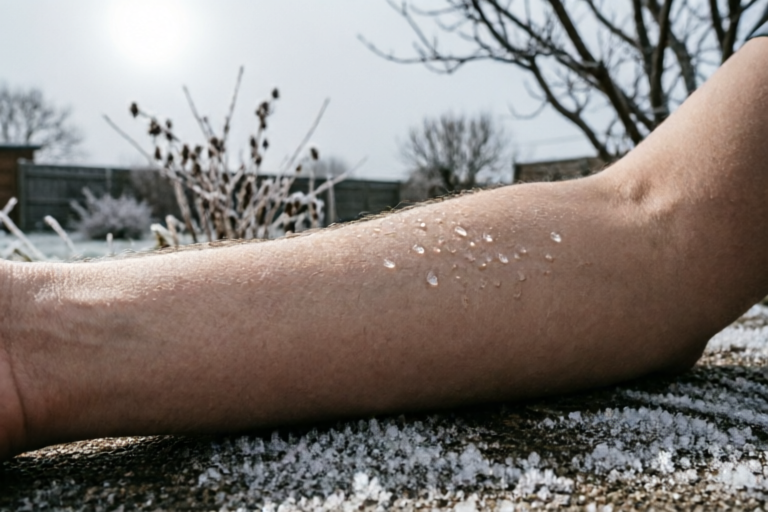
Have you ever walked out into a freezing winter morning, felt the bite of the wind, and suddenly noticed your skin turning into a textured landscape of small bumps? This familiar sensation is known as getting goosebumps, a reaction that almost everyone experiences regardless of age or location. While it feels purely physical and immediate, the underlying causes are a complex blend of neurobiology, evolutionary history, and psychological response. Scientifically, this condition is termed **cutis anserina**, derived from Latin where "cutis" means skin and "anserina" refers to a goose due to the resemblance of the bumps to a plucked goose.
Most commonly, people associate this phenomenon with extreme cold temperatures. When the ambient temperature drops significantly below body temperature, the body initiates automatic protective mechanisms to conserve heat. However, the story of goosebumps is not merely about thermoregulation; it is a window into our evolutionary past. It reveals how humans were once covered in thick fur and how their physiology was wired differently to survive harsh environments. By understanding the mechanics of goosebumps, we gain insight into the autonomic nervous system and how the human body retains ancient commands even when they appear obsolete.
In this comprehensive guide, we will dissect the biological machinery at play, explore the evolutionary reasons why this trait exists despite our lack of fur, examine how emotions trigger similar reactions, and conclude on whether this reflex holds any relevance for us today. Whether you are curious about human biology, interested in evolutionary psychology, or simply want to know why your arms bristle when it snows, this article provides a detailed examination of the prickle on your skin.
## The Biological Mechanism at Work
To truly understand why goosebumps occur, we must first delve into the intricate anatomy of the skin and the nervous system. The primary actors in this drama are the **arrector pili muscles**. These are tiny bundles of smooth muscle fibers located in the dermis layer of the skin. Each individual muscle is attached to a hair follicle on one end and the connective tissue of the skin on the other. When these muscles contract, they pull the hair follicle upright, causing the surrounding skin to bunch up, creating the characteristic bump.
However, this contraction does not happen voluntarily. It is orchestrated by the **autonomic nervous system**, specifically the sympathetic division. This branch of the nervous system controls involuntary bodily functions such as heart rate, digestion, and respiratory rate. When the skin perceives a drop in temperature—through thermoreceptors embedded in the epidermis—the signal is relayed to the hypothalamus in the brain. The hypothalamus acts as the body's thermostat, regulating internal equilibrium. Upon detecting excessive cold stress, it triggers the release of neurotransmitters, primarily norepinephrine (also known as noradrenaline).
This cascade of chemical signaling stimulates the arrector pili muscles to contract almost instantaneously. The speed of this response is crucial; it happens faster than conscious thought, serving as a primitive alert system. For mammals with thick coats, this contraction would trap a layer of air against the skin, creating insulation. Air is a poor conductor of heat, so trapping it helps retain body warmth. In humans, because our hair is significantly shorter and finer compared to our furry ancestors, the trapped air layer is negligible. Yet, the neural pathway remains fully intact.
Furthermore, the sympathetic nervous system is designed for the "fight or flight" response. Stress, danger, and fear activate this same system. Consequently, the same muscles that rise when you are cold can also react when you are frightened or excited. This biological overlap explains why goosebumps are not exclusive to thermal regulation. The mechanism relies on the sympathetic stimulation causing vasoconstriction (narrowing of blood vessels) in the skin to reduce heat loss, which occurs simultaneously with the muscle contraction. Thus, goosebumps are often accompanied by a reduction in blood flow to the extremities, making hands and feet feel colder, completing the body's strategy to prioritize core warmth over surface exposure.
## Evolutionary Purpose in Ancestors
While the mechanism is clear, the question remains: why did evolution preserve this reflex if it offers little benefit to modern, largely hairless humans? The answer lies in our distant ancestors who roamed the earth with dense fur coverings. For early hominids and primates, piloerection (the technical term for hair raising) was a vital survival tool. In a freezing environment, standing up the fur created a thicker barrier of trapped air, acting as a highly efficient thermal coat. Without this ability, many ancestral species would have succumbed to hypothermia much faster than those that could adjust their insulation dynamically.
Beyond thermal protection, there is a second evolutionary purpose: intimidation. In the wild, predators and rivals are often deterred by size. When an animal feels threatened, contracting arrector pili muscles makes its fur stand on end, significantly increasing its visual profile. A lion with its mane fully puffed up looks larger and more menacing. Similarly, a cat arches its back and raises its fur to appear more formidable to an attacker. For our prehistoric predecessors, displaying increased stature through raised hair may have served as a warning signal to potential threats, buying time to flee or engage in defense.
As humans evolved, particularly as they migrated towards warmer climates and adopted tools for hunting and clothing, the necessity for thick fur diminished. We began to rely on behavioral adaptations, such as wearing clothes and building shelters, which rendered biological insulation less critical. Simultaneously, the development of sweating became advantageous for cooling down during endurance activities, favoring bodies with reduced fur and increased sweat gland density. Despite shedding most of our body hair, the genetic blueprint controlling arrector pili muscles was never deleted. This is a classic example of a vestigial trait—a feature that has lost most of its original function through the course of evolution.
Some scientists argue that the retention of this trait might serve minor auxiliary functions. For instance, it may help detect insects moving across the skin. The raised hairs increase sensitivity to touch, allowing for quicker removal of parasites. Additionally, the reaction serves as a feedback loop indicating that the body is under thermal stress, reminding us to seek shelter or add layers. While these functions are minimal compared to the robust thermoregulation seen in furred mammals, they highlight that nature rarely removes a trait unless it becomes actively harmful. Since goosebumps are harmless, they persist as a biological echo of our hairy lineage.
## Similar Reactions to Emotional Stimuli
Interestingly, goosebumps are not limited to environmental factors. They frequently occur during intense emotional experiences. You may have experienced shivers running down your spine when listening to a powerful piece of classical music, watching a heart-wrenching scene in a movie, or standing in awe before a majestic landscape. This phenomenon is sometimes referred to as **frisson** (French for "shiver") or an aesthetic chill. Like the cold-induced response, emotional goosebumps are driven by the activation of the sympathetic nervous system.
When we encounter stimuli that evoke strong feelings of awe, fear, nostalgia, or excitement, the brain releases dopamine and activates the limbic system, which processes emotion. Interestingly, the amygdala, often associated with fear processing, plays a central role here. Studies suggest that individuals who experience musical frisson have heightened connectivity between the auditory cortex and the reward centers of the brain. The physical manifestation of this neurological excitement is identical to cold-induced piloerection: the arrector pili muscles contract, and blood vessel constriction reduces skin temperature locally.
This parallel reveals that our emotional states and physical temperature regulation share a common neurological root. Both are controlled by the sympathetic nervous system. This explains why we might sweat palms when nervous yet shiver and get goosebumps when scared. It is a unified response to high-arousal states. Historically, this connection may have been adaptive. Sudden emotional spikes often signaled danger or opportunity in the ancestral environment. The rapid mobilization of energy reserves and heightened sensory awareness facilitated by sympathetic activation ensured a quick response to either fight or flee. Today, while we rarely face mortal danger, the body responds to modern stressors or artistic inputs using the same ancient hardware.
Moreover, social bonding plays a role. Observing others experiencing goosebumps can sometimes induce the same reaction in us, known as mirror neurons activity. If you see someone huddled in fear or shivering from a song, your brain simulates the emotion, triggering a similar physical reflex. This shared vulnerability and response foster empathy, reinforcing group cohesion. Therefore, the "chill factor" in music or storytelling is not merely metaphorical; it has a tangible physiological basis that connects our internal emotional landscape with our external physical presentation.
## Practical Implications and Misconceptions
Despite the romanticized view of goosebumps as a sign of beauty or profound emotion, there are practical aspects to consider regarding this reflex. One common misconception is that goosebumps indicate a serious health issue. Generally, they do not. As long as they disappear quickly once the stimulus (cold or emotion) fades, they are considered normal physiological function. However, persistent or uncontrollable shivering (piloerection) unrelated to cold or emotion can sometimes indicate underlying hormonal imbalances, such as hyperthyroidism, or issues with the autonomic nervous system. Conditions like dysautonomia affect the regulation of involuntary functions and may present with irregular skin responses.
From a skincare perspective, understanding the cause of dryness or texture changes is important. When the body enters shivering mode, blood flow away from the skin can exacerbate dryness, especially in winter. This is why moisturizing is critical during cold seasons. The reduced oil production due to lower sebum activity, combined with the mechanical pulling of hair follicles, can irritate sensitive skin types. Individuals with eczema or dermatitis may find that cold-induced piloerection worsens itching and inflammation. Managing ambient temperature and protecting exposed skin can mitigate these secondary effects.
Another practical consideration is the inability to control this reflex consciously. Unlike blushing, which is also autonomic but sometimes subject to voluntary dampening through breathing exercises, goosebumps are difficult to suppress once the sympathetic trigger is set. This lack of control reinforces the primitive nature of the reflex. However, some techniques focused on deep relaxation and parasympathetic activation (slowing the breath, grounding techniques) can help reduce the overall arousal of the nervous system, thereby preventing the onset of goosebumps in stressful situations, though they cannot be mechanically forced to stop once they have started.
There is also a marketing angle worth noting. Some products claim to eliminate goosebumps permanently, often focusing on hair removal via laser treatments. Since the arrector pili muscles are attached to hair follicles, removing the hair follicle itself effectively renders the muscle useless. Consequently, people who undergo permanent hair removal on large portions of their body often notice fewer goosebumps in those areas. This confirms the biological link between hair presence and the reaction. If the structural attachment is severed, the skin smooths out. Yet, this is generally unnecessary for average individuals who do not suffer from the cosmetic annoyance of the bumps.
## Conclusion on Human Vestigial Traits
In summary, the phenomenon of goosebumps is a multifaceted biological event that bridges the gap between our past and present. While the immediate trigger is often the biting cold of winter, the underlying mechanism involves a sophisticated interplay of the sympathetic nervous system, the arrector pili muscles, and the brain's thermoregulatory centers. Historically, this reflex was a cornerstone of survival for our furry ancestors, providing essential insulation and a defensive display against predators. Today, however, it serves as a harmless vestige of an evolutionary history that prioritized fur over skin.
The persistence of this trait underscores a fundamental principle of biology: evolution works by modification, not erasure. Old systems remain available for new purposes, or simply linger if they do not impose a cost. The fact that we still get goosebumps allows us to trace the continuity of life. It reminds us that we are the descendants of creatures who stood taller and looked fiercer when the wind blew. Even the emotional chills we feel from art are remnants of a system designed for survival, repurposed for connection and appreciation.
Ultimately, when you next feel the prickly sensation on your arms during a cold walk or hear that beautiful chord in a song, remember that you are experiencing a living fossil of human physiology. It is a reminder that our bodies hold thousands of years of history, written in muscle, nerve, and blood. While the cold winds of the Arctic may no longer threaten us with hypothermia in the same way, the body’s ancient wisdom remains vigilant, ready to raise the flags of its former selves against the chill. Understanding this helps us appreciate the complexity of our own biology and the enduring legacy of the animal kingdom within us.
### Frequently Asked Questions About Goosebumps
**Are goosebumps dangerous?**
No. Goosebumps themselves are benign and temporary. They are a normal reflex and pose no threat to health.
**Can exercise prevent goosebumps?**
Regular exercise improves cardiovascular health and regulates body temperature, which may reduce sensitivity to cold shock, but it won't stop the reflex entirely.
**Do men or women get goosebumps more often?**
Research suggests little to no significant difference in frequency between genders, though pain thresholds and hormonal variations might influence perception.
**Is there any treatment to remove goosebumps permanently?**
Hair removal methods like laser therapy remove the follicle attachment required for the muscle to work, effectively stopping goosebumps in treated areas. Otherwise, managing temperature and emotional state is the best approach.
**Why does my music give me chills?**
This is due to dopamine release and sympathetic nervous system activation caused by unexpected harmonies or emotional peaks in the music, mirroring the stress response.
Comments

QuickRead
thanks for clearing up why my skin reacts like this randomly
👍 23👎 0

ChillyBreeze
i wonder if this ever goes away completely or if its locked in forever
👍 1👎 0

ScienceQuery
makes sense regarding ancestors looking bigger to predators. clever evolutionary trick
👍 15👎 0

OutdoorJane
literally just stepped outside into the wind and yep. goosebumps city
👍 19👎 0

MusicAddict
wait does anyone else get this from listening to music?? not just cold stuff
👍 21👎 0
HistoryMike
kinda sad we lost the fur but at least we have central heating lol
👍 19👎 0

SnowBug_Sam
never realized there are actual muscles doing this! cool fact tho
👍 2👎 0