Science Explained
How Does Your Brain Store Memories While You Sleep?
Rest Well, Remember Better: Unlock Your Brain's Full Potential
# How Does Your Brain Store Memories While You Sleep?
## Introduction: The Fundamental Link Between Sleep and Memory Formation
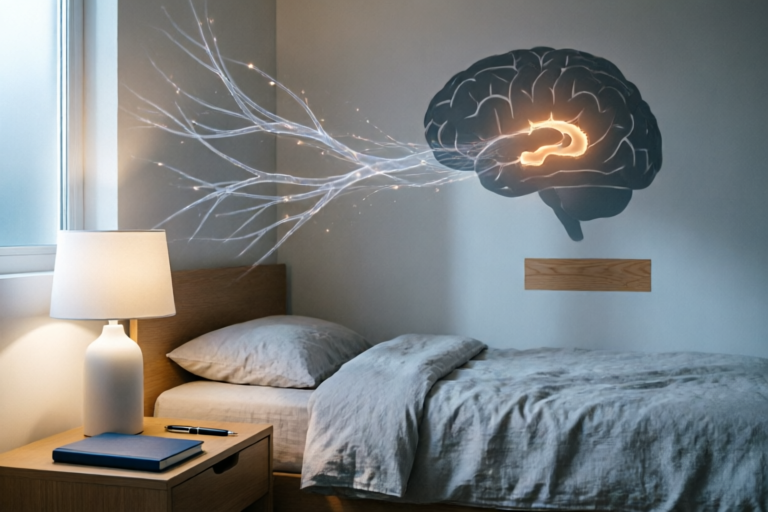
When we think of sleep, it often seems like a passive state—a period where our conscious mind shuts down, and the body goes offline for maintenance. However, modern neuroscience has revealed a startling truth: the sleeping brain is incredibly active. Far from resting, the brain is engaged in critical work that shapes who we are and what we know. At the heart of this nocturnal activity lies a process known as **memory consolidation**.
Memory consolidation is the process by which temporary memories, initially stored in vulnerable states, are stabilized and transformed into permanent knowledge. Think of it as saving a document you have been working on; without that save action, everything you typed might vanish upon rebooting. During the day, as we experience the world, our brains encode fleeting information into short-term storage. However, without the nightly intervention of sleep, much of this information never makes it to long-term storage.
Why does this matter? Because every skill you learn, from riding a bicycle to solving complex equations, and every fact you memorize relies on this sleep-dependent mechanism. Studies suggest that individuals who stay awake during the crucial consolidation window fail to show the same memory improvements as those who sleep. The sleeping brain is not merely resting; it is actively reorganizing, reinforcing, and integrating new experiences with existing knowledge networks. This biological imperative underscores why sleep deprivation severely impacts learning and cognitive function. By understanding how this process works, we can appreciate sleep not just as a necessity for survival, but as a fundamental pillar of intelligence and mental agility.
## Core Processes: Neural Replay and Synaptic Homeostasis
To understand how memories are stored, we must look at the microscopic level of neural activity. Two primary mechanisms drive this process: **Neural Replay** and **Synaptic Homeostasis**. These processes work in tandem to fortify useful connections while clearing away digital clutter.
### Neural Replay: Strengthening Connections
During wakefulness, neurons fire in specific patterns to represent new information. For instance, when you learn a new route to the office, a specific group of neurons fires together to map out the turns and landmarks. Once you fall asleep, particularly during deep stages, these same groups of neurons reactivate in rapid succession. This phenomenon is called "neural replay."
Imagine a movie being played forward during the day. When you sleep, the brain replays these scenes, but faster and more efficiently. This replay reinforces the synaptic connections between the neurons involved. The more frequently a neural pathway is traversed during this replay, the stronger the connection becomes. This is essentially the physical basis of Long-Term Potentiation (LTP), the cellular mechanism underlying learning. By firing again and again in a synchronized manner, the brain solidifies the trace of the memory, making it resistant to interference.
### Synaptic Homeostasis: Pruning for Efficiency
While strengthening strong pathways, the brain also needs to manage energy and space. This is where the **Synaptic Homeostasis Hypothesis (SHY)** comes into play. Throughout the waking day, as we learn and interact, our synapses grow stronger and consume more energy. If this continued unchecked, the brain would eventually run out of capacity and metabolic resources.
Sleep serves as a reset button. Research indicates that during sleep, especially in Non-REM (NREM) phases, there is a global downscaling of synaptic strength. Weak or unnecessary connections are pruned away, effectively "cleaning up" the noise. This pruning is crucial because it prevents saturation and improves signal-to-noise ratio. By eliminating the less important connections, the brain saves energy and maintains the fidelity of the most critical memory traces. In essence, sleep acts as a quality control filter, discarding the junk mail so the important letters stand out more clearly.
Together, Neural Replay builds the house of knowledge, while Synaptic Homeostasis clears the lot, ensuring that future construction can take place efficiently. Without this delicate balance, our ability to learn new skills or retain facts would degrade over time.
## Brain Region Interaction: Transferring Data from Hippocampus to Cortex
One of the most remarkable feats occurring during sleep is the transfer of data between distinct regions of the brain. This involves a sophisticated conversation between two key players: the **hippocampus** and the **neocortex**.
### The Role of the Hippocampus
The hippocampus acts as the brain's temporary buffer zone for memory. It is highly efficient at encoding new information rapidly, but it lacks the permanent storage capacity required for lifelong retention. Consider the hippocampus as a RAM chip in a computer—it holds data for immediate use but doesn't permanently store files. Every night, this chip gets filled with the "files" gathered during the day.
### The Role of the Neocortex
In contrast, the neocortex (the outer layer of the brain) is the hard drive. It contains stable, long-term memory representations of the world. The neocortex stores semantic knowledge (facts), episodic memories (events), and procedural skills (how-to).
### The Transfer Process
The critical communication process happens during **Slow-Wave Sleep (SWS)**, a stage of deep, non-REM sleep. During this phase, large-scale electrical oscillations known as slow waves synchronize across the cortex. Simultaneously, the hippocampus generates bursts of electrical activity called "spindles."
These two signals must coordinate perfectly. Imagine the slow waves acting as a carrier bus, picking up packages from the hippocampus and delivering them to the neocortex. When a hippocampal ripple (a burst of memory replay) aligns with a cortical spindle and slow wave, the transfer is most successful. The memory trace is physically moved from the temporary hippocampal storage to the distributed network of the neocortex.
Once this transfer is complete, the original memory becomes independent of the hippocampus. This explains why patients with hippocampal damage cannot form new memories but can often recall old childhood memories intact. Over years and decades of sleep, this repeated transfer strengthens the cortical representation until it becomes robust and immutable. This dialogue ensures that what we learned yesterday becomes a part of who we are tomorrow.
## Sleep Architecture: Distinct Contributions of NREM and REM Phases
Sleep is not a uniform state; it is composed of alternating cycles of Non-Rapid Eye Movement (NREM) and Rapid Eye Movement (REM) sleep. Each stage plays a unique role in the architecture of memory consolidation.
### NREM Sleep: Fact Retrieval and Declarative Knowledge
Deep NREM sleep, often referred to as Stage N3 or Slow-Wave Sleep, is primarily associated with **declarative memory**—the memory of facts, names, places, and events.
Research consistently shows that spending more time in deep sleep correlates with better recall of word lists, geographical maps, and academic information. The synchronization of slow waves and spindles mentioned earlier is most prominent here. This phase is optimal for logical and factual retention. If you study mathematics or history before bed, your brain uses NREM sleep to stabilize those specific neural circuits. Disruption of deep sleep during this window directly impairs the ability to remember factual information.
### REM Sleep: Emotional Processing and Skill Integration
Rapid Eye Movement (REM) sleep dominates the second half of the night. Unlike NREM, REM is characterized by heightened brain activity, vivid dreaming, and muscle atonia (paralysis). Its role in memory is slightly different, focusing on **procedural memory** and **emotional regulation**.
Procedural memory involves motor skills and habits, such as playing a musical instrument, typing, or driving. Studies show that people who practice a motor skill task before sleep show significant improvement after a night of REM-rich sleep. The brain is effectively "rehearsing" the movements, refining the motor programs.
Furthermore, REM sleep is essential for emotional memory processing. Amygdala activity is high during REM, while prefrontal cortex regulation is lowered. This allows the brain to process intense emotional experiences without triggering the stress response that occurs during waking hours. Essentially, REM sleep helps extract the emotional sting from painful memories while preserving the lesson or context. It integrates new emotional experiences with past emotional schemas, fostering resilience and psychological well-being.
### The Balance Matters
A full night's sleep cycle includes multiple transitions between NREM and REM. Early in the night, NREM dominates; later in the morning, REM periods become longer and more intense. Missing out on the early sleep robs you of deep consolidation for facts. Waking up early robs you of emotional processing and creativity. Both are essential for a balanced cognitive state.
## Conclusion: Practical Steps to Enhance Memory Through Quality Sleep
Understanding the biology of sleep is empowering. Now that we know the brain actively constructs and organizes our memories at night, the conclusion is clear: optimizing sleep is synonymous with optimizing intelligence. Here are actionable strategies to leverage sleep for better cognitive retention.
### Prioritize Sleep Duration and Consistency
Adults generally require **7 to 9 hours** of quality sleep per night. Aim for a consistent schedule, going to bed and waking up at the same time every day, even on weekends. Irregular schedules disrupt circadian rhythms, which governes the timing of memory consolidation processes. Consistency tells your brain when to initiate the transfer of memories.
### Create a Sleep-Conducive Environment
Ensure your bedroom is cool, dark, and quiet. Exposure to blue light from screens (phones, computers, TVs) suppresses melatonin production, delaying sleep onset and reducing the depth of subsequent sleep. Try to avoid screens for at least an hour before bed. Additionally, maintain a temperature around 65°F (18°C), as a cooler room facilitates the transition into deep NREM sleep.
### Timing Matters: The Pre-Sleep Review
Given that NREM sleep is crucial for declarative memory, reviewing difficult material shortly before bed can be beneficial. The proximity of learning to the onset of slow-wave sleep enhances the likelihood of neural replay engaging those specific pathways. However, avoid stressful studying right before bed; relaxation is equally important.
### Monitor Stress and Nutrition
Chronic stress elevates cortisol, which can impair the hippocampus and hinder memory consolidation. Practices like meditation, deep breathing, or gentle yoga before bed can lower cortisol levels. Conversely, heavy meals or caffeine late in the evening can fragment sleep architecture. Limit caffeine intake after 2 PM to allow it to clear your system by bedtime.
### Final Thoughts
Your brain is a powerful machine, but it requires downtime to update its software. Every night, through the intricate dance of neural replay, synaptic pruning, and hippocampal-cortical dialogue, you are rewriting your mind. By respecting this biological process, you are not just resting; you are preparing yourself to learn better, feel happier, and perform smarter the next day. Sleep is the ultimate tool for human potential—use it wisely.
Comments

HealthyHabits
Going to try following that sleep hygiene section. No phones in bedroom challenge starts now.
👍 25👎 0

Insomniac_Ina
My brain is busy at night huh. Guess that's why I wake up confused sometimes.
👍 23👎 0

DeepThinker_90
Transferring data to cortex sounds like saving to cloud storage. Pretty cool tech inside us.
👍 9👎 0

NapTimeKing
Does this mean afternoon naps count? I usually crash right after lunch anyway.
👍 27👎 0
SciFan_Sarah
Super interesting how NREM and REM handle different things. Did not know dreams had a purpose like that.
👍 17👎 0
StudentStruggles
So this confirms why pulling all-nighters is basically suicide for grades. Making changes tonight.
👍 29👎 0

NightOwl_Nate
Never realized my brain was actually doing housekeeping while I slept. Mind blown 🤯
👍 2👎 0