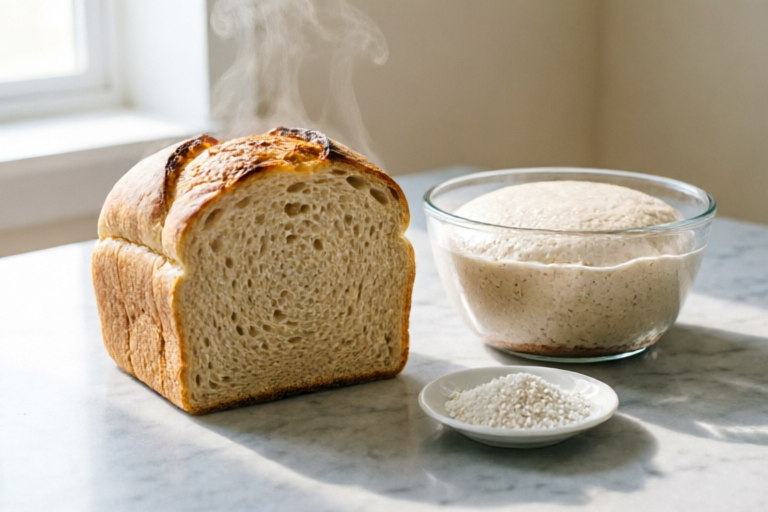
What Causes Bread to Rise When Baking?
Perfectly Risen Bread Every Time
### Article Outline: What Causes Bread to Rise When Baking?
1. Introduction to Bread Rising
Definition of bread rising: Bread rising is the process where dough expands and increases in volume due to the production of gases within it. This process is crucial for creating a light, airy texture in baked goods.
Importance of proper rising in baking: Proper rising ensures that the bread will have the right texture, flavor, and structure. Under-risen bread can be dense and tough, while over-risen bread may collapse or become flat.
Overview of the factors involved in bread rising: Several key factors contribute to bread rising, including yeast, gluten, temperature, and time. Understanding these elements is essential for achieving the best results in your baking.
2. The Role of Yeast in Bread Rising
Explanation of yeast and its function: Yeast is a living organism that consumes sugars in the dough and converts them into carbon dioxide gas and alcohol through a process called fermentation. This gas gets trapped in the dough, causing it to rise.
How yeast produces carbon dioxide during fermentation: Yeast feeds on sugars present in the flour and releases carbon dioxide as a byproduct. These bubbles of CO₂ expand within the dough, leading to its increase in volume.
Factors affecting yeast activity (temperature, moisture, etc.): Yeast thrives at specific temperatures between 70°F to 85°F (21°C to 29°C). Too cold temperatures can slow down yeast activity, while too hot temperatures can kill the yeast. Moisture also plays a critical role; too little moisture can prevent yeast from activating, while too much can lead to a soggy dough.
3. The Role of Gluten in Bread Structure
Explanation of gluten formation in dough: Gluten is formed when proteins in flour, particularly gliadin and glutenin, combine with water. Kneading the dough helps develop strong gluten strands that give bread its structure.
How gluten traps gases for expansion: The network of gluten strands acts like a sponge, trapping the carbon dioxide produced by yeast. As more gas is generated, the gluten stretches, allowing the dough to expand and rise.
Importance of kneading for gluten development: Proper kneading ensures that gluten forms adequately, which is vital for trapping gases effectively. Without sufficient gluten development, the bread may not rise properly or hold its shape after baking.
4. The Impact of Temperature on Bread Rising
Ideal temperature range for yeast activity: The ideal temperature for yeast activity is around 75°F to 80°F (24°C to 27°C). At this range, yeast ferments optimally, producing enough gas to make the dough rise effectively.
Effects of too cold or too hot temperatures: Cold temperatures slow down yeast activity, leading to longer rising times. Hot temperatures can deactivate yeast, preventing it from producing gas and causing the dough to fail to rise properly. Extremely hot temperatures can even kill the yeast.
Common rising methods (room temperature, proofing box): Room temperature rising is a common method for home bakers. Proofing boxes provide a controlled environment with consistent temperature and humidity levels, ensuring reliable results. Some bakers also use the refrigerator for overnight rising, which slows down the process but can improve flavor.
5. The Role of Time in Bread Rising
Factors that influence rising time: The amount of yeast used, the temperature of the dough and environment, the humidity level, and the size of the dough all affect the rising time. Typically, dough should double in size during the first rise and increase slightly during the second rise.
Over-rising vs under-rising issues: Over-risen dough can become flat and lose its structure, while under-risen dough may be dense and heavy. To avoid these issues, it's important to monitor the dough closely and check for proper rising.
Techniques for checking if bread has risen properly: A simple way to check if the dough has risen sufficiently is to gently press your finger into the dough. If the indentation remains, the dough has risen enough. Another method is to observe the surface of the dough; it should look puffy and slightly domed.
6. Summary of Key Takeaways
Recap of main factors affecting bread rising: Yeast, gluten, temperature, and time are the primary factors that influence bread rising. Each element plays a crucial role in ensuring the dough rises correctly.
Tips for achieving perfect bread rising: Use fresh yeast, maintain optimal temperature, ensure proper hydration, and knead the dough thoroughly. Pay attention to the rising time and check for proper expansion before proceeding to the next step.
Final thoughts on the importance of proper rising techniques: Proper rising techniques are fundamental to successful baking. By understanding and controlling the factors involved, you can consistently produce delicious, well-risen bread every time.
Comments

Great tips! Proper rising really makes a huge difference in the final product.

Does the type of flour affect the rising process as well?

I use a proofing box, but I'm curious how much faster it really is compared to room temp.

Interesting how gluten plays a role too. Always thought it was just about the yeast!
I've had issues with my bread over-rising. Is there a way to know when it's done without poking it?
So does using instant yeast make a difference in rising time?

Wow, never knew yeast was so crucial! I always thought it was just magic.