What Causes Air Pollution in Major Cities?
Cleaner Air, Healthier Cities
Introduction to Air Pollution
Air pollution is a significant environmental issue affecting millions of people worldwide. In urban areas, where population density is high and industrial activity is concentrated, maintaining good air quality is crucial for public health and environmental sustainability. This article will delve into the various factors contributing to air pollution in major cities, examining their sources and potential solutions.
Definition and Importance of Air Quality in Urban Areas
Air pollution refers to the presence of harmful substances in the atmosphere that can cause harm to human health, ecosystems, and climate change. In urban settings, poor air quality can lead to respiratory problems, cardiovascular diseases, and even premature death. Additionally, it can exacerbate global warming by increasing greenhouse gas concentrations and degrading local ecosystems.
Brief Overview of the Impact on Health and Environment
The effects of air pollution extend beyond individual health issues; they also contribute to broader environmental challenges such as acid rain, smog formation, and biodiversity loss. Understanding these impacts helps policymakers and citizens take necessary steps towards cleaner air.
Industrial Emissions: The Leading Cause
Industries are among the primary contributors to air pollution in many metropolitan areas. Manufacturing plants, power stations, and other large-scale enterprises emit vast amounts of pollutants like sulfur dioxide (SO₂), nitrogen oxides (NOₓ), carbon monoxide (CO), volatile organic compounds (VOCs), and particulate matter (PM).
Explanation of Industrial Activities Contributing to Pollution
These emissions come from processes involving combustion of fossil fuels, chemical reactions, and waste disposal. For instance, coal-fired power plants release SO₂ and NOₓ when burning coal, while oil refineries produce VOCs during refining operations. Such activities not only degrade air quality but also contribute significantly to climate change.
Examples of Industries That Release Harmful Pollutants
- Steel mills: Emitting high levels of CO and PM due to metal processing.
- Cement factories: Producing large quantities of CO₂ through calcination.
- Petrochemical plants: Releasing toxic gases like benzene and toluene.
Transportation Sector: A Significant Contributor
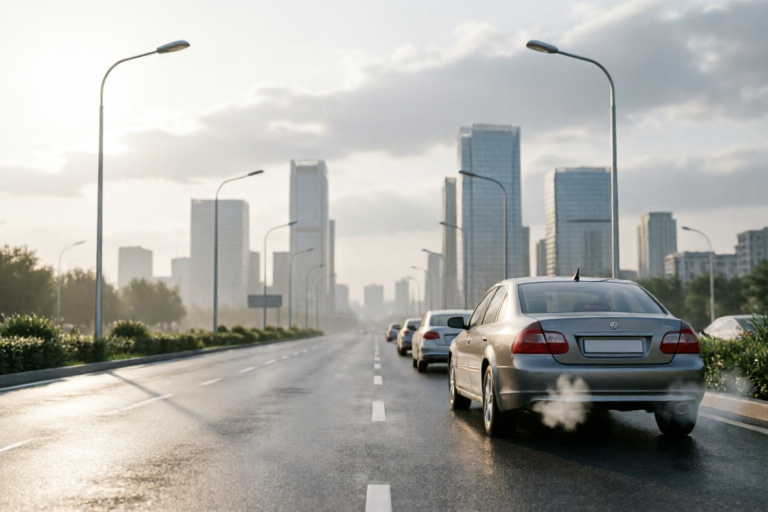
Vehicle emissions are another critical source of air pollution in urban environments. Cars, trucks, buses, and motorcycles all contribute to the problem through exhaust fumes containing pollutants similar to those mentioned earlier.
Discussion on Vehicle Emissions, Especially from Diesel Engines
Diesel engines are particularly problematic because they tend to produce more NOₓ and particulates compared to gasoline engines. These particles are small enough to penetrate deep into lung tissue, causing severe respiratory issues over time. Moreover, idling vehicles add unnecessary pollution to already congested streets.
Impact of Traffic Congestion in City Centers
Urban centers often experience heavy traffic congestion, which increases both the duration and frequency of vehicle emissions. During peak hours, roads become clogged with cars moving slowly or stopped altogether, leading to higher concentrations of pollutants near ground level where people breathe. This phenomenon is known as photochemical smog, characterized by yellowish haze and reduced visibility.
Residential Heating and Cooking Practices
Household activities also play a role in deteriorating air quality within cities. Traditional heating methods using wood, coal, or kerosene generate substantial amounts of smoke and soot, while cooking with solid fuels adds further contamination.
Analysis of How Household Activities Affect Air Quality
In developing countries, millions still rely on biomass fuels for daily needs like warmth and food preparation. Burning these materials indoors without proper ventilation results in indoor air pollution, exposing residents—especially children and elderly—to dangerous levels of contaminants.
Comparison Between Traditional and Modern Heating Methods
| Method | Efficiency (%) | Environmental Impact |
|---|---|---|
| Wood stove | 20-40 | High emissions of PM and CO |
| Electric heater | 90-95 | Low emissions if powered by renewable energy |
| Gas boiler | 80-90 | Moderate emissions of NOₓ and CO₂ |
Construction Activities and Dust Generation
Construction sites are notorious for generating large amounts of dust, which consists mainly of fine particles suspended in the air. This dust can travel long distances, settling onto buildings, trees, and water bodies.
Examination of Construction Sites as Sources of Particulate Matter
During excavation, demolition, and construction phases, soil erosion occurs naturally, releasing tiny soil particles into the atmosphere. Additionally, machinery used at construction sites emits diesel exhaust, adding to overall pollution levels.
Measures to Mitigate Dust Pollution During Building Projects
To minimize dust generation, contractors should implement several best practices:
- Watering down exposed surfaces before work begins.
- Using barriers to contain dust within the site perimeter.
- Installing air filtration systems in nearby buildings.
Summary and Conclusion
This article has explored the major causes of air pollution in major cities, highlighting industrial emissions, transportation sector contributions, residential heating and cooking practices, and construction activities. Each of these factors plays a significant role in degrading air quality, posing risks to human health and the environment.
Recap of Major Causes Discussed
We have seen how different sectors contribute to poor air quality, from factories emitting harmful chemicals to households burning biomass fuels. It's clear that addressing this issue requires coordinated efforts across multiple fronts.
Suggestions for Reducing Air Pollution in Cities
To combat air pollution effectively, governments must enforce stricter regulations on industrial emissions, promote cleaner transportation alternatives, encourage the adoption of efficient heating systems, and implement dust control measures on construction sites. Individuals can also make a difference by choosing eco-friendly products, reducing energy consumption, and supporting policies aimed at improving air quality.
Comments

Great breakdown! Sharing this with my friends who live in polluted cities.

I'm surprised by the impact of cooking practices too. Time to invest in better kitchen ventilation.

Could they introduce stricter regulations on construction sites to reduce dust?

Makes sense now why my asthma flares up more in the city center.

How exactly do these pollutants affect our health though? More details please!
Interesting point about residential heating. Maybe switching to electric heaters could help.
Yeah, I always thought traffic was the main issue. But construction dust? That's something.

Wow, never knew industrial emissions were such a big deal!