Why Does 5G Offer Faster Internet Speeds?
Unlock the Potential of 5G for a Faster Digital Future
1. Introduction to 5G Technology
What is 5G? 5G, or fifth-generation wireless technology, represents the latest evolution in mobile communication networks. It promises to deliver unprecedented levels of speed, reliability, and capacity compared to its predecessors—2G, 3G, and 4G. In today's increasingly connected world, where data consumption is growing exponentially, 5G stands out as a critical enabler for innovations ranging from smart cities to autonomous vehicles.
The transition from earlier generations has been gradual but significant. While 2G introduced basic voice services, 3G brought mobile internet access, and 4G enhanced browsing experiences with faster download speeds, 5G takes these capabilities to new heights. With its ability to support massive amounts of data at incredibly high rates, 5G is poised to revolutionize industries and transform daily life.
2. Key Features of 5G That Enable Faster Internet Speeds
Higher Bandwidth Through Wider Spectrum Usage
One of the primary reasons behind 5G’s superior performance is its utilization of broader frequency bands, particularly in the millimeter wave range. These higher frequencies offer significantly greater bandwidth, allowing for much larger volumes of data to be transmitted simultaneously. This increased capacity translates directly into faster download and upload speeds for users.
Enhanced Network Efficiency with More Base Stations and Improved Antenna Technology
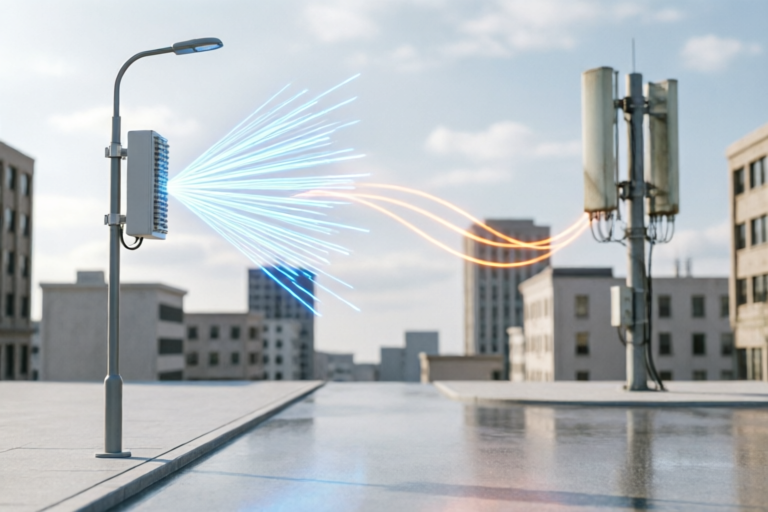
To maintain optimal performance across various locations, 5G employs denser networks composed of many small cells instead of fewer large ones used by previous technologies. Additionally, advanced antenna designs such as Massive MIMO (Multiple Input Multiple Output) help direct signals more precisely towards devices, further boosting efficiency and reducing interference.
Lower Latency Due to Advanced Signal Processing Techniques
Latency refers to the time it takes for data packets to travel between source and destination. By implementing sophisticated algorithms and hardware optimizations, 5G reduces this delay substantially compared to 4G LTE. Lower latencies are crucial for applications requiring real-time interaction, such as online gaming or telemedicine.
3. How 5G Reduces Latency for Smoother User Experience
Understanding Latency: In simple terms, latency measures how quickly information can move through a network. For instance, if you click on an image link, there will be some delay before the page fully loads. High latency can lead to noticeable delays in loading times, especially when dealing with complex multimedia content or interactive platforms.
Real-World Benefits: Reduced latency in 5G networks means smoother interactions during activities like streaming videos, participating in virtual meetings, or playing multiplayer games. Users experience less buffering and more responsive interfaces, enhancing overall satisfaction and engagement.
4. The Role of Millimeter Waves in Boosting Speeds
Introduction to Millimeter Waves: Millimeter waves operate within frequencies above 30 GHz, which lie beyond those typically utilized by current cellular systems. Their shorter wavelengths enable them to carry vast amounts of data over short distances efficiently. However, they also have limited penetration capabilities and are easily obstructed by physical barriers like buildings or trees.
Advantages Over Traditional Frequencies: Despite these limitations, mmWaves provide several benefits. Firstly, they allow for extremely wide channels, supporting very high data rates. Secondly, because they cover smaller areas, operators can reuse the same spectrum multiple times without causing interference issues.
Challenges & Solutions: Deploying mmWave infrastructure requires overcoming obstacles such as line-of-sight requirements and potential signal degradation caused by weather conditions. To address these challenges, network providers are investing heavily in infrastructure upgrades, deploying more base stations strategically placed throughout urban centers, and developing robust backhaul connections.
5. Comparison Between 4G and 5G Speeds: Real-World Examples
Several studies and tests conducted globally highlight substantial improvements in both download and upload speeds offered by 5G compared to 4G. For example, in South Korea, one of the earliest adopters of commercial 5G services, users reported average download speeds exceeding 500 Mbps, nearly ten times faster than typical 4G rates.
However, actual performance varies depending on several factors including geographic location, network congestion, device compatibility, and operator-specific implementations. Urban areas tend to benefit most from 5G deployments due to better coverage and infrastructure investments.
6. Conclusion: Why 5G Represents a Major Leap Forward in Connectivity
In summary, 5G introduces groundbreaking improvements in internet speed through higher bandwidth, lower latency, and innovative use of millimeter waves. As we move towards a more interconnected society, these enhancements promise to unlock countless possibilities for innovation and convenience.
Looking ahead, widespread adoption of 5G could reshape entire sectors, driving advancements in healthcare, education, entertainment, and beyond. By providing reliable, ultra-fast connections, 5G lays the groundwork for next-generation technologies that may yet remain unimagined.
Comments

Never knew this! So 5G is all about faster speeds AND smoother connections?

Great breakdown! It's amazing how much better 5G is at handling multiple devices at once.

This really makes me excited for the future of connectivity. Can't wait to see what 5G brings next!

So 5G is basically just a big upgrade over 4G? What's the point if we already have pretty good speeds?

I've noticed a huge difference in streaming quality since switching to 5G. Makes total sense after reading this!

The part about millimeter waves was super interesting. I always thought they'd be too unreliable for wide use.

How exactly does the wider spectrum usage translate to faster speeds? Is it just about having more channels?

Wow, never knew 5G could reduce latency so much! This really explains why my online games feel smoother now.