Animals & Nature
Why do birds migrate south during winter months?
Follow the Flock, Witness Nature's Journey
# Why Do Birds Migrate South During Winter Months?
## Introduction to Seasonal Migration Behavior
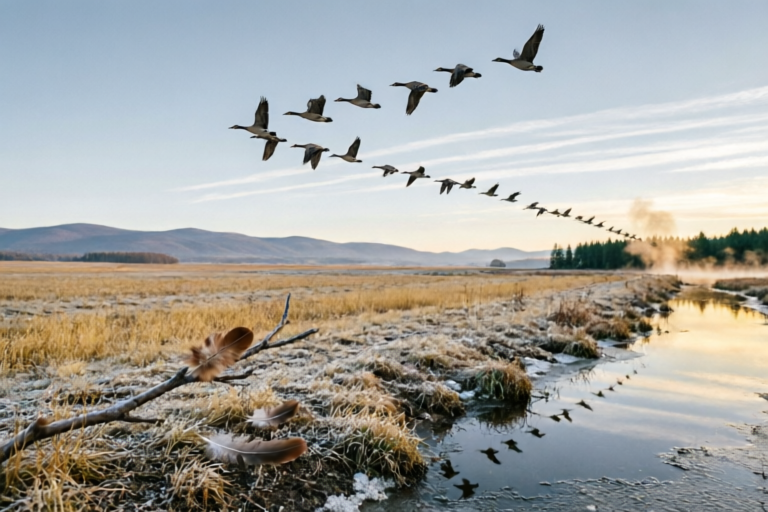
Throughout the history of our planet, few phenomena capture the imagination quite like the sight of thousands of birds taking flight in coordinated patterns across the sky. As the seasons shift from the warmth of summer to the chill of winter, a massive biological event unfolds across continents. This phenomenon is known as seasonal migration, a survival strategy adopted by countless avian species worldwide.
While migration occurs for various reasons throughout the year, such as breeding, the most dramatic and observable movement involves birds traveling south during the winter months. For many residents of northern latitudes, watching the empty skies of late autumn signals the departure of beloved neighbors like geese, swallows, and warblers. But why specifically south? Why not stay put? The decision to undertake these perilous journeys is driven by complex biological imperatives rooted in the fundamental need for survival.
In this comprehensive guide, we delve deep into the scientific and ecological drivers behind southern winter migration. We will explore how the search for food dictates the timing, how harsh climates create physiological stress, and the incredible innate navigation systems that guide these travelers safely to their destinations. By understanding the "why" behind bird migration, we gain a deeper appreciation for the intricate connections that sustain biodiversity and maintain the health of our global ecosystems.
## Search for Abundant Food Sources
### The Impact of Frozen Ground and Vegetation
The primary driver of winter migration is, undeniably, the availability of food. In temperate and polar regions, winter brings a cessation of photosynthesis. Deciduous trees lose their leaves, grasses die back, and the ground becomes covered in snow or ice. For birds that rely on specific dietary staples, such as insects, nectar, or easily accessible seeds and fruits, the landscape transforms from a banquet to a barren wasteland overnight.
Consider the diet of a warbler. These small songbirds primarily feed on insects and spiders found on foliage. When temperatures drop below freezing, insects either hibernate, burrow deep underground, or simply perish. Furthermore, the vegetation that harbors them disappears or becomes encased in ice. A bird cannot eat frozen branches. Consequently, staying in a northern environment during winter means facing near-certain starvation unless the bird is capable of switching diets entirely—a trait not all species possess.
Similarly, granivorous birds (seed-eaters) face significant challenges. While some seeds remain available in winter, accessing them becomes difficult under snow cover. Ground-foraging birds struggle to dig through frozen soil, making the energy cost of finding food unsustainable. Many migratory species move south because warmer climates maintain active plant life and insect populations year-round, ensuring a reliable supply of calories necessary to fuel metabolism.
### Energy Balance and Metabolic Demands
Migration is not just about finding food; it is about balancing energy expenditure with intake. The winter environment is a place where energy expenditure spikes due to cold. Birds must burn fat reserves to maintain body temperature. If they cannot replenish these reserves by eating, their stored fat depletes rapidly, leading to death.
Southern winter habitats often offer abundant resources that require less energy to acquire. Tropical and subtropical regions may still host ripe fruits, blooming flowers, or swarming insects during northern winters. For example, many North American waterfowl migrate to the Gulf Coast, where wetlands remain unfrozen. These areas teem with aquatic plants, mollusks, and crustaceans, providing a high-calorie buffet that allows migrating birds to recover from the grueling flight and prepare for the spring return north.
The decision to migrate south is essentially an economic calculation performed by evolution over millions of years. If the caloric intake gained in the warmer region minus the caloric cost of migration exceeds the caloric intake available locally during winter, migration is the winning strategy. For many species, moving south offers this positive balance, whereas staying puts them in a negative energy deficit.
## Coping with Harsh Climatic Conditions
### Physiological Stress of Extreme Cold
Beyond food scarcity, the physical conditions of winter pose severe threats to avian physiology. Birds are warm-blooded, meaning they maintain a constant internal body temperature regardless of external conditions. However, this regulation requires immense energy. In extreme cold, a bird's basal metabolic rate increases dramatically just to prevent hypothermia.
Small birds have a high surface-area-to-volume ratio, causing them to lose heat quickly. A chickadee or sparrow might freeze to death within hours if exposed to severe cold without adequate shelter or insulation. While feathers provide excellent insulation, and some birds fluff them up to trap air layers, the limits of thermal tolerance are real. Species that migrate south leave the harshest thermal regimes behind, moving into climates where the thermal gradient between their body and the environment is less extreme, reducing the energy drain on their bodies.
Moreover, extreme cold often comes with storms, high winds, and precipitation. These weather events increase the risk of physical injury, exhaustion, and disorientation during rest periods. Southern locations generally offer milder weather patterns, allowing migrating birds to roost safely and conserve energy rather than fighting for survival against blizzards.
### Scarcity of Open Water
Water availability is another critical factor often overlooked but essential for survival. Many birds require liquid water for drinking and, in the case of waterfowl and shorebirds, swimming and bathing. Bathing is crucial for feather maintenance, keeping oil glands functional and plumage waterproof.
In northern regions during winter, freshwater sources frequently freeze over. Lakes, ponds, and streams become solid sheets of ice. While some birds can break thin ice or find small openings, large-scale ice cover creates a logistical nightmare. Without open water, birds cannot hydrate effectively. Dehydration is a silent killer, impairing kidney function and digestion.
Migration south ensures access to open water. Coastal regions, rivers flowing from unglaciated mountains, or even urban reservoirs in warmer latitudes provide necessary hydration points. For swimming birds, the inability to dive into icy water to feed forces them to travel further and work harder, compounding energy deficits. Therefore, the quest for drinkable, usable water is a major motivator for the southward journey, reinforcing the necessity of leaving the frozen north.
## Innate Instincts and Navigation Abilities
### Biological and Environmental Cues
If migration is purely about survival, how do young birds, who have never traveled before, know where to go? The answer lies in innate instincts honed by genetics. Research suggests that migration routes are encoded in the DNA of birds. Upon reaching maturity, juvenile birds inherit the knowledge of direction, distance, and destination without being taught by parents.
These instincts are triggered by environmental cues. Changes in day length, known as photoperiodism, are the strongest trigger. As days shorten in late summer and early autumn, hormonal changes in the birds' bodies initiate migratory restlessness, called Zugunruhe. This prepares them physically for the long haul. Simultaneously, environmental factors like wind shifts, temperature drops, and food scarcity reinforce the urge to leave.
However, instinct alone is not enough. Birds must navigate vast distances across oceans, mountains, and deserts. They employ a sophisticated suite of navigational tools to ensure they stay on course.
### Magnetic Fields and Star Patterns
One of the most remarkable abilities of migrating birds is magnetoreception—the capacity to detect the Earth’s magnetic field. Scientists believe that proteins in the bird’s eye, possibly cryptochromes, interact with light to allow the bird to see magnetic lines as visual patterns. This acts like an internal compass, guiding them along geomagnetic corridors. Some species, like homing pigeons, utilize magnetic inclination to determine latitude, effectively telling them how far north or south they are.
Celestial navigation is another key component. Nocturnal migrants, such as the Indigo Bunting, use the stars. Experiments show that when placed under artificial planets, these birds orient themselves correctly according to star charts. They learn to identify constellations, particularly the North Star, which remains stationary relative to other moving stars, serving as a fixed point in the night sky.
Landmarks play a role too. Familiar coastlines, mountain ranges, and river valleys help birds correct their course. Additionally, olfactory cues (smell) may assist in pinpointing final destination sites. The combination of these sensory inputs creates a robust navigation system that allows billions of birds to traverse the globe annually with remarkable precision.
## Conclusion on Survival and Ecological Balance
### Summary of Primary Reasons
To summarize, the migration of birds south during winter months is a multifaceted survival strategy driven by three interconnected pillars:
1. **Resource Acquisition:** Moving to regions where food (insects, seeds, fruit) remains available and accessible.
2. **Thermoregulation:** Escaping lethal cold and finding environments that minimize energy expenditure on body heat maintenance.
3. **Hydration:** Accessing unfrozen water sources necessary for bodily functions and hygiene.
This movement is guided by powerful innate instincts and refined navigation skills involving magnetic fields, stars, and memory.
### Critical Role in Biodiversity and Ecosystem Health
The implications of bird migration extend far beyond the birds themselves. Migratory species act as vital links in the global web of life. They transport nutrients across continents, fertilizing soils in both breeding and wintering grounds. Their presence controls insect populations, acting as natural pest management agents for agricultural crops in tropical regions.
Furthermore, migratory birds contribute to seed dispersal. As they consume fruits in the tropics and excrete seeds in temperate zones, they facilitate forest regeneration and plant diversity. This intercontinental nutrient cycling supports ecosystem resilience. If bird migrations were to cease, we would witness a collapse in the ecological balance of countless habitats, affecting everything from plant reproduction to predator-prey dynamics.
Understanding why birds migrate south is therefore not just an academic exercise; it is crucial for conservation efforts. Protecting stopover sites, preserving wintering habitats, and mitigating climate change impacts on migration routes are essential steps to ensure these majestic journeys continue. By valuing the migration of birds, we acknowledge our shared responsibility in maintaining the health of our planetary home. Whether observing a flock of geese overhead or studying their biology in a lab, recognizing the urgency and beauty of this natural rhythm is key to preserving the biodiversity that sustains us all.
In essence, the southward journey is a testament to the tenacity of life. It demonstrates the profound adaptations organisms evolve to thrive in a changing world. As we look to the future, protecting the pathways of these travelers ensures that the spectacular spectacle of migration continues to grace our skies for generations to come.
Comments

ObserverJoe
Reminds me of why I see so many crows in the city during winter vs summer.
👍 11👎 0

LazySunday
Never knew this! Mind = blown 🤯.
👍 24👎 0

NatureNerd
The part about open water surprised me. Didn't realize drinking itself could be an issue in cold climates.
👍 25👎 0

Alex_92
do hummingbirds actually migrate south? feels like they wouldn't survive the frost tbh
👍 27👎 0

BirdBrain_Tom
so basically they are just escaping hunger? haha simple as that.
👍 29👎 0

GrandmaRose
Used to tell my grandkids about the cranes coming home. Didn't know exactly why though. Thanks for explaining!
👍 15👎 0
SkyWatcher_01
Wow, I always wondered how they find their way back. Magnetic fields are wild.
👍 21👎 0