Why Does Hot Water Freeze Faster Than Cold?
Unlocking the Secrets of Thermodynamics
1. Introduction to the Mpemba Paradox
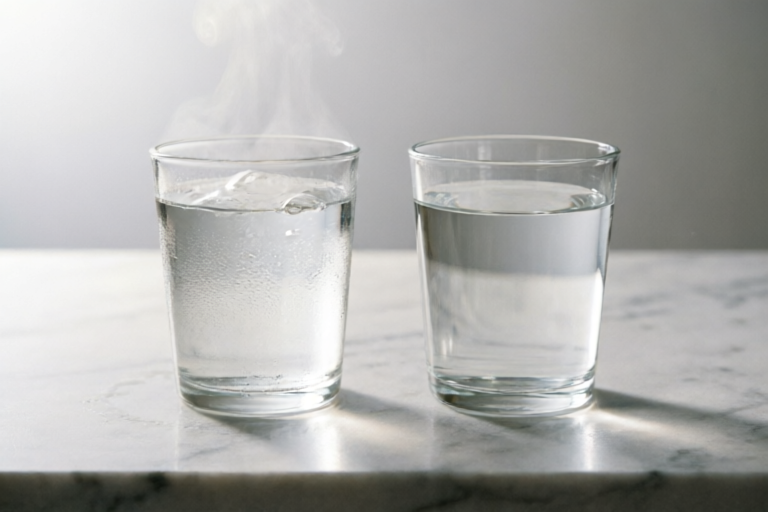
The phenomenon where hot water freezes faster than cold water is one of the most counterintuitive concepts in basic physics. Known widely as the Mpemba Effect, this observation contradicts our everyday intuition. Logically, we expect cooler substances to reach the freezing point sooner because they possess less thermal energy to dissipate. However, under specific conditions, a container of hot water placed in a freezer will solidify before a container of cold water started at a lower temperature.
This paradox has fascinated scientists and laypeople alike for centuries. Ancient philosophers like Aristotle speculated on the cooling rates of heated wine compared to warm water, suggesting a connection between heat and cooling efficiency. However, it was not until 1963 that the phenomenon gained significant modern attention. Erasto Mpemba, a Tanzanian student, noticed that his ice cream mix froze faster while still warm than when he allowed it to cool down first. Confused by what he called \"a physical mystery\", he consulted with a visiting physics lecturer. Despite initial skepticism, experiments confirmed his observations, leading to the phenomenon being named after him.
Historical Context and Scientific Curiosity
For decades, the scientific community dismissed the idea as experimental error. How could adding energy (heat) result in faster state change (freezing)? Early explanations were often incomplete. It wasn't until the late 20th century and early 21st century that researchers began systematically analyzing the variable factors involved. Today, the Mpemba Effect remains a subject of rigorous study, proving that science is rarely binary and depends heavily on the precise environment in which the experiment is conducted.
Understanding this effect is not merely an academic exercise; it has practical applications in industrial cooling processes, food preservation, and even understanding climate dynamics. By breaking down the mechanisms at play, we can better understand the complex interplay between thermodynamics, fluid dynamics, and material properties.
2. The Impact of Evaporation on Water Mass
One of the most significant and straightforward explanations for the Mpemba Effect involves the process of evaporation. When water is heated, its molecules gain kinetic energy, causing them to move faster and break free from the liquid surface more readily. This results in a higher rate of evaporation compared to colder water.
Reduction of Liquid Volume
In a typical home freezer setting, the air is relatively dry. When you place a pot of boiling water into this environment, a considerable amount of steam escapes rapidly. As water evaporates, the total mass of the liquid remaining in the container decreases. Since freezing requires removing the latent heat of fusion from a specific mass of water, having less water to freeze means less total energy needs to be extracted.
For instance, if you start with 100 milliliters of hot water and lose 20% through evaporation during the cooling phase, you are left with 80 milliliters. Conversely, cold water may lose negligible amounts of mass. Therefore, the remaining mass of the hot sample takes less time to reach the freezing point because the heat load is simply smaller. This factor alone can provide a decisive advantage to the hotter sample in open containers.
Surface Area and Exposure
The geometry of the container also plays a crucial role. If the hot water is spread over a larger surface area or placed in an open dish, evaporation accelerates. This explains why the Mpemba Effect is more observable in shallow trays rather than sealed bottles. Sealed containers prevent mass loss, effectively neutralizing this mechanism and often resulting in the cold water freezing first, as expected.
3. Role of Convection Currents in Cooling
Beyond simple mass loss, the internal movement of water molecules is a powerful driver of cooling speed. This is primarily governed by convection currents, which describe how fluids circulate heat from warmer regions to cooler ones.
Temperature Gradients and Fluid Dynamics
When water is hot, especially near the boiling point, it creates steep temperature gradients within the container. The water at the top cools quickly by contact with cold air, becoming denser and sinking, while the warmer water at the bottom rises to replace it. This continuous circulation ensures that heat is constantly redistributed and exposed to the cooling environment.
Warm water promotes stronger convection currents than lukewarm water because the viscosity (thickness) of the liquid changes with temperature. Hotter water is slightly less viscous, allowing for faster flow. These vigorous currents facilitate a more efficient transfer of heat from the interior of the liquid to the surface and eventually to the freezer walls. In contrast, cold water has weaker convection, meaning the center of the liquid may stay warmer for longer periods relative to its edge, slowing the overall freezing process.
Dissipation Efficiency
This dynamic mixing prevents the formation of stagnant thermal layers. Imagine a cup of coffee; the top gets cold fast, but the middle stays hot without stirring. With hot water, nature stirs it for you through convection. This enhanced heat dissipation allows the system to shed its excess thermal energy more aggressively than a static column of cold water.
4. Effects of Dissolved Gases and Impurities
Water is rarely pure H₂O. It typically contains dissolved minerals and gases like oxygen and carbon dioxide. The behavior of these impurities changes significantly when water is heated, affecting its thermodynamic properties.
Boiling Removes Dissolved Gases
As water approaches its boiling point, its ability to hold dissolved gases decreases. When you boil water, bubbles of gas form and escape, leaving the water largely degassed. Cold water retains a higher concentration of these dissolved gases.
Some theories suggest that dissolved gases alter the solubility of solids in the water and can influence the nucleation points required for ice crystals to form. Degassed water might exhibit different freezing characteristics compared to saturated water. For instance, oxygen-rich cold water might stabilize the liquid phase slightly more than oxygen-poor hot water, delaying the onset of crystallization.
Nucleation Sites and Thermal Conductivity
Furthermore, heating can precipitate some impurities. Hard water, for example, forms scale when heated. While this seems minor, microscopic particles can act as nucleation sites—places where ice starts to grow. Hot water treated in a way that removes suspended particles or alters the gas content changes the landscape of the liquid. Research indicates that in some cases, the reduced presence of gases makes the remaining water more prone to forming stable ice structures once the temperature drops below zero, whereas gas-heavy cold water might resist phase change.
5. Differences in Supercooling Behavior
Perhaps the most scientifically nuanced factor is the phenomenon of supercooling. Freezing does not happen instantly at 0°C (32°F); water often waits for a "trigger" to begin crystal formation.
The Trap of Supercooling
Cold water is notorious for supercooling. Under very still conditions and in smooth containers, water can remain liquid well below 0°C without turning into ice. It waits for a vibration or an impurity to kickstart the freezing process. This can lead to a situation where cold water sits at -5°C in liquid form, suddenly freezing later than expected.
Hot water, however, tends to experience fewer degrees of supercooling. Because of the previous history of heating, agitation, and dissolved gas loss, it may establish ice nuclei earlier as it cools. Essentially, warm water hits the freezing point sooner and commits to the phase transition, while cold water hovers anxiously below zero before succumbing to ice.
Nucleation Timing
If you observe the freezer closely, you might see the hot water developing frost on the sides earlier than the cold water. This is because the supercooling threshold is reached differently. Warm water often initiates crystallization closer to 0°C. Once the phase change begins, it releases latent heat, but since the mass is already reduced via evaporation and the structure initiated earlier, the entire block freezes faster. Cold water, stuck in a metastable liquid state, essentially wastes time waiting for the trigger that hot water never needed.
6. Conclusion on Scientific Consensus and Conditions
After exploring evaporation, convection, dissolved gases, and supercooling, it becomes clear that the Mpemba Effect is not a single magic bullet. Instead, it is a cumulative result of multiple variables interacting under specific conditions.
Not a Universal Rule
It is crucial to understand that hot water does not always freeze faster. If the containers are identical, covered, the water is distilled, and the freezer is a controlled constant environment, the cold water will win every time. The Mpemba Effect relies on a delicate balance. It works best when:
- Containers are open: Allowing for evaporation.
- Substantial Temperature Difference: Starting temperatures must be sufficiently different.
- Specific Container Shapes: Shallow dishes promote surface cooling.
- Absence of Insulation: No lids to trap steam.
Ongoing Research and Complexity
Scientists continue to debate the primary cause. Some argue that hydrogen bonding structures differ between hot and cold water (rearranging into hexagonal patterns easier after heating). Others dismiss structural theories in favor of macroscopic effects like evaporation and convection. Currently, the consensus is that no single mechanism explains every case.
The Mpemba Effect serves as a reminder that nature is complex. Intuition based on simplified models often fails in real-world scenarios. Whether you are an engineer designing cooling towers, a student conducting science fairs, or just curious about kitchen mysteries, acknowledging the nuances of thermodynamics ensures success. Next time you wonder why your hot soup chills faster than the tea sitting out, consider the invisible dance of molecules, steam, and energy driving the Mpemba Paradox.
In conclusion, while physics provides answers, it rarely offers absolutes. The interaction between heat, mass, and matter keeps science vibrant and full of surprises.
Comments

Whoa mind blown. I thought cold always wins but turns out nature is tricky 🤯

Anyone know if adding ice cubes at the start changes anything? Like pre-cooling it?

So basically it’s not guaranteed? Just depends on the setup right? Don’t wanna waste fuel testing this everywhere.
This is useful info! Wonder if it works in the freezer drawer or if the air needs to be moving.

But wouldn't the hot water take more energy to cool down first? How does it jump over the cold water temp? Still a bit weird to me.

Tried this once when I needed popsicles fast. Surprised it actually worked lol. Guess the evaporation really helps cool it down quicker.
wait so if the container shape matters, would a narrow tall cup beat a wide shallow bowl? curious about the surface area thing.

honestly never knew this was real tbh. always thought my grandma was just wrong about putting hot food away.