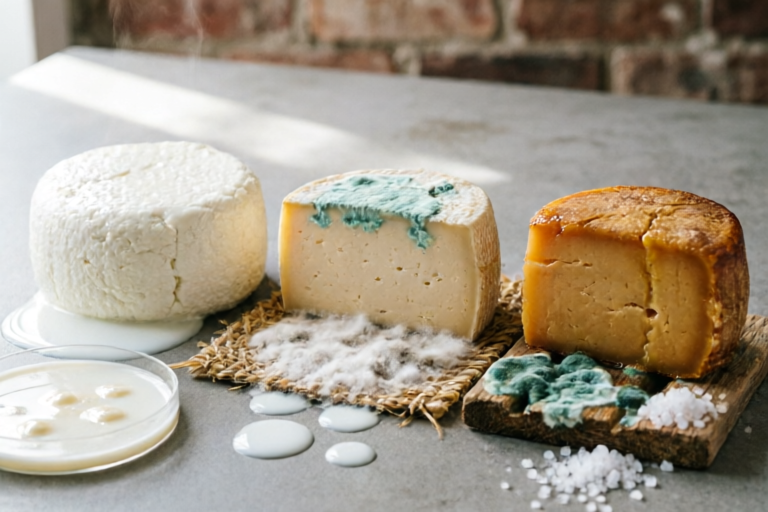
How Does Fermentation Change the Flavor of Cheese?
From Milk to Marvel: The Art of Cheese Fermentation
Introduction to Fermentation in Cheese Making
Fermentation is a crucial process in cheese production that involves the conversion of sugars into acids, gases, or alcohol by microorganisms. This transformation not only preserves the cheese but also significantly impacts its flavor, texture, and aroma. The history of fermented cheeses dates back thousands of years, with evidence of cheese-making found in ancient Egyptian tombs and Greek mythology. Today, fermentation remains an essential step in creating the diverse array of cheeses enjoyed around the world.
Definition and Importance of Fermentation in Cheese Production
Fermentation is the metabolic process where microorganisms, such as bacteria and yeast, convert sugars into acids, gases, or alcohol. In cheese-making, lactic acid bacteria are primarily responsible for converting lactose into lactic acid, which lowers the pH of the cheese curds and helps in their separation from the whey. This acidification is vital for coagulating the proteins and setting the curds, thus initiating the cheese-making process.
Brief History of Fermented Cheeses
The origins of cheese-making can be traced back to ancient civilizations, including the Sumerians, Egyptians, and Greeks. Early cheese-makers likely discovered the process accidentally when milk was left to sit and ferment naturally. Over time, this technique evolved into a more controlled process, with specific cultures and techniques developed to produce various types of cheeses. Today, there are hundreds of cheese varieties worldwide, each with its own unique characteristics and flavors.
Overview of How Fermentation Affects Flavor Development
The process of fermentation plays a pivotal role in developing the distinctive flavors, aromas, and textures of cheese. By breaking down lactose and proteins, microorganisms create compounds that contribute to the complexity of the cheese's flavor profile. These compounds can range from simple acids to more complex esters, aldehydes, and ketones, which together form the unique taste and aroma of each cheese variety.
The Role of Microorganisms in Flavor Transformation
The microorganisms involved in cheese fermentation include various strains of bacteria and fungi, each contributing uniquely to the cheese's final flavor and texture.
Types of Bacteria and Fungi Involved in Cheese Fermentation
Lactic acid bacteria (LAB), such as Lactobacillus, Leuconostoc, and Streptococcus, are the primary microorganisms responsible for the initial stages of cheese fermentation. They convert lactose into lactic acid, lowering the pH and promoting the coagulation of milk proteins. In addition to LAB, certain molds, such as Penicillium roqueforti and Penicillium camemberti, are used to produce blue and surface-ripened cheeses, respectively. These molds contribute to the characteristic flavors and textures of these cheese varieties.
How These Microorganisms Break Down Lactose and Proteins
The breakdown of lactose and proteins by microorganisms is a critical aspect of cheese fermentation. Lactic acid bacteria metabolize lactose into lactic acid, which not only lowers the pH but also inhibits the growth of unwanted pathogens. Meanwhile, proteolytic enzymes produced by these bacteria and other microorganisms break down casein proteins into smaller peptides and amino acids. These compounds contribute to the cheese's flavor, texture, and aroma.
Influence on Aroma, Texture, and Taste Profiles
The activities of microorganisms during fermentation influence the cheese's aroma, texture, and taste in several ways. For example, the production of volatile compounds by bacteria and molds contributes to the cheese's distinct aroma, while the breakdown of proteins results in a softer texture and more complex flavor. Additionally, the presence of certain microorganisms can lead to the development of specific flavors, such as the earthy notes in washed-rind cheeses or the pungent aroma of blue cheeses.
Stages of Fermentation and Their Impact on Flavor
The fermentation process in cheese-making occurs in several stages, each contributing to the development of the cheese's flavor and texture.
Initial Stages: Acidification and Curd Formation
The initial stage of cheese fermentation involves acidification and curd formation. During this phase, lactic acid bacteria convert lactose into lactic acid, lowering the pH of the milk and promoting the coagulation of milk proteins. This process leads to the formation of curds, which are then separated from the whey. The acidity and texture of the curds at this stage play a significant role in determining the final characteristics of the cheese.
Aging Process: Development of Complex Flavors Through Secondary Fermentation
After the initial stages of fermentation, the cheese enters the aging process, during which secondary fermentation occurs. During this phase, additional microorganisms, including yeasts and molds, may become active, contributing to the development of more complex flavors and textures. For example, blue cheeses develop their characteristic veins and flavors due to the growth of Penicillium roqueforti, while surface-ripened cheeses like Brie and Camembert acquire their soft, creamy texture and nutty flavor through the action of mold species.
Final Stages: Ripening and Maturation Effects on Cheese Character
The final stages of cheese fermentation involve ripening and maturation, during which the cheese develops its full flavor and texture. During this period, the cheese undergoes further enzymatic activity, leading to the breakdown of proteins and fats, which contributes to the cheese's final flavor profile. The duration of the ripening and maturation process varies depending on the cheese variety, ranging from a few weeks for fresh cheeses to several years for aged varieties.
Common Fermented Cheese Varieties and Their Unique Flavors
There are numerous cheese varieties that rely on fermentation to develop their unique flavors and textures. Some of the most popular fermented cheese categories include blue cheeses, washed-rind cheeses, surface-ripened cheeses, and hard cheeses.
Blue Cheeses (e.g., Roquefort, Gorgonzola)
Blue cheeses, such as Roquefort, Gorgonzola, and Stilton, are characterized by their distinctive blue or green veins and pungent aroma. These veins are caused by the growth of Penicillium roqueforti, a mold that produces enzymes that break down proteins and fats, contributing to the cheese's strong flavor and creamy texture. Blue cheeses are typically sharp, salty, and slightly tangy, with a crumbly or creamy texture depending on the variety.
Washed-Rind Cheeses (e.g., Epoisses, Taleggio)
Washed-rind cheeses, such as Epoisses, Taleggio, and Munster, are known for their strong aroma and sticky orange rinds. These cheeses are periodically washed with brine or other liquids, which promotes the growth of Brevibacterium linens, a bacterium responsible for the cheese's distinctive smell and flavor. Washed-rind cheeses are typically soft, creamy, and have a robust, savory flavor with a hint of sweetness.
Surface-Ripened Cheeses (e.g., Brie, Camembert)
Surface-ripened cheeses, such as Brie, Camembert, and Brillat-Savarin, are soft and creamy, with a bloomy rind. These cheeses are ripened from the outside in, with the growth of Penicillium camemberti on the surface of the cheese. As the mold breaks down the proteins and fats, it creates a soft, creamy texture and a rich, buttery flavor. Surface-ripened cheeses are often mild and delicate when young, but they become stronger and more complex as they age.
Hard Cheeses Like Parmesan and Cheddar
Hard cheeses, such as Parmesan, Grana Padano, and Cheddar, are aged for long periods, allowing for extensive enzymatic activity that breaks down proteins and fats. This process contributes to the cheese's intense flavor and firm texture. Parmesan, for example, is aged for up to two years, developing a granular texture and a rich, nutty flavor. Cheddar, on the other hand, can vary in flavor from mild and creamy to sharp and tangy, depending on the aging period.
Factors Affecting Fermentation and Flavor Profiles
Several factors can influence the fermentation process and the resulting flavor profiles of cheese.
Temperature Control During Fermentation
Temperature control is crucial during the fermentation process, as it affects the activity of microorganisms and the rate of chemical reactions. Higher temperatures promote faster microbial growth and enzyme activity, leading to quicker acidification and flavor development. However, excessively high temperatures can cause the cheese to over-acidify or develop off-flavors. Conversely, lower temperatures slow down the fermentation process, resulting in milder flavors and textures. The optimal temperature range for cheese fermentation varies depending on the cheese variety.
Salt Content and Its Role in Flavor Enhancement
Salt plays a vital role in cheese fermentation by regulating the activity of microorganisms and enhancing the cheese's flavor. Salt inhibits the growth of unwanted pathogens and encourages the growth of beneficial bacteria, such as lactic acid bacteria. It also draws moisture out of the cheese curds, helping to form a firmer texture. Additionally, salt enhances the cheese's flavor by balancing acidity and bringing out the natural sweetness of the milk. The salt content in cheese can vary widely, from less than 1% in fresh cheeses to over 5% in aged varieties.
Humidity Levels in Aging Environments
The humidity level in the aging environment also plays a significant role in cheese fermentation and flavor development. High humidity levels help to maintain moisture in the cheese, preventing it from drying out and promoting the growth of molds and bacteria on the surface. This is particularly important for surface-ripened cheeses, which rely on the activity of microorganisms on the rind to develop their characteristic flavors and textures. Conversely, low humidity levels can cause the cheese to dry out, leading to a harder texture and potentially affecting the flavor profile.
Influence of Milk Type (Cow, Goat, Sheep) on Final Product
The type of milk used in cheese-making can significantly impact the final product's flavor, texture, and nutritional profile. Cow's milk is the most commonly used milk for cheese-making, producing a wide range of cheese varieties with varying flavors and textures. Goat's milk produces a tangier, creamier cheese with a smoother texture, while sheep's milk yields a richer, more intense flavor with a higher fat content. The choice of milk can also affect the cheese's ability to age and develop complex flavors over time.
Conclusion: Appreciating the Complexity of Fermented Cheese
In conclusion, the process of fermentation is a fundamental aspect of cheese-making, transforming simple dairy products into complex, delicious cheeses with unique flavors and textures. From the initial stages of acidification and curd formation to the final stages of ripening and maturation, each step contributes to the development of the cheese's final characteristics. By understanding the role of microorganisms, environmental factors, and the type of milk used, we can appreciate the artistry behind crafting flavorful cheeses through fermentation techniques. Whether you prefer the sharpness of blue cheeses, the creaminess of washed-rind cheeses, or the nuttiness of hard cheeses, there is a fermented cheese variety to suit every palate.
Comments

This really shows the craftsmanship behind each cheese. Truly an art form!

Interesting that goat milk cheeses have such distinct flavors. I love trying new ones.
The aging process sounds fascinating. How long does it usually take for cheeses to fully mature?

Never knew this! Makes me want to try more blue cheeses.

Does the temperature really affect the flavor that much? I need to try making cheese at different temps.

I always wondered why some cheeses have that tangy flavor. Now it makes sense.

So fermentation is like magic that turns milk into something so delicious. Cool stuff!

Wow, I never knew the type of milk used could change the flavor so much!