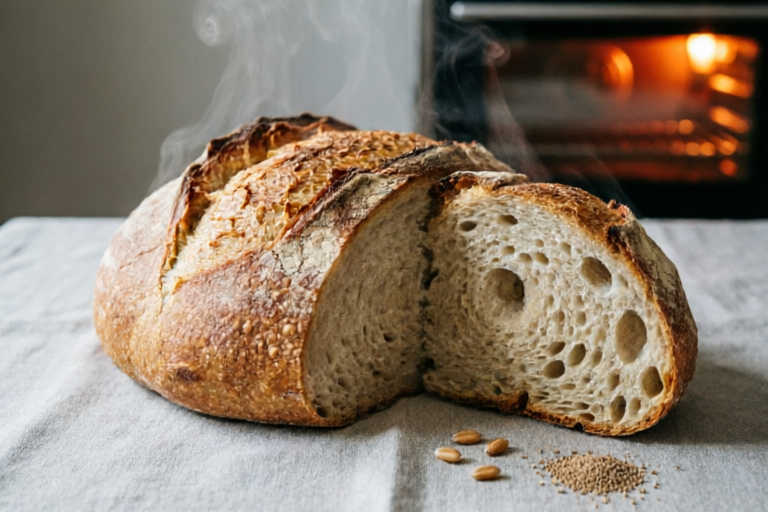
Why Does Bread Rise When Baked?
The Science of Bread Rising
### Article Outline: Why Does Bread Rise When Baked?
1. Introduction to Bread Rising
- Definition of bread rising: Bread rising refers to the process where dough expands and becomes lighter before it is baked. This process is crucial for developing the characteristic texture and flavor of bread. - Importance of bread rising for texture and flavor: Proper rising ensures that the bread has a light, airy crumb and a pleasant taste. Without adequate rising, the bread may turn out dense and flat. - Brief overview of the baking process: The baking process involves mixing ingredients, kneading the dough, allowing it to rise, shaping the bread, and finally baking it at a high temperature.
2. The Role of Yeast in Bread Rising
- Explanation of yeast as a leavening agent: Yeast is a microorganism that plays a critical role in bread making by acting as a leavening agent. It converts sugars in the dough into carbon dioxide and ethanol, which causes the dough to rise. - How yeast consumes sugars and produces carbon dioxide: During fermentation, yeast feeds on the sugars present in the dough, producing carbon dioxide gas. These bubbles get trapped within the dough, causing it to expand. - The importance of fermentation in dough development: Fermentation not only helps in the rising process but also develops the flavor and texture of the bread. The longer the fermentation time, the more complex the flavors become.
3. The Science Behind Carbon Dioxide Production
- Chemical reactions that occur during baking: When the dough is placed in the oven, the heat activates the yeast, speeding up the fermentation process. The yeast continues to produce carbon dioxide until the temperature reaches around 140°F (60°C), at which point the yeast dies. - How carbon dioxide expands the dough structure: As the carbon dioxide gas is produced, it gets trapped in the gluten network formed by the flour proteins. This expansion creates air pockets, giving the bread its characteristic texture. - Factors affecting gas production (temperature, humidity): The rate of carbon dioxide production is influenced by environmental factors such as temperature and humidity. Higher temperatures speed up the reaction, while excessive humidity can slow down the process.
4. The Role of Gluten in Dough Structure
- Explanation of gluten formation: Gluten is a protein composite formed when water is added to wheat flour. It provides elasticity and structure to the dough, allowing it to stretch and trap the carbon dioxide gas produced by the yeast. - How gluten traps gases and contributes to volume: The gluten network forms a matrix that holds the carbon dioxide bubbles, preventing them from escaping. This trapping action gives the bread its volume and texture. - Differences between weak and strong gluten flours: Different types of flour contain varying amounts of gluten-forming proteins. Strong flours, like bread flour, have higher protein content and form a more robust gluten network, making them ideal for bread baking. Weak flours, such as cake flour, have less protein and are better suited for delicate pastries.
5. The Impact of Baking Temperature on Rising
- How oven temperature affects the rising process: The temperature inside the oven plays a significant role in the rising process. Too low a temperature will result in insufficient expansion, while too high a temperature can cause the crust to set before the interior has fully risen. - Ideal temperature ranges for different types of bread: The ideal baking temperature varies depending on the type of bread. For example, artisanal breads often require higher temperatures (around 450°F or 230°C) to achieve a crisp crust and proper rising, while softer breads like brioche may benefit from lower temperatures. - Common mistakes that can hinder proper rising: Some common errors include opening the oven door too frequently, which can cause the temperature to drop, or using an oven that isn't preheated properly. Additionally, using too much yeast or letting the dough rise for too long can lead to over-proofing and a loss of structure.
6. Conclusion: Perfecting Your Bread Baking Technique
- Summary of key factors influencing bread rising: The main factors that influence bread rising include the activity of yeast, the quality of gluten formation, and the baking temperature. Each of these elements works together to create the perfect loaf. - Tips for achieving optimal bread volume and texture: To ensure your bread rises well, use fresh yeast, maintain proper hydration levels, and allow enough time for fermentation. Additionally, preheat your oven thoroughly and avoid opening the door too frequently during the baking process. - Encouragement to experiment with different recipes and techniques: Baking is both an art and a science. Don't be afraid to try new recipes and techniques to find what works best for you. With practice, you'll develop a keen understanding of how each variable affects the final product.
Comments

Great tips! I'm excited to try these out in my next loaf.

I'm surprised by how much the temperature really matters. Will definitely pay more attention to that.

This makes so much sense now. I'll try adjusting my yeast amount next time.

I always set my oven at 375°F, is that too high or low for most breads?

So does this mean if I use too much yeast, my bread will rise too much?

How does the gluten affect the texture? I've been using all-purpose flour but my bread is still dense.
Wow, never knew yeast was so important! I always wondered why my bread turned out flat.