Food & Cooking
Why Does Raw Meat Change Color When Fully Cooked? The Science Behind the Transformation
Master the Art of Cooking Through Chemistry
# Why Does Raw Meat Change Color When Fully Cooked?
## Introduction: Observing the Color Transformation
One of the most universal experiences in the culinary world occurs in every home kitchen and professional restaurant around the globe. It is the moment when raw ingredients meet heat, transforming from their natural, living state into edible sustenance. Among the many sensory changes that take place—the release of savory aromas, the sizzling sounds, and the textural shifts—none is as visually striking or psychologically significant as the change in color.
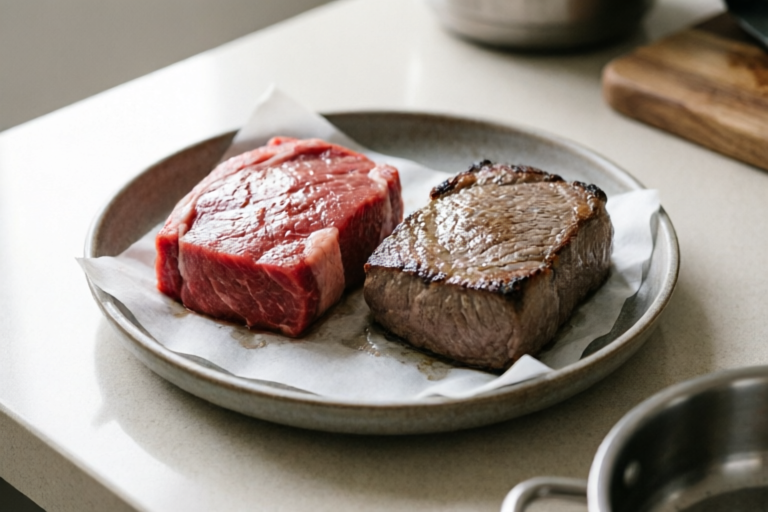
Imagine opening a package of steak. It gleams with a vibrant, deep red hue, often signaling freshness to consumers worldwide. As you sear this piece of beef in a hot pan, watch the edges transform. Slowly, the intense red fades, giving way to shades of brown and gray. Similarly, chicken, which starts as a translucent pinkish-purplish raw state, becomes opaque white as the heat penetrates its fibers. This phenomenon is immediate, undeniable, and tells us two things: we are cooking, and eventually, the food is done. However, for a curious cook, the question arises: precisely why does this happen? Is the redness safe? Does the loss of color indicate spoilage, or is it purely a result of chemistry?
Understanding the science behind this color transformation is not merely an academic exercise; it bridges the gap between culinary intuition and scientific precision. Historically, cooks relied entirely on visual cues. They pressed the meat with their fingers or cut it open to see juices run clear. While intuitive methods can work, modern food safety standards have moved toward greater reliability because visual cues can sometimes be misleading. By delving into the biochemistry of muscle tissue, we unlock the logic behind the colors we see. This knowledge empowers chefs and home cooks alike to move beyond guesswork.
In this comprehensive guide, we will explore the molecular journey of meat from raw to cooked. We will examine the primary pigments responsible for color, analyze the chemical reactions triggered by thermal energy, contrast how different species react to heat, and critically evaluate the limitations of visual indicators. Our goal is to equip you with the understanding necessary to cook with confidence, ensuring that your meals are not only delicious but also safe for consumption. Let us peel back the layers of biology and physics hiding beneath the surface of your dinner plate.
## The Primary Pigment: Understanding Myoglobin
To understand why meat changes color, we must first identify what gives raw meat its characteristic color in the first place. While blood is often cited as the culprit, the truth lies in a specialized protein found within the muscle cells themselves. This protein is called myoglobin.
### What Is Myoglobin?
Myoglobin is an iron-containing protein found in the muscle tissues of vertebrates. Its primary biological function is to store oxygen and facilitate oxygen transport within muscle cells. Unlike hemoglobin, which travels through the bloodstream to deliver oxygen to tissues, myoglobin resides directly within the muscle fiber to reserve oxygen for times when the animal is exercising heavily and oxygen demand exceeds supply. The name itself offers a clue: "myo" refers to muscle, and "globin" indicates its protein nature.
The reason myoglobin is central to our discussion of meat color is its ability to bind with oxygen molecules. This binding capacity relies on a small molecule attached to the protein chain known as a heme group. At the center of the heme group sits a single atom of iron. It is the interaction between this iron atom, the surrounding protein structure, and oxygen molecules that dictates the color we perceive with our eyes.
### The Role of Iron and Oxygen States
The color of fresh meat is actually determined by the oxidation state of the iron atom within the heme group. There are three main forms of myoglobin, each corresponding to a different color:
1. **Deoxymyoglobin:** When myoglobin is not bound to oxygen, the iron exists in a reduced ferrous state (Fe2+). In this form, the meat appears purple-red or dark crimson. This is often seen in tightly vacuum-packed meats, such as thick steaks stored in plastic trays. Because there is no oxygen reaching the interior of the vacuum pack, the myoglobin cannot bind with oxygen, keeping the meat in this darker state.
2. **Oxymyoglobin:** When myoglobin comes into contact with oxygen (such as when you unwrap the package or cut the meat), the iron binds with oxygen. This creates oxymyoglobin, which reflects light in a way that makes the meat appear bright cherry red. This is the color most consumers associate with "fresh" meat in grocery stores. The oxygenation process is reversible; as long as the iron remains in the ferrous state and binds oxygen, the meat retains its bright red appeal.
3. **Metmyoglobin:** When the iron atom loses an electron and oxidizes further to the ferric state (Fe3+), it can no longer bind oxygen effectively. This form is called metmyoglobin. Chemically, it appears brown or gray. Normally, enzymes in the body recycle metmyoglobin back into healthy forms, but once the animal dies, these enzymatic processes stop. Over time, exposure to air will naturally convert oxymyoglobin to metmyoglobin. This is why meat left out for too long begins to darken; it is not necessarily spoiled, but it is undergoing oxidation.
### Concentration Levels and Animal Diet
The intensity of the red color also varies based on the concentration of myoglobin in the muscle. Animals that walk or run frequently develop larger muscles to support movement. Consequently, birds that fly (though domestic chickens do not fly much) generally have higher myoglobin levels than mammals that rest more often, though poultry varies wildly between breast and leg meat. Herbivores like cattle also typically have higher myoglobin concentrations compared to pigs, whose muscles are adapted for different physical demands. Therefore, the baseline richness of the red color depends on the animal's physiology and diet. Grass-fed cattle, for instance, may exhibit a deeper red hue due to differences in fat composition and muscle oxidative stress, whereas grain-fed cattle might appear slightly paler.
Understanding that this pigment is the driver of color allows us to predict how external factors, particularly heat, will alter the protein's architecture. The next step is to observe how thermal energy disrupts this delicate balance.
## Chemical Reactions Triggered by Heat
Cooking meat is essentially the application of controlled thermal energy to biological matter. This heat causes profound structural changes within the protein chains. The color change is a direct consequence of protein denaturation and oxidation. When you apply heat, you are breaking the weak bonds that hold the complex folded structures of myoglobin together.
### Protein Denaturation Explained
Denaturation is a process where proteins lose their native shape and functionality due to external stressors like heat, acid, or agitation. In raw meat, myoglobin has a specific folded 3D structure that allows the heme group to interact with light and oxygen in specific ways. As the internal temperature of the meat rises, the kinetic energy of the atoms increases. This vibrational energy causes the hydrogen bonds and other forces stabilizing the protein's shape to break.
Once the myoglobin unfolds, the heme group is exposed differently to the environment. The unfolded protein structure, now often referred to as hemichrome, alters the way light is absorbed and reflected. Instead of reflecting the bright red wavelength associated with oxygenated myoglobin, the denatured pigment absorbs more light across the visible spectrum, resulting in a dull gray-brown appearance. This structural collapse happens progressively as heat penetrates the tissue.
### Temperature Thresholds and Color Transition
The color change is not instantaneous at any given temperature; it follows a trajectory based on degrees Celsius or Fahrenheit:
* **Low Heat (30°C - 50°C):** At low temperatures, minimal denaturation occurs. The meat may look slightly brighter initially due to moisture loss or mild oxidation, but the fundamental color remains largely red.
* **Medium Heat (60°C - 70°C):** This is the critical range for most cooking. Around 60°C (140°F), myoglobin undergoes significant denaturation. The protein coils tighten, squeezing water out, and the heme iron stabilizes in an oxidized form. The red color vanishes rapidly here. For beef, the center will turn from rare red to medium pink and finally to pale brown as it approaches well-done temperatures.
* **High Heat (70°C+):** Above 70°C (160°F), virtually all protein structures are denatured. Collagen in connective tissues has also broken down into gelatin. The meat takes on a uniform brownish-gray color throughout. Even if you achieve this level of doneness quickly (searing), the internal temperature determines the permanence of the color change.
### The Physics of Light Reflection
It is important to note that color is not an intrinsic property of the object but a property of how the object interacts with light. Healthy, oxygenated myoglobin molecules absorb green and yellow light waves and reflect red ones, creating the sensation of redness. As heat destroys the heme's symmetry and oxidizes the iron permanently, the absorption spectrum shifts. More blue and green light are absorbed, leaving the remaining reflected light to appear brown or gray. This optical shift confirms the chemical destruction of the pigment's original state.
Furthermore, surface browning involves a different process known as the Maillard reaction. This occurs when amino acids react with reducing sugars in the presence of heat. While this creates the desirable crust on a steak, it contributes to the overall darkening of the meat, complementing the internal pigment changes caused by myoglobin denaturation. Thus, the total color change is a combination of internal protein degradation and surface chemical reactions.
## Variation in Color Based on Meat Type
While the underlying mechanism of myoglobin denaturation applies to almost all mammalian and avian meat, the specific visual outcome varies significantly depending on the source of the meat. This variation is primarily driven by the concentration of myoglobin in different muscle types.
### Red Meats: Beef, Lamb, and Veal
Red meats are defined by their higher concentration of myoglobin. Muscles like the sirloin in beef or the shoulder in lamb are used constantly by the animal, requiring significant oxygen storage. Consequently, they contain dense networks of myoglobin.
When beef is raw, the difference between deoxymyoglobin (purple) and oxymyoglobin (bright red) is stark. When cooked, beef transitions from red to brown. However, the rate of this change can depend on the cut. Lean cuts turn brown faster as they have less fat to insulate the internal heat. Fat acts as a buffer, delaying the temperature rise in the core, which delays the denaturation of myoglobin. This is why fatty marbled steak might retain some pinkness at lower internal temperatures compared to an ultra-lean lean eye-of-round roast.
Pork is another category. Despite often being marketed as "the other white meat," pork is technically a red meat chemically. Fresh pork contains sufficient myoglobin to show pink hues. However, unlike beef, it must be cooked to higher internal temperatures (often historically recommended at 71°C/160°F) to destroy parasites like Trichinella, although modern farming has reduced this risk allowing for lower temps. As pork cooks, the pink tone intensifies and then fades to gray-white. Many consumers mistake the lack of red color in pork for doneness, but relying on it solely is dangerous, as cured hams remain pink due to nitrites, not lack of cooking.
### White Meats: Chicken and Turkey
Poultry presents a distinct contrast. Chicken breast meat, specifically the pectoral muscles used for flight in wild ancestors but limited in domestic breeds, has significantly lower myoglobin content. This results in a lighter, pinkish-cream raw appearance rather than the deep red of beef.
As poultry cooks, the color change is dramatic but subtle in terms of shade. It goes from translucent pink to opaque white. The whiteness is primarily due to the scattering of light by denatured protein fibers and the coagulation of collagen, which makes the meat opaque. Myoglobin is present in small amounts, especially in the skin or dark meat legs.
Dark meat from poultry (thighs and drumsticks) behaves similarly to red meat. Because these muscles are used for walking and supporting weight, they have higher myoglobin levels. You will notice that roasted chicken thighs often stay pinker than breasts even after cooking. This persistence of pink color in dark poultry meat is a common point of confusion. Unlike beef, where pink indicates undercooking (unless cured), in dark poultry, residual pink can exist even when fully cooked and safe, provided the temperature reaches the correct threshold (approx. 74°C / 165°F).
### Game Meats and Exotic Varieties
Game meats, such as venison or bison, tend to be extremely lean and often possess a darker, more intense color due to the high aerobic activity of wild animals. They cook much faster and turn gray much quicker than farm-raised counterparts because they have fewer insulating fats. Bison meat, for example, cooks faster than beef and requires careful monitoring to prevent it from becoming dry and leathery, accompanied by a rapid shift to a dull gray.
Fish is another extreme case. Fish muscle contains different proteins and pigments. The flesh can be translucent white (cod), vibrant orange (salmon due to astaxanthin from shrimp diets), or dark red (tuna, similar to beef). When fish cooks, the white flesh turns opaque white, and the red flesh turns flaky and pink-gray. The science remains the same (protein denaturation), but the pigment sources differ, highlighting the universality of the thermal protein reaction across species.
## Limitations of Visual Cues for Doneness
Despite the predictable patterns described above, relying solely on visual cues to determine if meat is safe to eat is fraught with peril. Modern food safety challenges have made appearance a poor proxy for internal bacterial load or full pasteurization. Here are several reasons why color can be misleading.
### Atmospheric Packaging and Artificial Retention
One major factor confusing consumers is Modified Atmosphere Packaging (MAP). In supermarkets, meat is often packaged in a mixture of gases designed to keep the oxymyoglobin stable. This extends shelf life by keeping the meat looking bright red for days. However, once removed from the package, this state reverts naturally. Worse, some additives or treatments can artificially extend the red color even when the meat is near spoilage. A meat that looks freshly red in the package might already be harboring bacteria that produce toxins, making the color a false sense of security.
### Cured Meats and Nitrites
The most dangerous misconception regarding color involves cured products like ham, bacon, or salami. These meats are treated with sodium nitrites. The nitrites bind with the myoglobin to form nitrosomyoglobin, which is stable and resistant to heat-induced browning. As a result, fully cooked ham remains pink or red, even when well past the danger zone for foodborne illness. Conversely, uncured hams may turn gray. If you judge doneness by color in a cured product, you might undercook it thinking it needs more time to brown, or overcook it assuming it's done because it still looks red. Relying on color here is fatal.
### pH Levels and Water Retention
Another variable is the pH level of the muscle. High-quality meat maintains a normal pH, which helps hold moisture and maintain color stability. However, conditions like DFD (Dark, Firm, Dry) or PSE (Pale, Soft, Exudative) affect meat.
DFD beef occurs when animals are stressed before slaughter, depleting glycogen stores. This results in higher pH and darker, redder meat. It holds moisture better and may appear "done" sooner than it actually is, or conversely, it might resist browning normally. PSE meat is pale and lacks pigment retention. These anomalies mean a steak could look perfectly "medium-rare" (red in the middle) while actually having been heated unevenly or potentially contaminated in pockets of cold meat. The color distribution becomes unreliable.
### Undercooked Ground Meat
For whole cuts like steaks, bacteria are mostly on the surface, so searing kills them easily. The inside can be rare and safe. However, in ground meat (minced beef, turkey mince), the grinding process pushes surface bacteria into the center of the meat. Therefore, ground meat must be cooked uniformly. But here is the catch: ground meat can sometimes retain a pinkish hue even when cooked to 75°C/165°F due to gas emissions from the meat or the specific type of myoglobin involved. Relying on the absence of pink in a burger patty can lead to eating undercooked pathogens like E. coli O157:H7, which cause severe illness. The color fades slowly, and the last trace of pink might be safe, but waiting for zero pink is unnecessary and risks drying out the patty.
### The Danger of "Juices"
Old folklore suggests checking doneness by piercing the meat and observing the juices. Clear juices were thought to equal done; pink meant underdone. In reality, clear juices can come from water released by denaturing collagen before the internal temperature is high enough to kill all pathogens. Furthermore, the clarity of juices is not a reliable indicator of temperature in thick roasts. You can have clear juices running from a rare roast, or cloudy juices from a fully cooked one depending on protein coagulation.
## Conclusion: Ensuring Safety Beyond Appearance
The transformation of raw meat from vivid reds and pinks to earthy browns and whites is a beautiful demonstration of biochemistry in action. It is a visible record of protein denaturation, oxidation, and the irreversible effects of heat on living tissue. Myoglobin, the unsung hero of muscle physiology, serves as our canvas, painting pictures of freshness and doneness that guide the hand of the chef.
However, as we have explored, this visual narrative is subject to deception. Factors such as packaging technologies, curing agents, variations in muscle type, and pH imbalances can decouple appearance from safety. The color of meat is a byproduct of cooking, but it is not a precise measurement of safety. In the age of modern food science, intuition must be supplemented with data.
### Summary of Key Mechanisms
To recap, the color change is driven by:
1. **Myoglobin concentration:** Determines baseline redness.
2. **Iron state:** Ferrous vs. Ferric interactions dictate hue.
3. **Heat application:** Causes protein unfolding (denaturation) and oxidation to metmyoglobin/hemichrome.
4. **Light physics:** Structural changes alter light reflection.
### The Ultimate Tool: The Meat Thermometer
Given the complexities discussed, the single most effective tool for ensuring food safety is the meat thermometer. It bypasses all the variables of color, packaging, and muscle type. It measures the internal temperature directly, correlating it to the thermal death point of pathogens.
* **Poultry (Chicken, Turkey):** Must reach 74°C (165°F). Do not rely on pinkness; cook until this temperature.
* **Ground Meats (Beef, Pork, Lamb):** Must reach 71°C (160°F) to eliminate internal contamination.
* **Whole Cuts of Beef, Pork, Veal:** Can be eaten medium-rare if handled safely, usually 63°C (145°F) followed by a 3-minute rest, but color will still be pink in the center. Note that the FDA recommends these temps to kill surface bacteria.
By trusting the thermometer over the palette, you prioritize health without sacrificing flavor. Professional kitchens insist on this metric for liability and safety reasons. Home cooks should adopt the same discipline.
### Final Recommendations
As you prepare your next meal, embrace the science. Observe the color change as a sign of progress, but verify the destination with tools. Understand that a slight pink tint in poultry dark meat is acceptable if the temp is right, and a red blush in cured ham is normal and harmless. Let your knowledge of myoglobin deepen your appreciation for the food, not just your caution. Whether searing a ribeye or baking a whole chicken, knowing *why* it changes color transforms a routine task into a mastery of technique. The red turning to brown is not magic; it is chemistry serving your table, provided you respect the laws of thermodynamics that govern it.
Cooking safely is about more than avoiding illness; it is about respecting the ingredient. When you understand the proteins you are cooking, you gain control over the outcome. So, the next time you hear that sizzle and see that color shift, remember the hidden story of iron, heat, and oxygen occurring within every slice. Trust the science, measure the heat, and enjoy your meal with peace of mind.
Comments

SteakQueen
definitely using a thermometer now instead of cutting into the meat to check
👍 7👎 0

CuriousCat_
used to think grey meant burnt but okay good to know there's actually science here
👍 29👎 0

GrillingDad
wait does that happen with fish too? salmon turns orange to opaque?
👍 1👎 0

HomeCookJen
interesting so pork stays pinkish if cured like bacon right? great explanation!
👍 21👎 0

ScienceNerd22
alright putting away the eyeball method immediately. bought a thermometer today tbh
👍 21👎 0

ChefMike_
myoglobin?? i always thought it was just the fat rendering out lol thanks for clearing this up
👍 6👎 0
MeatLover99
honestly never thought about the chemistry behind cooking meat, kinda crazy how iron plays a role
👍 21👎 0